1st century to 2016
Women of the Church
The Mother of God, followed by martyrs, abbesses, mystics, founders and Doctors of the Church.
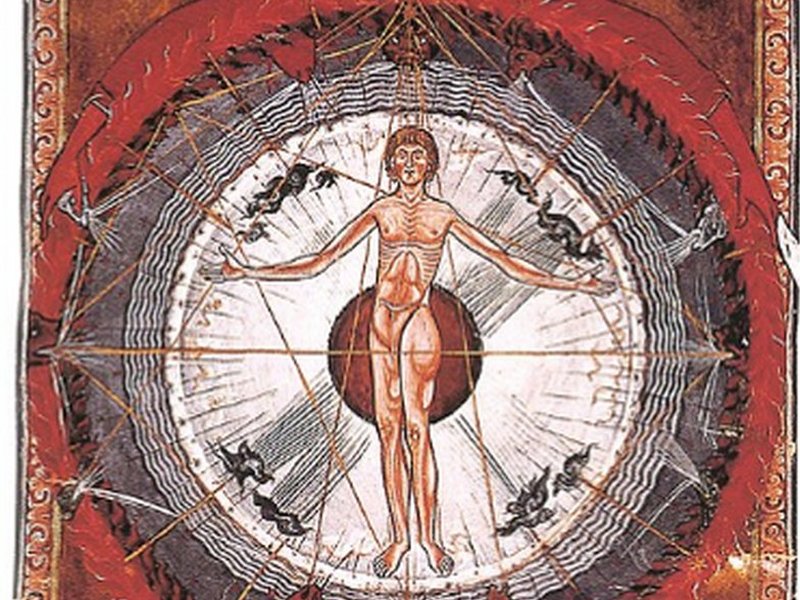
From the first centuries, women have carried the faith as martyrs, teachers, rulers of great abbeys, mystics and founders of communities that built schools and hospitals around the world. Four of them are now Doctors of the Church, a title the Church has given to only a few dozen saints. This timeline follows a few of the many, from a young mother in a Roman prison to the women who brought the faith to the Americas.
The early Church · 1st century to 664
1st century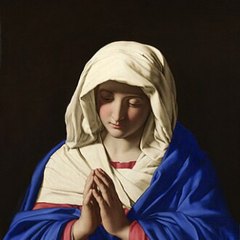
The Blessed Virgin Mary says yes to the angel Gabriel and becomes the Mother of God.
The Gospels show her at Jesus' birth, at the wedding at Cana, at the foot of the cross and praying with the apostles before Pentecost. The Council of Ephesus in 431 named her Theotokos, the God-bearer, and the Church honors her as the first and greatest of the saints.
203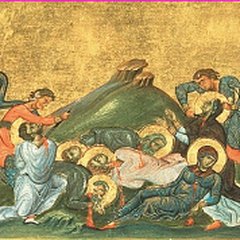
Sts. Perpetua and Felicity, a young mother and her enslaved companion, die for their faith in Carthage.
Perpetua kept a prison diary, one of the earliest writings by a Christian woman, and it was finished by another hand after her death in the arena. Felicity gave birth in prison days before. Both are still named in the Roman Canon of the Mass.
c. 381Egeria, a pilgrim probably from Spain or Gaul, writes an account of her journey to the Holy Land.
Her letters to the women of her community back home describe the holy places and how the church in Jerusalem kept Holy Week and Easter. Part of the account was rediscovered in an Italian library in 1884 and is a key source for early Christian worship.
c. 543St. Scholastica, sister of St. Benedict, dies after leading a community of women near Monte Cassino.
Tradition holds that she and Benedict were twins. St. Gregory the Great tells how at their last meeting she prayed for a storm so he would stay and talk through the night. She is honored as a founder of Benedictine nuns.
664St. Hilda of Whitby hosts the synod that sets the date of Easter in England.
Hilda ruled a double monastery of men and women at Whitby, where five future bishops trained and the poet Caedmon first sang. The Synod of Whitby met in her abbey and chose the Roman way of dating Easter over the Irish custom.
Abbesses and mystics · 1150 to 1429
1151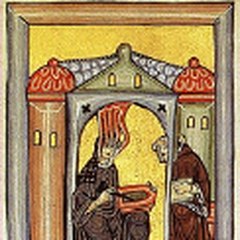
St. Hildegard of Bingen finishes Scivias, the first of her great books of visions.
A Benedictine abbess in the Rhineland, Hildegard wrote on theology, medicine and natural history, composed music still sung today and corresponded with popes and emperors. Benedict XVI declared her a Doctor of the Church in 2012.
1212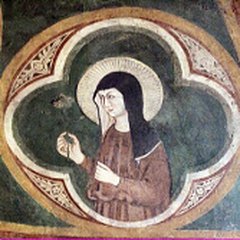
St. Clare of Assisi leaves home to follow St. Francis and founds the Poor Clares.
Clare lived at San Damiano for more than forty years. Her rule, approved by Innocent IV two days before her death in 1253, was the first written by a woman for women.
1373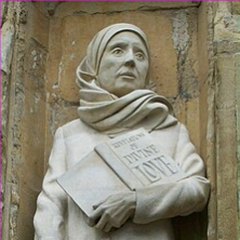
Julian of Norwich, an anchoress, receives the visions she wrote up as Revelations of Divine Love.
Her book is the earliest surviving book in English known to be written by a woman. It contains her famous line that all shall be well, and all manner of thing shall be well.
1377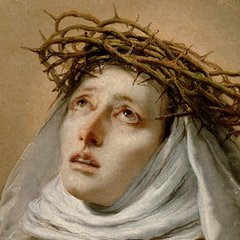
St. Catherine of Siena urges Gregory XI to bring the papacy back to Rome from Avignon, and he does.
A Dominican laywoman who could barely write at first, Catherine dictated hundreds of letters to popes and rulers and a book called The Dialogue. She died in 1380 aged 33 and was named a Doctor of the Church in 1970.
1429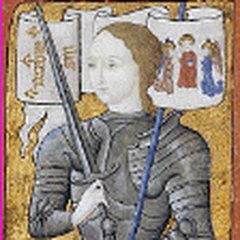
St. Joan of Arc leads French troops to lift the siege of Orléans.
Joan was burned at Rouen in 1431 after a political trial. The Church overturned the verdict in 1456 and canonized her in 1920.
Reformers and founders · 1535 to 1639
1535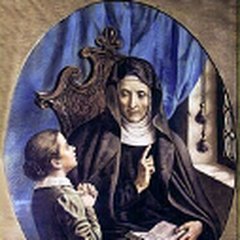
St. Angela Merici founds the Ursulines in Brescia to teach girls.
Her Company of St. Ursula began as consecrated women who lived at home rather than in a cloister. The Ursulines became one of the great teaching orders and brought schools for girls to many countries, including New Orleans in 1727.
1562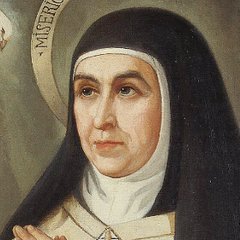
St. Teresa of Ávila opens her first reformed Carmelite convent, St. Joseph's in Ávila.
Teresa went on to found more than a dozen convents and, with St. John of the Cross, reformed the Carmelite friars. Her books, including The Interior Castle, are classics of prayer. In 1970 she became the first woman named a Doctor of the Church.
1633St. Louise de Marillac and St. Vincent de Paul found the Daughters of Charity.
Instead of living in a cloister, the Daughters served the poor and sick in their homes, in hospitals and in the streets of Paris. They became one of the largest communities of women in the Church.
1639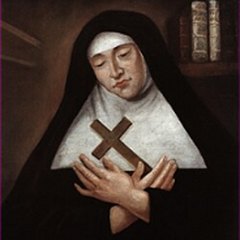
St. Marie of the Incarnation, a French Ursuline, arrives in Quebec to teach girls.
A widow and mother before she became a nun, Marie founded the first Ursuline school in North America, learned several Indigenous languages and wrote dictionaries in them. Pope Francis canonized her in 2014.
The modern era · 1809 to 2016
1809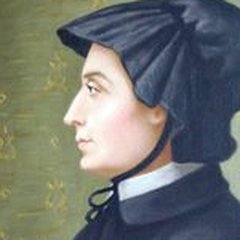
St. Elizabeth Ann Seton founds the Sisters of Charity in Emmitsburg, Maryland.
A widowed mother of five who became Catholic in 1805, Seton opened a school for girls and the first American community of religious sisters. In 1975 she became the first saint born in what is now the United States.
1889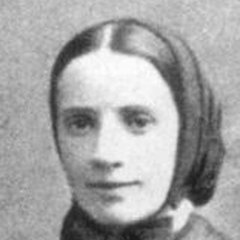
St. Frances Xavier Cabrini arrives in New York to serve Italian immigrants.
She and her Missionary Sisters of the Sacred Heart founded dozens of schools, orphanages and hospitals across the Americas. In 1946 she became the first American citizen to be canonized.
1891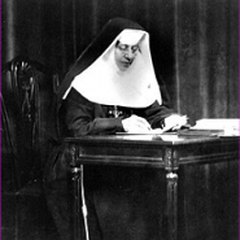
St. Katharine Drexel founds the Sisters of the Blessed Sacrament.
An heiress from Philadelphia, Drexel spent her fortune on schools for Native American and Black students, including Xavier University of Louisiana. She was canonized in 2000.
1970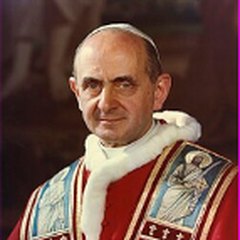
Paul VI names St. Teresa of Ávila and St. Catherine of Siena the first women Doctors of the Church.
The title honors saints whose teaching has special value for the whole Church. St. Thérèse of Lisieux followed in 1997 and St. Hildegard in 2012.
1979Mother Teresa of Calcutta receives the Nobel Peace Prize.
Born in Skopje, she founded the Missionaries of Charity in 1950 to serve the poorest of the poor. She was canonized in 2016.
2016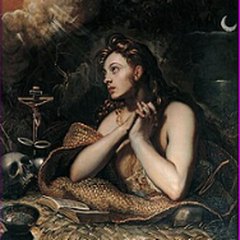
St. Mary Magdalene's memorial is raised to a feast, honoring her as apostle to the apostles.
Pope Francis asked for the change, putting her day, July 22, on the same level as the feasts of the apostles. The Gospels name her as the first witness of the risen Christ.
2016Mother Teresa is canonized by Pope Francis in St. Peter's Square as St. Teresa of Calcutta.
The Mass on September 4, 2016, the eve of her feast day, drew huge crowds of pilgrims, among them many of her Missionaries of Charity. She had died in 1997 and was beatified by St. John Paul II in 2003.