999 to 2014
Faith and Science
Friars, canons, Jesuits and a Belgian priest who helped explain the heavens and the living world.
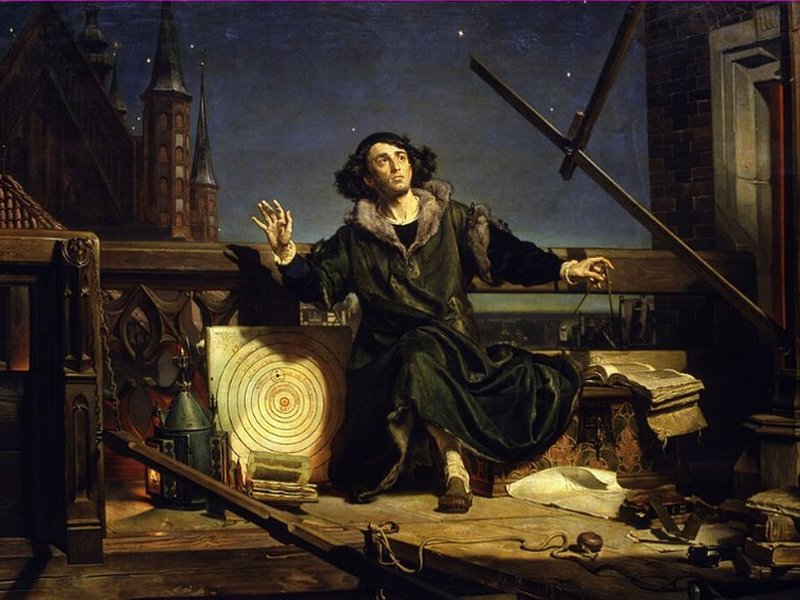
The medieval universities that taught theology also taught mathematics, optics and natural history, and many of the people who pushed science forward were priests, friars and bishops. This timeline follows some of them, from an Oxford bishop studying light to the priest who first proposed the Big Bang. It also tells the story of Galileo, the hardest chapter in the Church's long relationship with science.
Medieval roots · 999 to 1377
999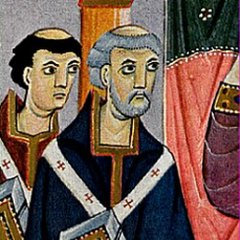
Gerbert of Aurillac, the most learned mathematician of his age, becomes Pope Sylvester II.
As a young monk he studied in Catalonia, near Muslim Spain, and brought back to Christian Europe the abacus with Hindu-Arabic numerals and knowledge of the astrolabe. He taught mathematics and astronomy at the cathedral school of Reims before his election.
c. 1230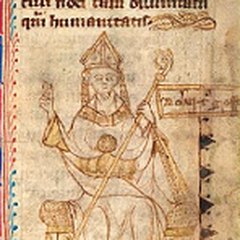
Robert Grosseteste, later Bishop of Lincoln, writes on light and optics and urges testing ideas against experience.
Grosseteste taught at Oxford and became Bishop of Lincoln in 1235. His short works on light, rainbows and the shape of the universe argued that nature follows mathematical laws and that claims should be checked by observation. Historians count him among the founders of the scientific method in the West.
c. 1250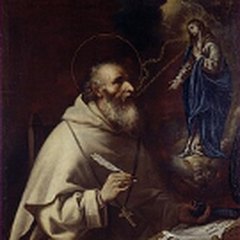
Albert the Great, a Dominican friar, studies plants, animals and minerals firsthand.
Albert taught Thomas Aquinas in Paris and Cologne and wrote huge works on natural history, often noting what he had seen for himself and correcting older books. He was canonized and named a Doctor of the Church in 1931, and in 1941 Pius XII made him patron of those who study the natural sciences.
1267Roger Bacon, a Franciscan, sends his Opus Majus to Pope Clement IV.
At the pope's request Bacon wrote a long account of the knowledge of his day, from languages and mathematics to optics. He insisted on what he called experimental science, learning by careful trial, and wrote about lenses that could magnify letters for weak eyes.
1377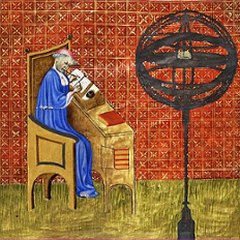
Nicole Oresme, soon Bishop of Lisieux, argues that the earth might turn daily on its axis.
In his Book of the Heavens and the World, written in French for King Charles V, Oresme showed that a spinning earth would look the same to us as a turning sky. He also drew graphs of changing quantities centuries before analytic geometry, though in the end he kept the traditional view of a still earth.
New views of the heavens · 1543 to 1801
1543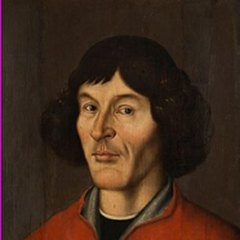
Nicolaus Copernicus, a canon of Frombork Cathedral, publishes his book placing the sun at the center.
On the Revolutions of the Heavenly Spheres appeared in the year Copernicus died and was dedicated to Pope Paul III. Copernicus was a church administrator and physician as well as an astronomer. His sun-centered system took decades to win acceptance and changed astronomy for good.
1582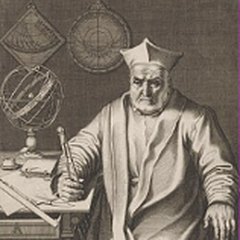
Christopher Clavius, a Jesuit mathematician, helps craft the Gregorian calendar for Gregory XIII.
The old Julian calendar had drifted about ten days from the seasons, which moved the date of Easter. Gregory XIII's reform, worked out by Aloysius Lilius and defended by Clavius, dropped ten days in October 1582. Most of the world uses it today.
1602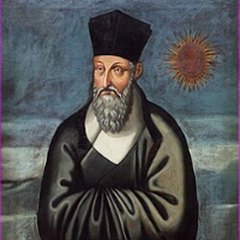
Matteo Ricci, a Jesuit in Beijing, prints a great map of the world for Chinese readers.
Ricci won a hearing at the imperial court through his skill in mathematics, astronomy and mapmaking. With the scholar Xu Guangqi, a Catholic convert, he also translated the first books of Euclid's geometry into Chinese.
1630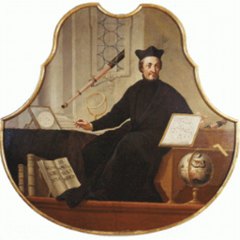
Christoph Scheiner, a Jesuit astronomer, publishes a landmark study of sunspots.
Scheiner observed sunspots from 1611, at the same time as Galileo, and the two quarreled over who saw them first and what they were. His book Rosa Ursina tracked the spots for years and showed that the Sun turns on a tilted axis.
1633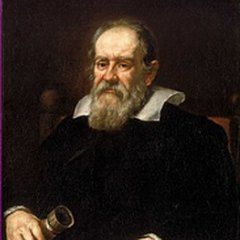
Galileo Galilei is condemned by the Roman Inquisition for teaching that the earth moves.
Galileo's telescope discoveries supported Copernicus, but his 1632 Dialogue was judged to break an earlier order not to defend the idea. He spent his last years under house arrest near Florence and kept writing on physics. The case became the best-known clash between the Church and science, and the Church later acknowledged its errors.
1651
Giovanni Battista Riccioli, a Jesuit, names the craters of the moon still used today.
Riccioli's New Almagest included a detailed lunar map drawn with his fellow Jesuit Francesco Grimaldi. They named craters after astronomers and thinkers, including Copernicus, Tycho and Kepler. Grimaldi also described the bending of light, which he named diffraction.
1665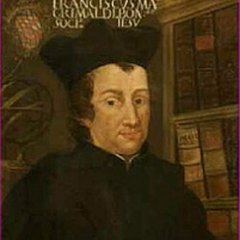
Francesco Maria Grimaldi, a Jesuit, describes the bending of light and names it diffraction.
His book on light was published two years after his death. Working with Riccioli in Bologna, he also drew the Moon map that gave many of its craters the names still used today.
1669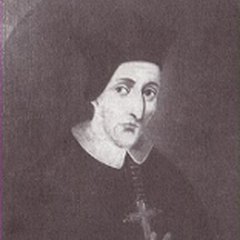
Nicolas Steno sets out the basic rules for reading rock layers, then becomes a priest and bishop.
A Danish anatomist working in Florence, Steno explained that fossils were remains of living things and that lower layers of rock were laid down first. He became a Catholic in 1667, was ordained a priest in 1675 and later served as a bishop in northern Germany. John Paul II beatified him in 1988.
1758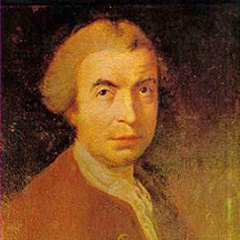
Roger Boscovich, a Jesuit from Dubrovnik, publishes an early theory of atoms as points of force.
His Theory of Natural Philosophy pictured matter as made of points that attract and repel one another, an idea that later physicists admired. He also advised the pope on the cracks in the dome of St. Peter's and helped measure the shape of the Earth.
1801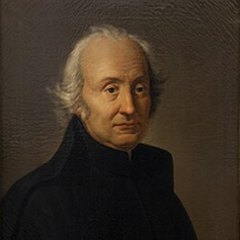
Giuseppe Piazzi, a Theatine priest, discovers Ceres, the first known asteroid, on New Year's Day.
Piazzi spotted it from his observatory in Palermo while making a star catalog. Ceres is now counted as a dwarf planet, the largest body in the asteroid belt.
Modern science · 1860s to today
1866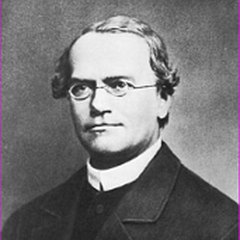
Gregor Mendel, an Augustinian friar, publishes his pea experiments and the laws of heredity.
Working in the monastery garden at Brno, Mendel crossed thousands of pea plants and found that traits pass on in predictable ratios. He read his results to a local society in 1865 and published them the next year. Their importance was recognized only around 1900, and he is now called the father of genetics.
1868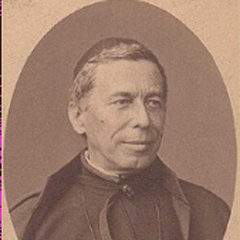
Angelo Secchi, a Jesuit astronomer in Rome, sorts the stars into classes by their light.
Secchi studied the spectra of thousands of stars at the Roman College observatory and grouped them into a few types. His system was a forerunner of the classes astronomers use today. He also studied the sun and helped show that solar prominences belong to the sun itself.
1891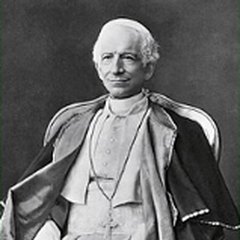
Leo XIII refounds the Vatican Observatory to show that the Church supports true science.
The Specola Vaticana grew out of older papal observatories. It took part in the first international map of the sky, moved to Castel Gandolfo in the 1930s and today also runs a telescope in Arizona. Its astronomers are mostly Jesuits.
1927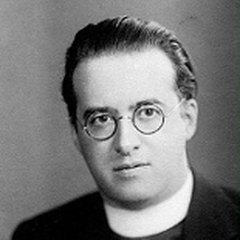
Georges Lemaître, a Belgian priest and physicist, proposes that the universe is expanding.
Lemaître worked out from Einstein's equations and observed galaxies that the universe is growing, two years before Edwin Hubble's famous paper. In 1931 he went further and suggested that it began from a single primeval atom, the idea later called the Big Bang.
1936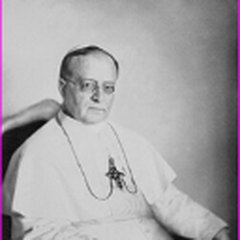
Pius XI refounds the Pontifical Academy of Sciences, open to scientists of any faith.
The academy traces its roots to the Lincean Academy of 1603, to which Galileo belonged. Its members, chosen for their work rather than their religion, have included many Nobel Prize winners, and it advises the pope on scientific questions.
1950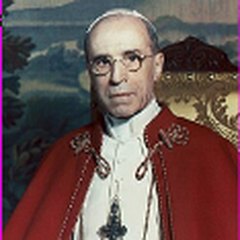
Pius XII, in the encyclical Humani Generis, allows Catholics to study the evolution of the human body.
He taught that research into whether the body came from earlier living matter could go on freely, while holding that each human soul is created directly by God. He asked that the evidence be weighed with care and without rash conclusions.
1959Jérôme Lejeune, a devout Catholic doctor in Paris, helps discover the extra chromosome behind Down syndrome.
He spent the rest of his life caring for patients with genetic conditions and defending their lives. St. John Paul II made him the first president of the Pontifical Academy for Life in 1994, shortly before he died. He was declared Venerable in 2021.
1992John Paul II receives the findings of a study commission on the Galileo case.
Speaking to the Pontifical Academy of Sciences on October 31, 1992, John Paul II said the theologians who condemned Galileo had made a mistake and called for a fruitful dialogue between faith and science. The commission had been set up in 1981.
1993The Vatican Advanced Technology Telescope is dedicated on Mount Graham in Arizona.
Built with the University of Arizona, it serves the Vatican Observatory's research group in Tucson, where the skies are far darker than at the observatory's old home near Rome.
1996St. John Paul II tells the Pontifical Academy of Sciences that evolution is more than a hypothesis.
He said new findings had led to recognizing the theory of evolution as more than a hypothesis, while repeating that the human spirit cannot come from matter alone.
2014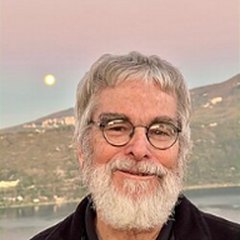
Br. Guy Consolmagno, a Jesuit expert on meteorites, wins the Carl Sagan Medal for explaining planetary science to the public.
The next year Pope Francis named him director of the Vatican Observatory. An asteroid, 4597 Consolmagno, is named for him.