1531 to 2010
Marian Apparitions
Appearances of the Virgin Mary that the Church has judged worthy of belief, with two related Marian dogmas.
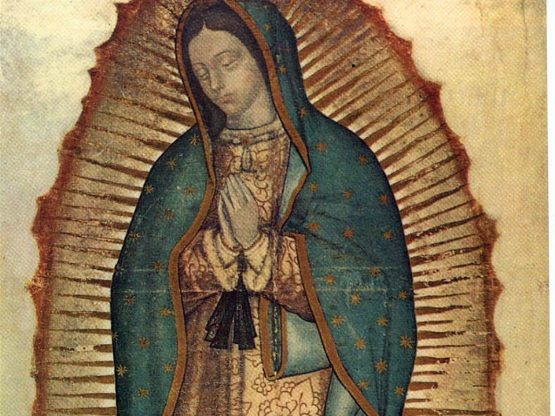
Catholics believe that Mary, the mother of Jesus, has at times appeared to ordinary people with a call to prayer and conversion. The Church investigates such claims carefully and approves very few. Belief in an apparition is never required, yet places like Guadalupe, Lourdes and Fatima draw millions of pilgrims every year.
The New World and France · 1531 to 1879
1531Our Lady of Guadalupe appears to Juan Diego on Tepeyac hill near Mexico City. He is canonized in 2002.
Juan Diego was an Indigenous convert who said a young woman appeared to him and asked for a church on the hill. When the bishop asked for a sign, roses bloomed in winter and her image appeared on Juan Diego's cloak, or tilma. The image is honored at the Basilica of Guadalupe and became a beloved symbol of Mexico and the Americas.
1830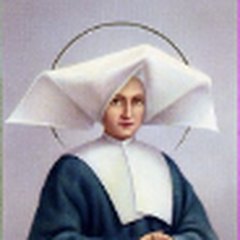
Rue du Bac, Paris: St. Catherine Labouré receives the design of the Miraculous Medal.
Catherine Labouré was a young novice of the Daughters of Charity when she reported that Mary showed her the image for a medal and asked for it to be made. The medal, first struck in 1832, became known as the Miraculous Medal because of the many graces credited to it. Catherine kept her role secret for decades and was canonized in 1947.
1846La Salette, France: Mary appears to two children, Mélanie Calvat and Maximin Giraud.
Mélanie and Maximin were young cowherds in the French Alps who said a weeping lady spoke to them about sin, especially working on Sundays and taking God's name in vain. After investigation, the local bishop declared the apparition worthy of belief in 1851. A large basilica now stands on the mountain site.
1854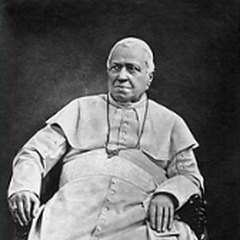
Pius IX defines the dogma of the Immaculate Conception.
In the bull Ineffabilis Deus, Pope Pius IX declared that Mary was preserved from original sin from the first moment of her conception. He consulted bishops around the world beforehand. Four years later, at Lourdes, the lady who appeared to Bernadette called herself the Immaculate Conception, which many saw as heavenly confirmation.
1858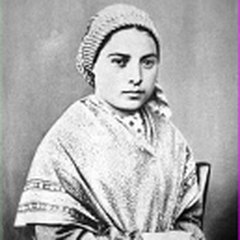
Lourdes: St. Bernadette Soubirous sees Mary 18 times. The grotto becomes a great place of healing.
Between February and July, Bernadette reported a series of visions of a lady in the grotto of Massabielle. A spring she dug up at the lady's request soon drew pilgrims, and doctors began studying reported cures. The Church approved the apparitions in 1862, and Lourdes became one of the most visited Catholic shrines in the world.
1859Champion, Wisconsin: Adele Brise reports an apparition, approved in 2010 as the first in the United States.
Adele Brise, a young Belgian immigrant, said a lady in white asked her to pray for sinners and teach children the faith. Adele spent her life catechizing frontier children, and a chapel was built on the site. Bishop David Ricken of Green Bay approved the apparition, and the site is now the National Shrine of Our Lady of Champion.
1871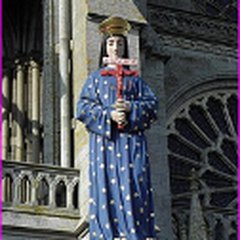
Pontmain, France: Mary appears to children during the Franco-Prussian War.
As Prussian troops advanced into western France, children in the village of Pontmain reported seeing Mary in the night sky above a barn, with a message urging prayer. The Prussian advance stopped short of the nearby city of Laval, and an armistice soon followed. The bishop approved the apparition the next year, and she is honored as Our Lady of Hope.
1879Knock, Ireland: villagers see Mary, Joseph and John at the parish church.
On a rainy evening, people of several ages reported a silent vision on the gable wall of the church, with Mary, St. Joseph, St. John the Evangelist and an altar with a lamb. Coming in the hard years after the Great Famine, it brought comfort to many Irish people. Knock became Ireland's national Marian shrine, visited by Pope John Paul II and Pope Francis.
The 20th century · 1917 to 2010
1917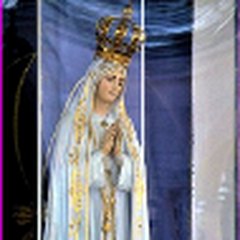
Fatima, Portugal: three shepherd children see Mary from May to October. Francisco and Jacinta are canonized in 2017.
Lúcia dos Santos and her cousins Francisco and Jacinta Marto said Mary asked them to pray the rosary for peace and the conversion of sinners during World War I. Crowds gathered for the final apparition, when many reported the Miracle of the Sun. Francisco and Jacinta died young in the flu epidemic, and Lúcia became a nun.
1932Beauraing, Belgium: Mary appears to five children into early 1933. Banneux follows that year.
At Beauraing, five children reported dozens of apparitions of Mary near their school garden from late 1932 into early 1933. Weeks later in Banneux, eleven-year-old Mariette Beco reported a lady who called herself the Virgin of the Poor and led her to a healing spring. The Church approved both apparitions in 1949.
1950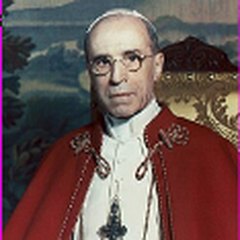
Pius XII defines the dogma of the Assumption.
In the apostolic constitution Munificentissimus Deus, Pope Pius XII declared that Mary, at the end of her earthly life, was taken up body and soul into heavenly glory. Belief in the Assumption was already ancient in both East and West. It is the most recent solemn dogmatic definition, and the feast is celebrated on August 15.
1981Kibeho, Rwanda: apparitions to young students begin. They are approved in 2001.
Students at a girls' school in Kibeho reported visions of Mary, who called herself Mother of the Word and urged prayer and repentance. Some visionaries described terrifying images of violence, which many later linked to the 1994 genocide in Rwanda. The local bishop approved the apparitions to three of the visionaries, and Kibeho is the only Vatican-recognized Marian apparition site in Africa.