From Spanish missions and a Maryland refuge to an immigrant church, a Catholic president and an American pope.
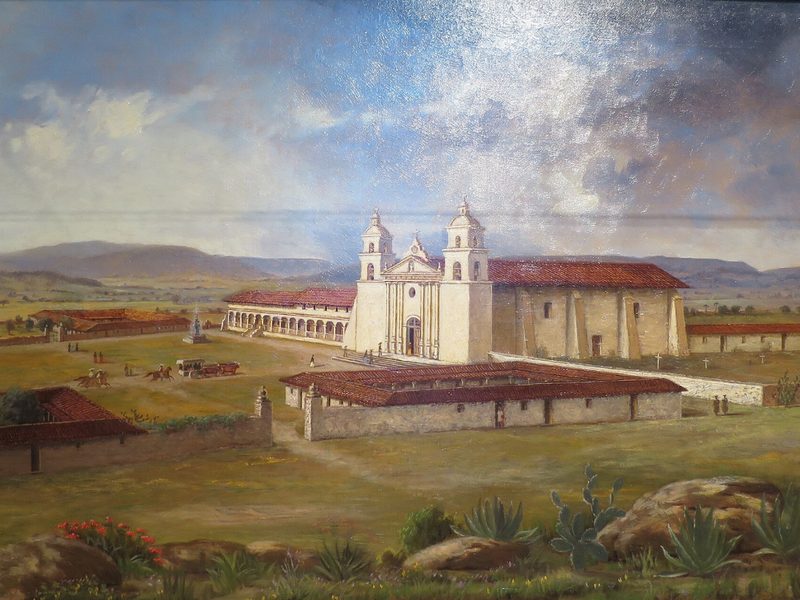
Oriana Day, Mission Santa Barbara, c. 1880. De Young Museum, San Francisco.
Catholics were in North America long before the Pilgrims: Spanish priests said Mass at St. Augustine, Florida, in 1565. From those first missions grew a church shaped by waves of immigrants from Ireland, Germany, Italy, Poland, Mexico and beyond, who built parishes, schools and hospitals across the country. In 2025 that church gave the world its first pope born in the United States.
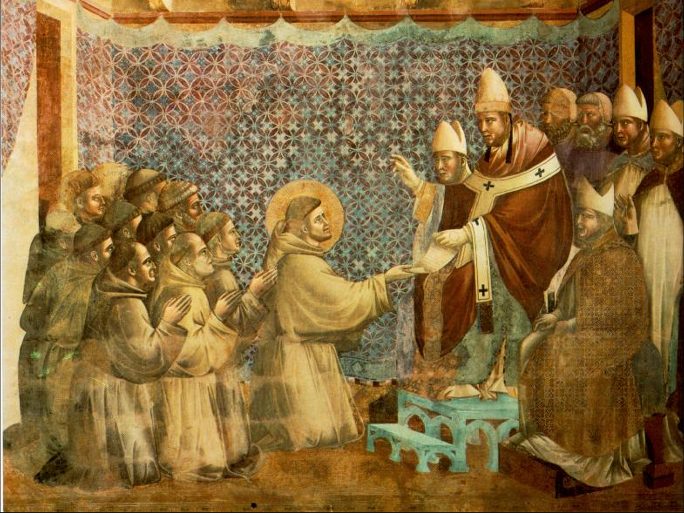
All paintings and saint portraits are public-domain works from Wikimedia Commons.
Missions and colonies · 1565 to 1775
1565
St. Augustine, Florida is founded by Spain with a Mass of thanksgiving. Its parish is the oldest in what is now the United States.
Spanish admiral Pedro Menéndez de Avilés founded St. Augustine, and his chaplain, Fr. Francisco López de Mendoza Grajales, celebrated Mass as the settlers came ashore. The town became the oldest continuously inhabited European settlement in the continental United States. Its parish community traces its roots to that founding and continues today at the Cathedral Basilica of St. Augustine.
1598
Franciscan missions begin in New Mexico, which become a long chain of Pueblo missions.
Franciscan friars traveled north with Juan de Oñate's colonizing expedition into New Mexico. They built churches among the Pueblo peoples and taught the faith, but forced labor and suppression of native religion bred deep resentment. In 1680 the Pueblo Revolt drove the Spanish out for about twelve years, and the missions were rebuilt after their return.
1634
The Ark and the Dove land in Maryland. Lord Baltimore's colony is founded as a haven for English Catholics.
Two small ships carried about a hundred and fifty settlers, Catholic and Protestant, along with Jesuit priests including Fr. Andrew White. They landed on St. Clement's Island, where the first Mass in the English colonies was offered. Cecil Calvert, the second Lord Baltimore, hoped Catholics could live there free from the penalties they faced in England, while his brother Leonard served as governor.
1649
Maryland Toleration Act guarantees freedom of worship for Christians, an early American religious liberty law.
Maryland's assembly passed this act to keep peace between its Catholic and Protestant settlers. It protected only Christians who believed in the Trinity, yet it was one of the first laws in the colonies to guarantee religious toleration. Protestants who later seized control repealed it, and by the 1690s Catholics in Maryland lost the right to worship publicly.
1673
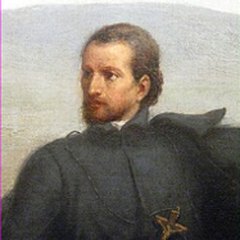
Fr. Jacques Marquette, a French Jesuit, maps the Mississippi with Louis Jolliet.
Marquette and the fur trader Louis Jolliet paddled from the Great Lakes down the Mississippi as far as the Arkansas River. They confirmed that the river flowed to the Gulf of Mexico rather than the Pacific, opening the way for French claims in the interior. Marquette later returned to found a mission among the Illinois and died in 1675.
1680St. Kateri canonized 2012
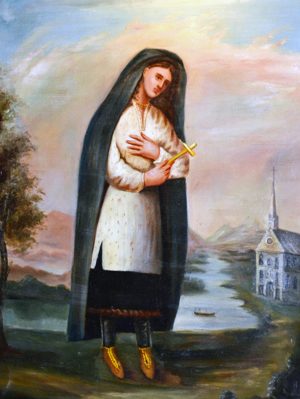
Kateri Tekakwitha, Mohawk-Algonquin convert, dies. She is canonized in 2012, the first Native American saint from the United States and Canada.
Kateri was born in a Mohawk village in present-day New York and survived smallpox that scarred her face. Baptized by a Jesuit missionary, she faced hostility at home and fled to a Christian mission near Montreal, where she lived a life of prayer and penance. Known as the Lily of the Mohawks, she was canonized by Pope Benedict XVI.
1769St. Junípero canonized 2015
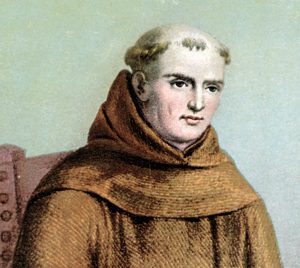
Junípero Serra founds Mission San Diego, the first of 21 California missions.
Serra, a Franciscan friar from Mallorca, arrived with Spain's expedition to settle Alta California. He personally founded nine of the eventual twenty-one missions along the coast, which became the seeds of cities like San Francisco and Los Angeles. The missions spread the faith but also disrupted native life and brought disease, a legacy still debated today.
A new nation · 1776 to 1840
1776
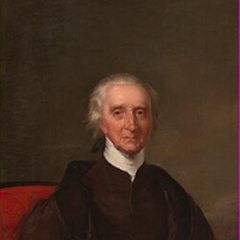
Charles Carroll of Maryland signs the Declaration of Independence, its only Catholic signer.
Charles Carroll of Carrollton was one of the wealthiest men in the colonies, yet as a Catholic he had been barred from voting or holding office in Maryland. He risked his fortune to support independence and later served in the U.S. Senate. He was the last surviving signer of the Declaration when he died in 1832.
1789
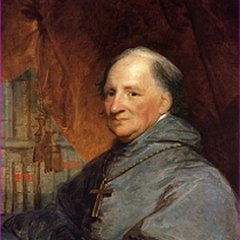
John Carroll becomes the first U.S. bishop, of Baltimore. Georgetown, the first Catholic college, opens the same era.
John Carroll, a former Jesuit and cousin of Charles Carroll, was chosen by his fellow priests and confirmed by Pope Pius VI. His diocese of Baltimore covered the entire young nation. He also founded Georgetown in 1789, and in 1808 Baltimore became an archdiocese, with new dioceses created in Boston, New York, Philadelphia and Bardstown.
1809St. Elizabeth Ann canonized 1975
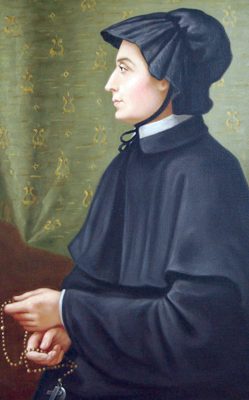
Elizabeth Ann Seton founds the Sisters of Charity and seeds parochial schooling. She becomes the first U.S.-born saint in 1975.
Seton was a widowed mother from a prominent New York Episcopal family who became Catholic after her husband's death. In Emmitsburg, Maryland, she founded the Sisters of Charity of St. Joseph's and opened a school for girls that included children who could not pay. Her sisters went on to run schools, orphanages and hospitals across the country.
1834
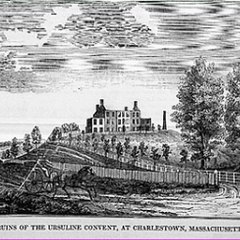
Anti-Catholic mob burns the Ursuline convent near Boston, a sign of rising nativism.
The Ursuline sisters ran a well-regarded girls' school in Charlestown, Massachusetts, attended by many Protestant families. Rumors that a woman was being held against her will stirred a mob, which looted and burned the convent and school one August night. Most rioters were acquitted, and the sisters never rebuilt there, a sign of how strong anti-Catholic feeling had become.
The immigrant church · 1840 to 1920
1845
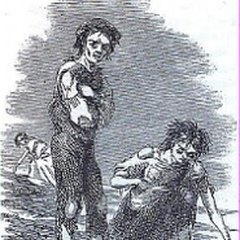
Irish famine migration begins. With German newcomers, it makes Catholics the largest U.S. denomination by about 1850, before later Italian and Polish waves.
When potato blight brought famine to Ireland, huge numbers of Irish Catholics fled to American cities such as Boston, New York and Philadelphia. Large German Catholic immigration came in the same decades, and later waves from Italy, Poland and elsewhere followed mostly after 1880. Through these arrivals the Catholic Church became the largest single religious body in the United States.
1854
Know-Nothing party wins elections on an anti-Catholic, anti-immigrant platform.
The Know-Nothings began as secret societies whose members answered questions about them by saying they knew nothing. Running as the American Party, they won the Massachusetts governorship and legislature and many seats in Congress, promising to limit immigrant voting and Catholic influence. The movement soon fractured over slavery and faded by the late 1850s.
1882
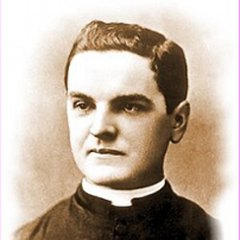
Knights of Columbus is founded in New Haven by Fr. Michael McGivney.
Fr. McGivney, a young parish priest at St. Mary's Church in New Haven, gathered Catholic men to form a fraternal society. It offered insurance to support widows and orphans of working men and gave Catholics an alternative to secret societies the Church discouraged. The Knights grew into one of the world's largest Catholic charitable groups, and McGivney was beatified in 2020.
1884
Third Plenary Council of Baltimore orders a school in every parish and produces the Baltimore Catechism.
The American bishops met in Baltimore to set common rules for a fast-growing church. They called for a parish school wherever possible, which helped build the vast Catholic school system of the next century. The question-and-answer Baltimore Catechism that followed shaped how generations of American Catholic children learned their faith, and the council also laid groundwork for the Catholic University of America.
1887
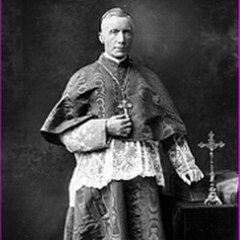
Cardinal Gibbons defends the Knights of Labor, aligning the church with working families.
Some bishops wanted Rome to condemn the Knights of Labor, a large union with many Catholic members, as a forbidden secret society. Cardinal James Gibbons of Baltimore argued in Rome that the union defended workers' just rights and that a condemnation would drive workers from the Church. Rome held back, and Leo XIII's 1891 encyclical Rerum Novarum soon affirmed workers' right to organize.
1908
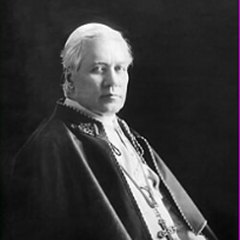
Rome ends mission status for the U.S. church, recognizing it as fully established.
Until then the American church had been overseen by the Congregation for the Propagation of the Faith, the Vatican office for mission lands. Pope Pius X's reorganization of the Roman Curia placed it under the ordinary offices that governed established churches. The change recognized how much American Catholicism had grown, and the U.S. church soon became a major source of missionaries itself.
Into the mainstream · 1920 to 1965
1928
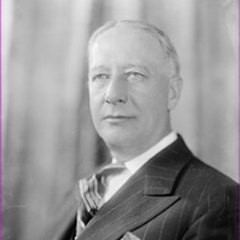
Al Smith becomes the first Catholic major-party nominee for president, and loses amid anti-Catholic attacks.
Alfred E. Smith, the popular governor of New York and the son of immigrants, won the Democratic nomination. He faced claims that a Catholic president would take orders from the pope, along with opposition to his stance against Prohibition. He lost decisively to Herbert Hoover, and more than thirty years passed before another Catholic was nominated.
1933
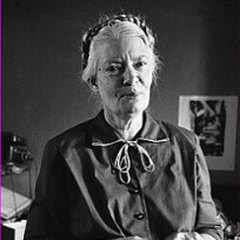
Dorothy Day and Peter Maurin launch the Catholic Worker movement.
Dorothy Day, a journalist and convert, and Peter Maurin, a French-born thinker, began selling The Catholic Worker newspaper for a penny on May Day in New York. They opened houses of hospitality to feed and shelter the poor and championed pacifism and workers' rights. Catholic Worker houses still operate today, and the Church has opened Day's cause for sainthood.
1946St. Frances Cabrini canonized 1946
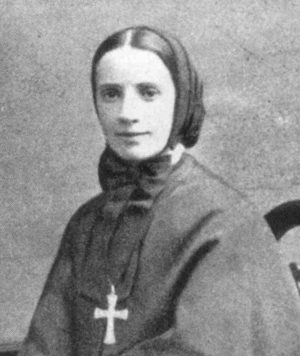
Frances Cabrini, who served Italian immigrants, becomes the first U.S. citizen canonized.
Born in Italy, Frances Xavier Cabrini founded the Missionary Sisters of the Sacred Heart and was sent by Pope Leo XIII to serve Italian immigrants in New York. She and her sisters built schools, orphanages and hospitals across the Americas, and she became a naturalized U.S. citizen. Pope Pius XII canonized her and later named her patron of immigrants.
1960
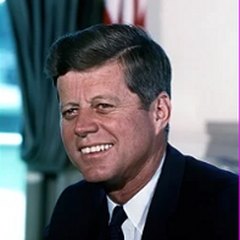
John F. Kennedy is elected the first Catholic president.
Kennedy faced the same questions about papal influence that had dogged Al Smith. In a famous speech to Protestant ministers in Houston, he declared his belief in the absolute separation of church and state. His narrow victory over Richard Nixon was widely seen as a sign that Catholics had moved into the mainstream of American life.
1962
Second Vatican Council opens. By 1964 Mass is said in English, and American John Courtney Murray shapes its 1965 declaration on religious liberty.
Pope John XXIII opened the council to renew the Church and engage the modern world. Its reforms allowed the vernacular in the liturgy, and many American parishes first celebrated parts of the Mass in English in late 1964. The Jesuit theologian John Courtney Murray helped shape Dignitatis Humanae, which affirmed that every person has a right to religious freedom.
Change and challenge · 1965 to today
1979
Pope John Paul II makes his first U.S. visit, drawing vast crowds.
The Polish pope traveled through Boston, New York, Philadelphia, Des Moines, Chicago and Washington, and addressed the United Nations. His Masses drew huge crowds, including a gathering on the National Mall and a visit to a farm community in Iowa. He was only the second pope to visit the United States, after Paul VI's brief trip in 1965.
2002
Abuse crisis breaks open after Boston reporting. U.S. bishops adopt the Dallas Charter on child protection.
The Boston Globe's Spotlight team revealed that church leaders had moved abusive priests between parishes for years. Cardinal Bernard Law resigned later that year as similar revelations spread nationwide. Meeting in Dallas, the bishops adopted the Charter for the Protection of Children and Young People, promising to remove abusers from ministry, report allegations and conduct background checks and audits.
2015
Pope Francis addresses Congress, the first pope to do so, and canonizes Junípero Serra.
Speaking to a joint meeting of Congress, Pope Francis held up Abraham Lincoln, Martin Luther King Jr., Dorothy Day and Thomas Merton as models. A day earlier in Washington, he canonized Junípero Serra in the first canonization held on American soil. The decision was welcomed by many but criticized by some Native Americans because of the mission system's harm.
2021
Joe Biden becomes the second Catholic president.
Joe Biden, raised in an Irish Catholic family in Pennsylvania and Delaware, defeated Donald Trump in the 2020 election and took office in January 2021. He often spoke of his faith and attended Mass regularly. His support for legal abortion, however, sparked sharp debate among U.S. bishops about Catholic politicians and receiving Communion.
2025
Pope Leo XIV, Chicago-born Robert Prevost, is elected the first pope from the United States.
Robert Prevost, an Augustinian priest, spent many years as a missionary in Peru, where he later served as bishop of Chiclayo and became a Peruvian citizen. Pope Francis brought him to Rome to lead the office that helps choose bishops worldwide. After Francis's death, the cardinals elected him, and he chose the name Leo, recalling Leo XIII's teaching on social justice.
Today roughly one in five Americans is Catholic, and a growing share of them are Hispanic. Dates are by year; some events span several years.