c. 35 to 2017
Catholic Charity
Hospitals, orphanages and works of mercy, from the first deacons to Mother Teresa.
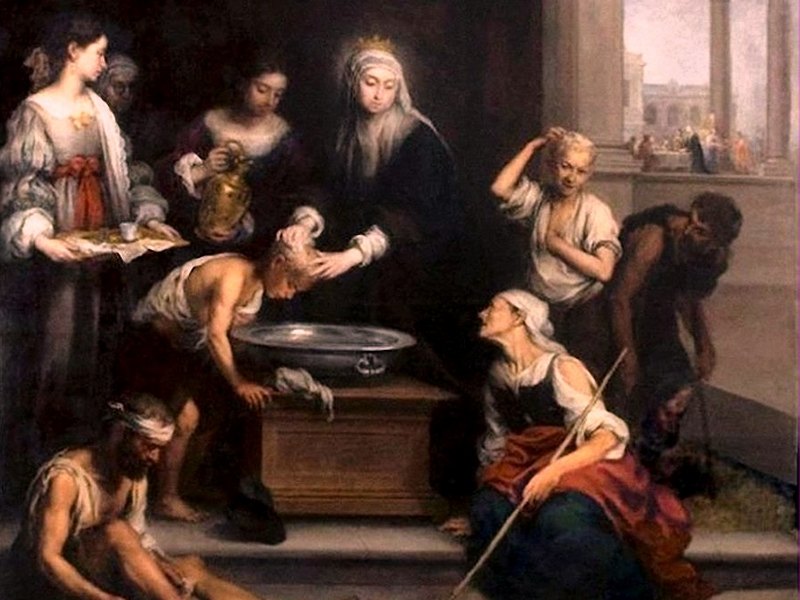
Jesus told his followers that whatever they did for the least of his brothers, they did for him. From the beginning, Christians cared for widows, orphans, the sick and prisoners, and they built many of the world's first hospitals. This timeline follows that work of mercy through the centuries.
The early Church · c. 35 to c. 390
c. 35The apostles choose seven deacons to care for widows in Jerusalem.
The Acts of the Apostles (chapter 6) tells how the first Christians in Jerusalem shared their goods and fed their widows every day. Greek-speaking believers complained that their widows were being overlooked. So the Twelve asked the community to choose seven men 'filled with the Spirit and wisdom' to serve at table, and they laid hands on them in prayer. The seven were St. Stephen, St. Philip, Prochorus, Nicanor, Timon, Parmenas and Nicolaus. Stephen soon became the first Christian martyr. Their office of service grew into the order of deacons (from the Greek diakonia, service), still charged with care for the poor.
258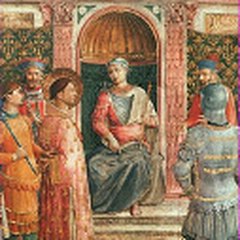
St. Lawrence, a deacon of Rome, presents the poor as the treasures of the Church.
In 258 the Emperor Valerian ordered Christian clergy put to death. Pope St. Sixtus II was killed on August 6, and Lawrence, one of his seven deacons, was arrested soon after. As deacon he kept the Church's funds and distributed them to the poor. St. Ambrose tells the story that when the authorities demanded the Church's treasures, Lawrence brought in the poor, the sick and the widows and said that these were its riches. He was martyred on August 10, by tradition roasted on a gridiron. He became one of the most loved saints of Rome, and the basilica of San Lorenzo stands over his tomb.
c. 369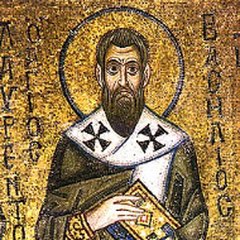
St. Basil the Great builds a city of care outside Caesarea.
When famine struck Cappadocia, in what is now central Turkey, in the late 360s, Basil, who had already given his inheritance to the poor, organized food for the hungry. Soon after, around 369 to 372, he began a great complex just outside Caesarea. It had a hospital, a hostel for travelers, a home for the poor and the old, and wards for people with leprosy, whom Basil cared for and even greeted with a kiss. Doctors, nurses and craftsmen worked there. His friend St. Gregory of Nazianzus called it a 'new city.' Basil became bishop in 370 and died in 379. His foundation, named the Basiliad after him, is often called one of the first true hospitals.
c. 390St. Fabiola opens a public hospital in Rome.
Fabiola came from one of Rome's great noble families. After an unhappy first marriage she divorced and remarried, which the Church did not permit. When her second husband died, she did public penance at the Lateran basilica before the whole city, then gave her fortune to the poor. Around 390 she founded a hospital in Rome. St. Jerome says she was the first to found one, and it is often called the first public hospital in the West. In his letter in her memory, he describes her carrying the sick in from the streets and dressing wounds others could not bear to look at. She died around 399.
The Middle Ages · 1198 to 1228
1198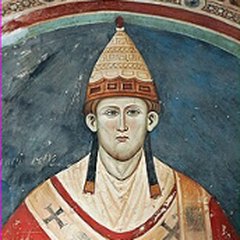
Innocent III approves the Trinitarians, founded to ransom Christian captives.
Many Christians, among them soldiers, sailors and merchants, were held as captives in North Africa and Muslim Spain. St. John of Matha, a French priest, founded the Order of the Most Holy Trinity to buy their freedom, and Innocent III approved its rule on December 17, 1198. The same pope founded the hospital of Santo Spirito in Sassia near St. Peter's and entrusted it to Guy of Montpellier's Order of the Holy Spirit. The hospital also took in abandoned babies. Hundreds of Holy Spirit hospitals followed its model across Europe. Santo Spirito still serves as a hospital today.
1218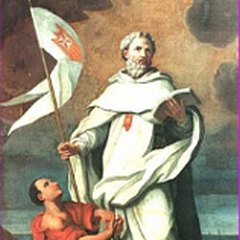
St. Peter Nolasco founds the Mercedarians in Barcelona.
Peter Nolasco, a layman living in Barcelona, spent his money ransoming Christian captives held by the Moors. On August 10, 1218, by the traditional date, he founded the Order of Our Lady of Mercy, or Mercedarians, with the support of King James I of Aragon and his advisor St. Raymond of Peñafort. Pope Gregory IX approved the order in 1235. Its members took a special fourth vow: to stay behind as a hostage in place of a captive whose faith was in danger, if no other ransom could be found. The Mercedarians freed many prisoners and still work today with prisoners and people in modern slavery.
1228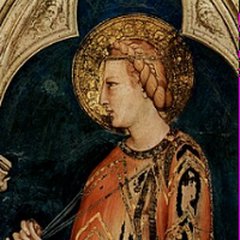
St. Elizabeth of Hungary builds a hospital at Marburg.
Elizabeth was born in 1207, a daughter of King Andrew II of Hungary. At fourteen she married Louis IV, landgrave (ruler) of Thuringia in Germany, and lived at the Wartburg castle. Louis died on crusade in 1227, leaving her a widow at twenty with three children. She joined the Franciscan Third Order, a way of life for lay people, and in 1228 built a hospital at Marburg, where she nursed the sick herself. She died on November 17, 1231, at twenty-four. Pope Gregory IX canonized her in 1235, and the church built over her tomb in Marburg is one of Germany's first Gothic buildings.
Saints of the sick and poor · 1539 to 1633
1539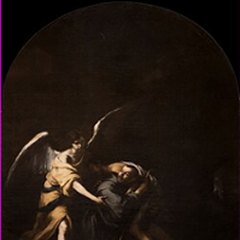
St. John of God opens a hospital in Granada.
John, born in Portugal in 1495, was a shepherd, a soldier and a bookseller before settling in Granada, Spain. In 1537 a sermon by St. John of Ávila shook him so badly that he was locked in the city's hospital as a madman. Seeing how the mentally ill were beaten there, he resolved to serve the sick differently. In 1539 he rented a house and filled it with the poor and sick. He walked the streets with a basket, crying, 'Do good to yourselves, brothers.' He died in 1550. In Italy his Hospitaller Brothers are still called the Fatebenefratelli, from his cry, and they serve today in more than forty countries.
1586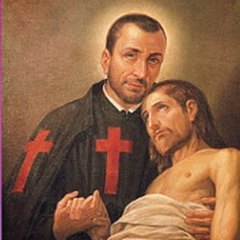
St. Camillus de Lellis founds the Ministers of the Sick, with a red cross on their habits.
Camillus was born in 1550 in central Italy. He was a mercenary soldier and a reckless gambler until his conversion in 1575. A wound in his leg brought him to the San Giacomo hospital in Rome, where he saw how badly patients were treated. He became a priest and gathered men to nurse the sick with real tenderness. In 1586 Pope Sixtus V approved his community and gave it the red cross, centuries before the Red Cross organization. His brothers took a vow to serve the sick even in times of plague, and in 1595 some went with papal troops to Hungary to care for the wounded. He died in 1614 and was canonized in 1746.
1633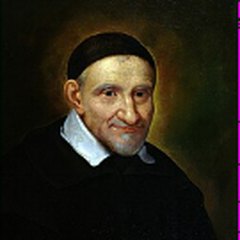
St. Vincent de Paul and St. Louise de Marillac found the Daughters of Charity.
Vincent de Paul, a French priest, had already organized wealthy laywomen into Confraternities of Charity to help the poor. But many ladies could not do the hard work themselves. In 1633 Louise de Marillac, a widow, took several country girls into her home in Paris to train them, and on November 29 the Daughters of Charity began. At a time when religious sisters lived behind convent walls, Vincent told them their convent would be the houses of the sick and their cloister the streets of the city. They nursed in hospitals, took in abandoned babies and taught poor children.
Vincent also sent food and money to regions ruined by the Thirty Years' War and to Paris during the Fronde, a civil war. Louise died in March 1660, and Vincent followed that September. He was canonized in 1737 and she in 1934. The Daughters of Charity remain one of the largest communities of women religious in the world.
The modern age · 1809 to 2017
1809St. Elizabeth Ann Seton founds the Sisters of Charity in Emmitsburg, Maryland.
Elizabeth Bayley was born in New York City in 1774 and raised Episcopalian. She married William Seton, but his business failed, and he died of tuberculosis in Italy in 1803. Moved by the faith of Catholic friends there, she became a Catholic in 1805. In 1809 she and a few companions began a religious community at Emmitsburg, and in 1810 opened St. Joseph's school, where poor girls could study for free. It is often seen as a seed of America's Catholic school system. She died in 1821, and in 1975 Pope St. Paul VI made her the first saint born in the United States. See the America timeline.
1833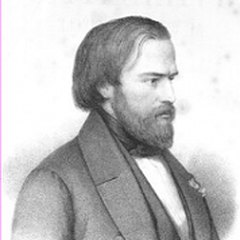
Frédéric Ozanam founds the Society of St. Vincent de Paul in Paris at twenty.
Frédéric Ozanam was born in Milan in 1813 and studied law in Paris. At student debates, critics of the Church asked what Christians were actually doing for the poor. In the spring of 1833, by most accounts on April 23, his twentieth birthday, Ozanam and a few friends formed a 'Conference of Charity.' Blessed Rosalie Rendu, a Daughter of Charity, sent them to visit poor families in the Mouffetard slum, bringing food, firewood and friendship. They took St. Vincent de Paul as patron. Ozanam became a professor of literature at the Sorbonne and died in 1853, aged forty. St. John Paul II beatified him in Notre-Dame in 1997. The society now works in more than 150 countries.
1839St. Jeanne Jugan takes a blind old woman into her own bed.
Jeanne Jugan was born in 1792 in Cancale, a fishing village in Brittany, France. In the winter of 1839, at Saint-Servan, she carried home Anne Chauvin, a blind and partly paralyzed old widow, and gave her own bed. Other women joined her, and she went door to door begging food and money for her old people. A priest who advised the group later took control and pushed her aside, and she spent her last twenty-seven years quietly at the motherhouse. She died in 1879. Benedict XVI canonized her in 2009, and her Little Sisters of the Poor now serve in about thirty countries.
1873St. Damien of Molokai goes to serve the leprosy colony in Hawaii.
Jozef De Veuster was born in Tremelo, Belgium, in 1840 and took the name Damien in the Congregation of the Sacred Hearts. He came to Hawaii in 1864 in place of his sick brother and was ordained in Honolulu. Hawaii's government was exiling people with leprosy, now called Hansen's disease, to Kalaupapa, an isolated peninsula on Molokai. Damien volunteered and arrived in May 1873. He was pastor, doctor, carpenter and gravedigger, and he built homes, a church and an orphanage. By late 1884 he found signs of the disease in himself. He died on April 15, 1889, aged forty-nine, and was canonized in 2009, the same day as St. Jeanne Jugan.
1910Catholic charities across the United States form a national conference.
Catholic charity in the United States began long before 1910. Ursuline sisters had reached New Orleans in 1727 and soon took in orphans, and by 1900 many orphanages, hospitals and parish societies worked on their own. In 1910 about four hundred people met at the Catholic University of America in Washington, D.C., to form the National Conference of Catholic Charities. Msgr. William J. Kerby led it in its early years. The conference trained social workers and spoke up for the poor in public policy. It took the name Catholic Charities USA in 1986, and its network of about 170 local agencies now serves millions of people every year.
1933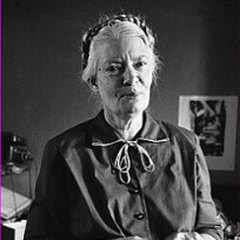
Dorothy Day and Peter Maurin start the Catholic Worker on May 1.
Dorothy Day was a journalist and former radical who had become a Catholic in 1927. Peter Maurin was a French immigrant and lay thinker. In the depth of the Great Depression they met and launched a newspaper. On May 1, 1933, they handed out 2,500 copies of the first Catholic Worker in New York's Union Square, at a penny a copy. Within a few years it printed well over 100,000 copies. Soon they opened houses of hospitality where the hungry and homeless were fed and housed. Day died in 1980, and her cause for sainthood is open. The paper still costs a penny. See the social teaching timeline.
1943The U.S. bishops found Catholic Relief Services to help victims of World War II.
In 1943 the U.S. bishops founded War Relief Services to aid refugees and displaced people in Europe, North Africa and beyond. Catholics across the country gave money, clothing and food, and after the war the agency helped rebuild ruined countries and resettle refugees. It took the name Catholic Relief Services in 1955 and soon broadened its work to the poor of the developing world. Based in Baltimore, CRS responds to earthquakes, wars and famines, and also runs long-term programs in farming, clean water, health and education. It serves people in need regardless of their religion, and it now works in more than a hundred countries.
1950Mother Teresa's Missionaries of Charity are approved on October 7.
Agnes Gonxha Bojaxhiu was born in 1910 in Skopje to an Albanian family. She joined the Loreto Sisters and taught for years at a girls' school in Calcutta, India. On September 10, 1946, on a train to Darjeeling, she felt Christ call her to serve the poorest of the poor. In 1948 she left the convent, put on a white sari with a blue border and began working in the slums. On October 7, 1950, the Archdiocese of Calcutta approved her Missionaries of Charity.
In 1952 she opened Nirmal Hriday, a home where the dying could end their lives in dignity and love. Her sisters added homes for lepers, orphans and the abandoned, and spread to well over a hundred countries. She received the Nobel Peace Prize in 1979, died on September 5, 1997, and was canonized by Pope Francis on September 4, 2016.
1951Catholic charities from many countries unite in Rome.
National Catholic charities had grown up country by country, starting with Caritas in Germany in 1897. After World War II, with Europe full of refugees and need, the Vatican encouraged them to work together. In December 1951 thirteen national organizations held a founding assembly in Rome, a plan backed by Giovanni Battista Montini, the future Pope St. Paul VI. The confederation took the name Caritas Internationalis in the 1950s. Today it joins more than 160 national Caritas groups, which provide disaster relief, development aid and help for migrants all over the world. In 2004 St. John Paul II gave it formal standing in Church law.
2005Benedict XVI's first encyclical, Deus Caritas Est, teaches that charity belongs to the Church's very nature.
Deus Caritas Est ("God Is Love") was the first encyclical of Benedict XVI, signed on Christmas Day 2005 and released in January 2006. Its first part is a meditation on love, showing how human desire and self-giving love are joined in God's love for us. The second part turns to the Church's work of charity. Benedict taught that the Church has three tasks that belong together: proclaiming the word of God, celebrating the sacraments and serving others in charity. Care for the poor, he wrote, is not a kind of welfare work that could be left to others. It is part of the Church's very nature.
2017The first World Day of the Poor is held in November.
Pope Francis announced the World Day of the Poor in November 2016, as the Jubilee Year of Mercy came to an end. It is kept each year on the Sunday before the feast of Christ the King. The first, on November 19, 2017, took its theme from the First Letter of St. John: let us love not in word but in deed. After Mass in St. Peter's, Francis shared lunch with some 1,500 poor people in the Vatican. Pope Leo XIV has carried on the day, and in October 2025 he published Dilexi Te, an apostolic exhortation on love for the poor that Francis had begun.