c. 30 to 2025
Eucharistic Devotion
How Catholics have believed in, defended and adored Christ really present in the Eucharist.
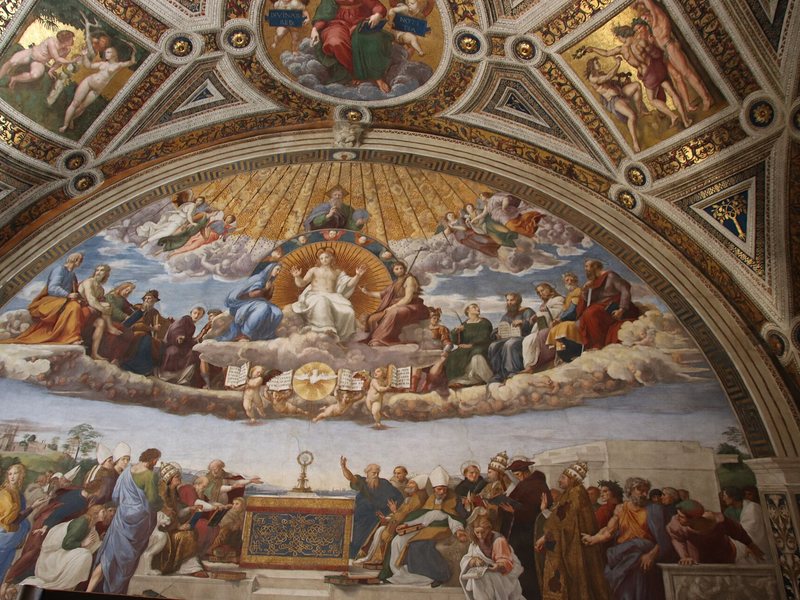
At the heart of Catholic faith is the belief that in the Eucharist the bread and wine truly become the Body and Blood of Christ. The Church calls this the Real Presence. From the first Christians, who carried the sacrament to the sick and the imprisoned, to the medieval feast of Corpus Christi and today's adoration chapels, believers have wanted not only to receive Christ but to kneel before him. This timeline follows that teaching and devotion. For the history of the Mass itself, see The Mass Through History.
The early Church · c. 30 to 750
c. 30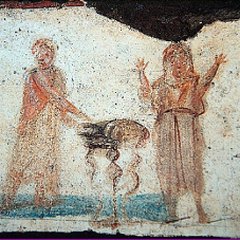
At the Last Supper Jesus takes bread and says, This is my body.
In John's Gospel, Jesus also calls himself the bread of life and says his flesh is true food, words that drove some followers away. Around the year 55, St. Paul warned the Corinthians that anyone who receives unworthily sins against the body and blood of the Lord.
c. 107St. Ignatius of Antioch, on his way to martyrdom, calls the Eucharist the flesh of our Savior.
Writing to the Christians of Smyrna, the bishop warned against teachers who stayed away from the Eucharist because they denied this. It is one of the earliest witnesses outside the Bible to belief in the Real Presence.
c. 155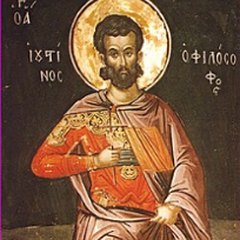
St. Justin Martyr explains to the emperor that Christians do not receive common bread and drink.
His First Apology describes the Sunday gathering in Rome and says deacons carried the Eucharist to those who were absent. He taught that the food becomes the flesh and blood of the incarnate Jesus.
c. 258St. Tarcisius, according to tradition, dies in Rome rather than hand the sacrament over to a mob.
Pope St. Damasus later wrote a verse epitaph for him. Later legend made him a boy acolyte carrying Communion to imprisoned Christians, and he became a patron of altar servers.
325The Council of Nicaea rules that no dying person may be denied Viaticum, Communion for the journey.
From early times the Eucharist was kept after Mass so it could be taken to the sick. This reserved sacrament, later kept in a tabernacle, is the root of all later prayer before the Blessed Sacrament.
c. 750At Lanciano in Italy, tradition holds that a doubting monk saw the host and wine turn to flesh and blood.
The relics are still displayed in Lanciano. A laboratory study in the 1970s reported that they were human heart tissue and blood. Like other reported Eucharistic miracles, it is a matter of devotion, not of faith the Church requires.
Debate and the great feast · c. 831 to 1264
c. 831 to 843Two monks of Corbie in France disagree in writing, about a decade apart, over how Christ is present in the Eucharist.
Paschasius Radbertus stressed that it is the same body born of Mary. His fellow monk Ratramnus emphasized the sacrament as a figure or sign. It was the first major written debate on the question.
1079Berengar of Tours signs a profession of faith that the bread and wine are substantially changed.
Berengar, a teacher at Tours, argued that the bread remains bread. He was condemned at several synods and recanted in 1059, then again under Pope St. Gregory VII in 1079. The controversy pushed theologians to explain the change more precisely.
c. 1200The elevation of the host spreads from Paris, as priests lift the consecrated bread for all to see.
The Bishop of Paris directed priests to raise the host only after the words of consecration. Seeing the host became central to medieval devotion, and bells were rung so people could look up.
1215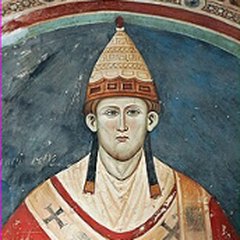
The Fourth Lateran Council uses the word transubstantiation for the change of bread and wine.
Under Pope Innocent III, the council taught that the substance of the bread and wine is changed into Christ's Body and Blood, while their appearances remain. It also required Catholics to receive Communion at least once a year, at Easter.
1246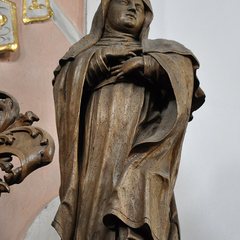
Corpus Christi is first celebrated in Liège, after years of pleading by St. Juliana, an Augustinian nun.
From about 1208 Juliana saw in visions a bright moon with one dark spot, which she understood as a feast missing from the Church's year. The Bishop of Liège finally held the feast in his diocese in 1246.
1263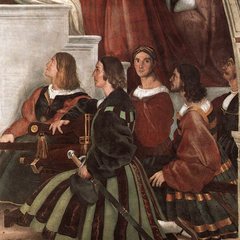
At Bolsena, tradition says blood flowed from the host onto the altar cloth as a doubting priest said Mass.
The stained corporal was taken to nearby Orvieto, where the pope was staying, and its great cathedral was later built to house it. Raphael painted the scene in the Vatican. Historians debate how closely the story is tied to the feast that followed.
1264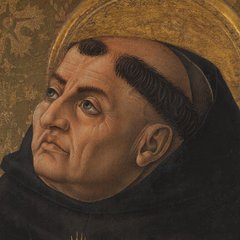
Pope Urban IV makes Corpus Christi a feast for the whole Church, with hymns by St. Thomas Aquinas.
Urban had been archdeacon in Liège and knew Juliana's cause. Aquinas wrote the feast's Mass and Office, including Pange lingua, whose last verses are the Tantum ergo, and Panis angelicus. The feast was firmly established in 1317, and processions through the streets soon spread across Europe.
Adoration and renewal · 1537 to 1910
1537The Forty Hours devotion begins in Milan, with the Blessed Sacrament exposed for prayer around the clock.
The forty hours recall the time Christ lay in the tomb. St. Philip Neri brought it to Rome, and Pope Clement VIII organized it there in 1592 so that it passed from church to church without a break.
1551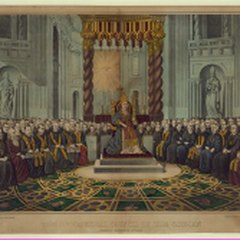
The Council of Trent reaffirms the Real Presence and transubstantiation against the Protestant reformers.
Luther kept a belief in Christ's presence but rejected transubstantiation, and Zwingli saw the sacrament as a memorial. Trent taught that Christ is truly, really and substantially present, and that the sacrament deserves the worship due to God.
1856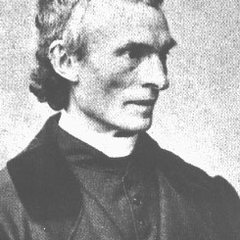
St. Peter Julian Eymard founds the Congregation of the Blessed Sacrament, devoted to perpetual adoration.
Communities of perpetual adoration, where someone is always praying before the sacrament, had grown since the 1600s. Eymard, a French priest, wanted adoration to lead people to Communion and to service. He was canonized in 1962.
1881The first International Eucharistic Congress meets in Lille, France.
It was inspired by a laywoman, Émilie Tamisier, who had organized pilgrimages to Eucharistic shrines. Congresses have met around the world ever since, including Chicago in 1926 and Quito, Ecuador, in 2024.
1905 and 1910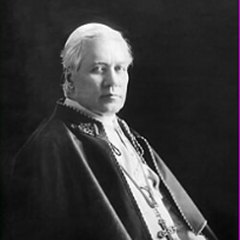
Pope St. Pius X urges frequent, even daily, Communion and opens it to children at about age seven.
For centuries many Catholics received only a few times a year, out of fear of unworthiness. Pius X taught that Communion is medicine, not a reward. His 1910 decree allowed children to receive once they could tell the Eucharist from ordinary bread.
Our own times · 1965 to 2025
1965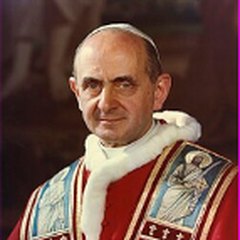
Pope St. Paul VI defends transubstantiation and adoration in his encyclical Mysterium fidei.
Published during the Second Vatican Council, it answered theologians who wanted to describe the change only as a change of meaning. Paul VI insisted the change is real and encouraged visits to the Blessed Sacrament.
2003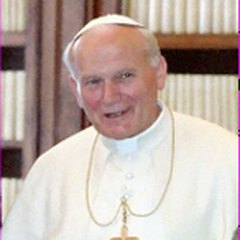
Pope St. John Paul II writes Ecclesia de Eucharistia, saying the Church draws her life from the Eucharist.
He had begun perpetual adoration in a chapel of St. Peter's Basilica in 1981 and called a Year of the Eucharist in 2004 and 2005. Adoration chapels multiplied in parishes around the world.
2022 to 2024The US bishops launch a National Eucharistic Revival, ending in a congress in Indianapolis.
A 2019 Pew survey found that only about a third of US Catholics believed the bread and wine become Christ's Body and Blood. After walking pilgrimages crossed the country from four directions, over 50,000 people met in Indianapolis from July 17 to 21, 2024, the first such national congress since 1941.
2025St. Carlo Acutis, an Italian teenager who catalogued Eucharistic miracles online, is canonized.
Carlo called the Eucharist his highway to heaven and built a website on reported miracles before dying of leukemia in 2006, aged 15. Pope Leo XIV declared him a saint on September 7, 2025, together with Pier Giorgio Frassati.