634 to 1683
The Crusades
Armed pilgrimages to defend Eastern Christians and free the Holy Land, and the long fight to keep Christendom free.
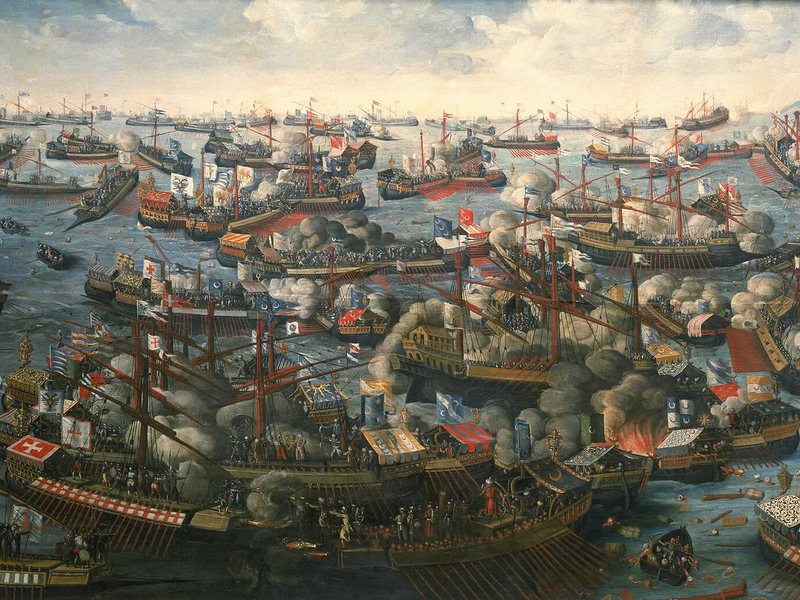
The Crusades are often told as unprovoked wars of greed. The real story begins earlier, with four and a half centuries of conquest that took Christian Syria, Egypt, North Africa and Spain, and with a desperate appeal from Constantinople. Crusaders went as vowed pilgrims doing penance; most lost money and many never came home. Beside them stood orders that nursed the sick and ransomed captives, and saints like Bernard, Francis and Louis.
Conquest and appeal · 634 to 1095
634 to 711Arab armies conquer the Christian heartlands of Syria, Palestine, Egypt, North Africa and Spain.
Within a few years of Muhammad's death in 632, Arab armies burst out of Arabia into lands that had been Christian for centuries. Damascus fell in 635, and Jerusalem surrendered to Caliph Umar in the late 630s. Alexandria, the city of St. Athanasius, fell in the 640s, Carthage, home of St. Cyprian, in 698, and Spain was invaded in 711. Sicily followed in the 800s, and in 846 raiders plundered St. Peter's in Rome. Christians who stayed became dhimmis, protected but subject people who paid a special tax and lived under legal limits. In 1009 the caliph al-Hakim had the Church of the Holy Sepulchre, built over Christ's tomb, torn down.
1071The Seljuk Turks crush the Byzantine army at Manzikert, and Asia Minor lies open.
The Seljuks were Turkish warriors from Central Asia who had taken over Persia and Baghdad. At Manzikert, in eastern Anatolia, Emperor Romanos IV Diogenes was captured by Sultan Alp Arslan on August 26, 1071, and the Byzantine Empire fell into civil war. Turkish bands poured west. Within a few years they held most of Asia Minor, the old Christian heartland of St. Paul's journeys, and by about 1081 they had made Nicaea, where the Creed was written in 325, a sultan's capital. Jerusalem passed into Turkish hands in the 1070s, and returning pilgrims told of danger, robbery and violence on the road to the holy places.
1095Emperor Alexius I sends envoys to Pope Urban II at Piacenza in March, begging for help against the Turks.
Alexius I Komnenos had taken the throne in 1081 and spent years fighting to save what was left of his empire. He needed Western soldiers. His envoys reached Urban II at the Council of Piacenza in northern Italy and described the suffering of Eastern Christians under the Turks. Urban, born Odo in France, had been a monk and prior at the great abbey of Cluny. Rome and Constantinople had split in 1054, when legates of the pope and the patriarch excommunicated each other, but Urban had already reached out to Alexius. He saw a chance to aid fellow Christians and to heal the rift between East and West.
1095
Urban II preaches at Clermont on November 27, and the crowd answers with the cry God wills it.
The Council of Clermont met in November 1095. On November 27, in a field outside the French town because no church could hold the crowd, the pope called the knights of Europe to free the Eastern Christians and the holy places, and to stop fighting one another. The council decreed that anyone who went out of devotion alone, not for honor or money, could count the journey as full penance for his sins. Bishop Adhemar of Le Puy was among the first to take the vow, and Urban named him papal legate, the pope's own representative on the march. Those who vowed to go sewed a cloth cross on their clothes; they were called crucesignati, those signed with the cross, the root of the later word crusade.
Urban set the departure for August 15, 1096, the feast of the Assumption. Urban then spent months touring France to preach the cause. No exact text of his speech survives; five chroniclers wrote versions later. Crusaders took a vow like pilgrims, and the Church protected their families and property while they were away.
To Jerusalem · 1096 to 1192
1096Rogue bands under Count Emicho attack the Jews of the Rhineland, against the Church's teaching.
Before the main armies left, loosely organized bands set out on their own. In the Rhineland some, led by Count Emicho of Flonheim, turned on Jewish communities in May and June 1096. Nothing in Urban's call had mentioned Jews, and earlier popes, such as Alexander II in the 1060s, had praised bishops for protecting them. At Speyer, Worms and Mainz, mobs offered Jews baptism or death. Bishop John of Speyer sheltered Jews in his castle and punished attackers, and Archbishop Ruthard of Mainz tried to protect them in his palace but was overwhelmed. Emicho's band never reached the East; King Coloman of Hungary defeated it and it fell apart.
1099Jerusalem is taken on July 15 after a three-year march, and Godfrey of Bouillon becomes its first ruler.
The main armies, led by nobles such as Godfrey of Bouillon, Raymond of Toulouse and Bohemond of Taranto, met at Constantinople in 1096 and 1097. They took Nicaea in June 1097, crossed Asia Minor, and endured an eight-month siege of Antioch, which fell in June 1098. Only a fraction of those who set out reached Jerusalem. Before the final assault the army walked barefoot in procession around the walls. As was usual when a medieval city was stormed, many inhabitants were killed; chroniclers gave huge figures, but modern estimates run from about 3,000 to 10,000. Godfrey reportedly refused a king's crown where Christ had worn thorns, taking the title Advocate of the Holy Sepulchre. Urban II died on July 29, 1099, before the news reached Rome.
1113 to 1129
The military orders are born: the Hospitallers nurse pilgrims and the Templars guard the roads.
Military orders were communities of men who took religious vows like monks but also bore arms. Pope Paschal II approved Blessed Gerard's hospital in Jerusalem on February 15, 1113; its brothers called the sick their lords, and a pilgrim in the 1160s was told it cared for some 2,000 patients. The Templars, founded around 1120 by Hugh de Payens to protect pilgrims, received a rule at the Council of Troyes in 1129 with the help of St. Bernard. The Templars were suppressed by Pope Clement V in 1312 under heavy pressure from King Philip IV of France. The Hospitallers live on as the Order of Malta, which today runs medical and charitable works in more than 120 countries (see Religious orders).
1146
St. Bernard of Clairvaux preaches the Second Crusade after the fall of Edessa, and stops a monk stirring up hatred of Jews.
Edessa, the first crusader state, fell to Zengi, the Turkish ruler of Mosul, on Christmas Eve 1144. Pope Bl. Eugene III, a former monk of Clairvaux, called a new crusade and asked his old abbot to preach it. Bernard preached at Vézelay on March 31, 1146, and King Louis VII of France took the cross; later Conrad III of Germany joined. When Radulf, a Cistercian monk, began urging attacks on Jews in the Rhineland, Bernard wrote that Jews must not be persecuted or killed, then traveled to Germany and sent Radulf back to his monastery. A Jewish chronicler, Ephraim of Bonn, credited him with saving many lives. The crusade failed before Damascus in 1148.
1187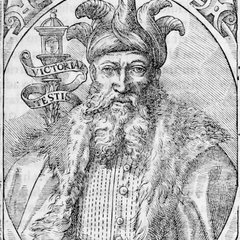
Saladin destroys the crusader army at Hattin on July 4 and takes Jerusalem in October.
Saladin, a Kurdish general who had united Egypt and Syria, drew the army of the Kingdom of Jerusalem out to the waterless hills above the Sea of Galilee. At the Horns of Hattin it was destroyed, King Guy was captured, the relic of the True Cross carried into battle was lost, and Saladin had about 200 captured Templars and Hospitallers put to death. Jerusalem, defended by Balian of Ibelin, surrendered on October 2. Saladin let many residents buy their freedom, but thousands who could not pay were sold into slavery. Pope Gregory VIII answered with the bull Audita tremendi, calling Christians to repentance and to a new crusade.
1192The Third Crusade ends with the Treaty of Jaffa, which opens Jerusalem to Christian pilgrims.
Three great kings took the cross. Frederick Barbarossa, the elderly emperor, drowned crossing a river in Asia Minor on June 10, 1190, and most of his army went home. Richard the Lionheart of England and Philip II of France retook the port of Acre in July 1191 after a siege of nearly two years. Philip soon sailed home, but Richard defeated Saladin at Arsuf and twice marched within about a dozen miles of Jerusalem. He judged he could not hold it and turned back. His treaty with Saladin, signed on September 2, 1192, left the coast from Tyre to Jaffa to the Christians and let unarmed pilgrims visit the holy places.
Captives, saints and kings · 1198 to 1291
1198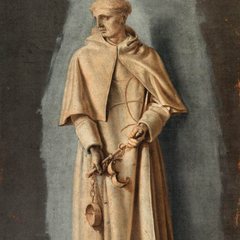
St. John of Matha founds the Trinitarians to ransom Christians held captive by Muslims.
John of Matha was a French priest who had studied theology in Paris. With the hermit St. Felix of Valois he founded the Order of the Most Holy Trinity and of Captives. Pope Innocent III approved their rule on December 17, 1198. The friars set aside a third of their income to buy back prisoners held in North Africa and Muslim Spain, and they often traveled to the slave markets themselves to bargain for them. In 1580 the Trinitarian friar Juan Gil ransomed the writer Miguel de Cervantes from Algiers after five years as a captive. Cervantes, who later wrote Don Quixote, had been taken by pirates after fighting at Lepanto.
1204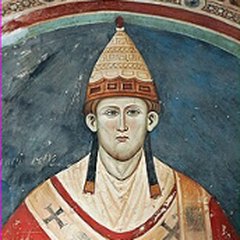
The Fourth Crusade is diverted against its pope's orders and sacks Constantinople in April.
Innocent III called the crusade in 1198 and forbade the crusaders to attack Christians. The leaders contracted with Venice for a fleet, but far fewer men came than planned and they could not pay. To settle the debt they helped Venice take the Christian city of Zara in 1202, and Innocent excommunicated them. Then a Byzantine prince, Alexios Angelos, promised money and church reunion if they restored his deposed father. The plan collapsed in murder and civil strife, and on April 12 and 13, 1204, the army stormed Constantinople and sacked it for three days. Innocent condemned it sharply, writing that the Greeks now saw in the Latins nothing but an example of perdition. The wound to East and West lasted centuries (see 2001 to 2004).
1212Las Navas de Tolosa: Spain's Christian kings defeat the Almohad caliph on July 16, turning the tide of the Reconquista, the long effort to win back Spain.
The Reconquista had begun around 722, when the Christian chieftain Pelayo defeated a Muslim force at Covadonga in the mountains of Asturias. By 1200 the Almohads, a North African dynasty, threatened to roll it back. Alfonso VIII of Castile led the armies of Castile, Aragon and Navarre against the caliph Muhammad al-Nasir in a campaign Innocent III had proclaimed a crusade, while Innocent ordered prayer and processions in Rome for victory. The battle in the Sierra Morena opened the south. St. Ferdinand III of Castile took Córdoba in 1236 and Seville in 1248. The last Muslim kingdom, Granada, surrendered to Ferdinand and Isabella on January 2, 1492.
1218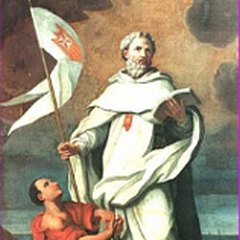
St. Peter Nolasco founds the Mercedarians in Barcelona, who vow to take a captive's place if needed.
Peter Nolasco was a layman, probably from southern France, who had spent his own fortune ransoming captives. Tradition says Our Lady appeared to him and asked him to found an order for the work. With the support of King James I of Aragon and the help of St. Raymond of Peñafort, the Order of Our Lady of Mercy began in Barcelona in 1218, and Pope Gregory IX approved it in 1235. Its members added a fourth vow to poverty, chastity and obedience: to give themselves as hostages, if needed, to free Christians in danger of losing their faith. The Mercedarians still exist today and work with prisoners and others in bondage.
1219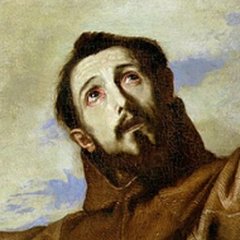
St. Francis of Assisi crosses the battle lines at Damietta to preach Christ to Sultan al-Kamil.
During the Fifth Crusade, while the crusader army besieged Damietta in Egypt, Francis walked into the Muslim camp with one companion, Brother Illuminato. He asked to see the sultan, al-Malik al-Kamil, a nephew of Saladin, and preached Christ to him. The sultan received him courteously, listened, and sent him back unharmed. Jacques de Vitry, a bishop with the crusaders, reported the meeting at the time. Francis's rule of 1221 later told friars going among Muslims to live peacefully first and to preach when it pleased God. Since 1342 Franciscans have kept the holy places as the Custody of the Holy Land. Pope Francis marked the 800th anniversary on his 2019 visit to Abu Dhabi.
1248 to 1270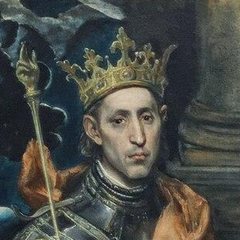
King St. Louis IX of France leads two crusades and dies near Tunis on August 25, 1270.
Louis took the cross in 1244, after Jerusalem was sacked by Khwarazmian raiders, and sailed in 1248. His army took Damietta in Egypt in 1249 but was defeated at Mansurah, where his brother Robert was killed. Captured in Egypt in 1250 and ransomed at enormous cost, Louis stayed four years to fortify Acre, Caesarea, Jaffa and Sidon. At home he built the Sainte-Chapelle in Paris to hold the Crown of Thorns. He was loved for his justice and care for the poor, often feeding beggars at his own table. On his second crusade he died of illness in camp near Tunis. Boniface VIII canonized him in 1297.
1291Acre falls to the Mamluk sultan on May 18, ending the crusader states in the Holy Land.
Sultan al-Ashraf Khalil brought a huge army and siege engines against Acre, the capital of what remained of the Kingdom of Jerusalem, in April 1291. After weeks of bombardment the walls were breached on May 18. Templars and Hospitallers fought to the end. The Templar Grand Master, William of Beaujeu, was killed, and the Templar fortress by the sea held out for ten more days. Tyre, Sidon and Beirut were abandoned within weeks. The Hospitallers moved on to Cyprus, then Rhodes in 1310, and later Malta, which they defended against a great Ottoman siege in 1565 under Jean de Valette.
Defending Christendom · 1453 to 1683
1453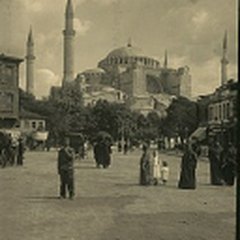
Constantinople falls to the Ottoman sultan Mehmed II on May 29, and Hagia Sophia becomes a mosque.
The Ottomans, another Turkish dynasty, had spread across Anatolia and the Balkans for a century. Mehmed II besieged Constantinople from early April 1453 with a vast army and giant cannon. Only a few thousand defenders, Greeks joined by Venetians, Genoese and the papal legate Cardinal Isidore, held the walls for nearly two months. The last emperor, Constantine XI, died fighting on the walls. After a thousand years as the greatest church in Christendom, Hagia Sophia became a mosque. The Ottomans now pressed on toward Central Europe and Italy. In 1480 they seized Otranto and killed some 800 men who would not renounce Christ; Pope Francis canonized them in 2013 (see Martyrs).
1456Belgrade holds against the Ottomans on July 22, as Pope Callixtus III orders church bells rung at noon for prayer.
Three years after taking Constantinople, Mehmed II besieged Belgrade, the gateway to Hungary. On June 29, 1456, Callixtus III ordered church bells rung at noon to call the faithful to pray for those fighting the Turks; the noon bell is still rung in many churches. John Hunyadi broke the Ottoman river blockade, and the elderly Franciscan St. John of Capistrano, about seventy years old, led thousands of peasant crusaders in the defense. On July 22 the Ottomans were routed and Mehmed was wounded. Both leaders died within months, Hunyadi of plague. To give thanks, Callixtus extended the feast of the Transfiguration, August 6, to the whole Church in 1457.
1571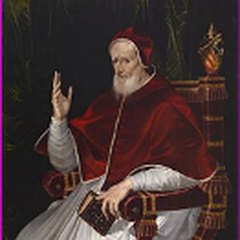
The Battle of Lepanto on October 7 breaks Ottoman sea power, as St. Pius V asks all Christendom to pray the Rosary.
In 1570 and 1571 the Ottomans conquered Venetian Cyprus, and their fleet threatened Italy. Pius V formed the Holy League of Spain, Venice and the Papal States under Don John of Austria, the 24-year-old half-brother of Philip II of Spain. More than 200 galleys on each side met in the Gulf of Patras off western Greece. The Ottoman admiral Ali Pasha was killed and most of his fleet was captured or sunk. Thousands of Christian galley slaves were freed. Among the wounded was the young Cervantes. Rosary confraternities had processed in Rome for victory, and the pope instituted a feast of Our Lady of Victory, which became Our Lady of the Rosary, kept on October 7.
1683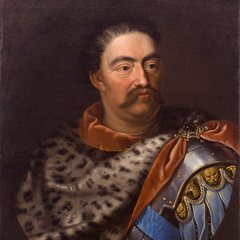
King John III Sobieski of Poland relieves Vienna on September 12 after a two-month Ottoman siege.
In July 1683 the grand vizier Kara Mustafa laid siege to Vienna, capital of the Holy Roman Empire, with a huge Ottoman army. Blessed Innocent XI had worked for years to build the alliance of Poland and the Empire, and funded it. On the morning of the battle the Capuchin friar Bl. Marco d'Aviano, the papal envoy, said Mass for the troops on the Kahlenberg hill above the city. That afternoon Sobieski led a great charge of cavalry, including the Polish winged hussars, and the Ottoman army fled. In thanksgiving Innocent extended the feast of the Holy Name of Mary to the whole Church. It is kept on September 12.
Memory and reassessment · 1977 to today
1977 to todayHistorians overturn the myths, showing crusaders as devout pilgrims who paid dearly to go.
For two centuries, writers of the Enlightenment and after had painted the crusades as wars of greed and fanaticism. Modern research told a different story. Jonathan Riley-Smith of Cambridge, whose What Were the Crusades? appeared in 1977, studied crusader families' charters and found many sold or mortgaged land to go, often at a heavy loss. A knight's journey could cost several years' income. Thomas Madden of Saint Louis University, Christopher Tyerman of Oxford and Rodney Stark, in God's Battalions (2009), brought this work to wide audiences. They showed crusaders as penitents moved by faith and by the call to defend fellow Christians. The picture of greedy younger sons seeking land does not fit the evidence.
2001 to 2004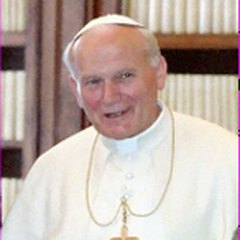
St. John Paul II expresses sorrow to the Orthodox for 1204 and returns relics taken from Constantinople.
On March 12, 2000, at the Jubilee Day of Pardon, the pope had asked God's forgiveness for the sins of the Church's members across history (see Jubilee years). In Athens on May 4, 2001, meeting Archbishop Christodoulos, he asked forgiveness for the sins of Catholics against the Orthodox, naming the sack of 1204 and the deep regret it caused Latin Christians. In 2004, the 800th anniversary, he spoke of it again to Patriarch Bartholomew of Constantinople. On November 27, 2004, he gave Bartholomew relics of Sts. Gregory Nazianzen and John Chrysostom, two great Fathers and archbishops of Constantinople, long kept in Rome (see St. John Paul II).