432 to 1969
Missions Worldwide
How the faith spread across Europe, Asia, Africa and the Americas.
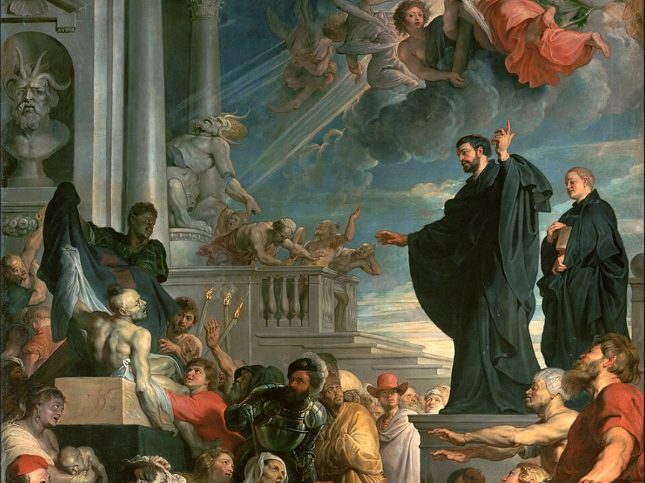
Jesus told his followers to "go and make disciples of all nations." Monks carried the faith to the peoples of Europe, Jesuits and Franciscans sailed to Asia and the Americas, and later missionaries crossed Africa. Today most of the world's Catholics live in Latin America, Africa and Asia.
Europe · 432 to 863
432St. Patrick begins his mission to Ireland, by traditional dating.
Patrick was a Romano-Briton who had been carried off to Ireland as a teenage slave, escaped, and later returned as a bishop to preach to the people who once held him captive. His own short writings, the Confession and a letter, survive. Monasteries and churches grew from his work, and Ireland later sent its own missionary monks across Europe.
597
St. Augustine of Canterbury, sent by Gregory the Great, arrives in England.
Pope Gregory the Great sent Augustine, a monk from his own monastery in Rome, with a band of companions to the Anglo-Saxons. They landed in Kent, where King Aethelberht's Frankish wife Bertha was already a Christian. The king was soon baptized, Augustine became the first Archbishop of Canterbury, and Canterbury has remained the mother church of England ever since.
863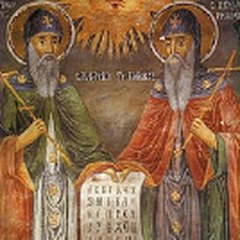
Sts. Cyril and Methodius begin their mission to the Slavs in Moravia.
Two Greek brothers from Thessalonica were sent by the Byzantine emperor after Prince Rastislav of Great Moravia asked for teachers who could instruct his people in their own tongue. They created the Glagolitic alphabet and translated the Scriptures and liturgy into Slavonic. Their work shaped the faith and literature of the Slavic world, and John Paul II named them co-patrons of Europe.
Asia and the Americas · 1542 to 1784
1542St. Francis Xavier reaches Goa, India. In 1549 he reaches Japan.
A founding companion of Ignatius of Loyola, Francis Xavier sailed east at the request of the king of Portugal. From Goa he preached along the Indian coast and in Southeast Asia before landing in Japan, where he planted the first Christian communities. He died in 1552 on an island off the coast of China, hoping to enter that country, and his body rests in Goa.
1583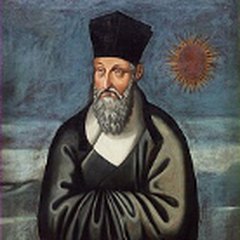
Matteo Ricci, an Italian Jesuit, settles in mainland China.
Ricci and his fellow Jesuit Michele Ruggieri first settled in Zhaoqing in southern China. Ricci mastered Chinese, studied the Confucian classics, and won respect among scholars with his maps, clocks and mathematics. He eventually reached Beijing and lived there until his death in 1610, and his approach of engaging Chinese culture shaped Catholic missions in Asia for generations.
1597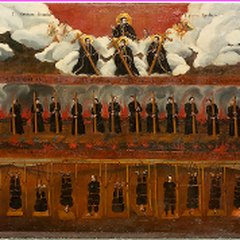
The 26 Martyrs of Japan are crucified at Nagasaki.
The ruler Toyotomi Hideyoshi, growing suspicious of foreign influence, ordered the arrests. The group included Spanish Franciscan friars, Japanese Jesuits such as Paul Miki, lay catechists and even young boys, who were marched to Nagasaki and crucified on a hill above the city. Pope Pius IX canonized them in 1862, and their courage foreshadowed centuries of hidden Christian faith in Japan.
1609Jesuit reductions, mission towns for the Guaraní, begin in Paraguay.
Jesuit missionaries gathered Guarani communities into self-governing towns, where people farmed, built churches, made music and were sheltered from slave raiders and forced labor. The reductions flourished for over a century in lands now in Paraguay, Argentina and Brazil. Their story ended after the Jesuits were expelled from Spanish territories in 1767, and ruins of several towns are now World Heritage Sites.
1622The Congregation for the Propagation of the Faith is founded to direct missions.
Pope Gregory XV created this Roman congregation, often called Propaganda Fide, so the Church rather than colonial crowns could coordinate missionary work, train clergy and appoint leaders in mission lands. It encouraged forming local priests and respecting native cultures. In 1967 it was renamed the Congregation for the Evangelization of Peoples, and today its work continues within the Dicastery for Evangelization.
1784Yi Seung-hun is baptized, and the Korean Church begins through lay converts.
Korean scholars first met Christianity through Catholic books brought back from China. Yi Seung-hun traveled to Beijing with a diplomatic mission, was baptized there with the name Peter, and returned home to share the faith. Remarkably, the Korean Church grew for years led by laypeople before any priest arrived, and it soon faced harsh persecution in which Yi himself was martyred in 1801.
Africa · 1868 to 1969
1868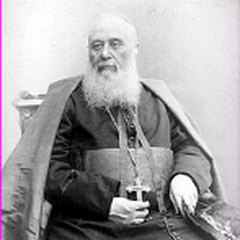
Cardinal Lavigerie founds the Missionaries of Africa, the White Fathers.
Charles Lavigerie, Archbishop of Algiers, founded this society of priests and brothers to bring the Gospel to Africa. Members adopted the white robes of North African dress, which gave them their popular name, and learned local languages and customs. They spread into East and Central Africa, and Lavigerie also became a leading voice in the campaign against the African slave trade.
1886The Uganda Martyrs are killed. They are canonized in 1964.
King Mwanga II of Buganda turned against Christians at his court, many of them young pages who refused his demands and would not give up their faith. Catholic and Anglican converts alike were killed, many burned at Namugongo. Pope Benedict XV beatified the 22 Catholic martyrs, led by Charles Lwanga, in 1920, and Paul VI canonized them, making them sub-Saharan Africa's first modern saints.
1969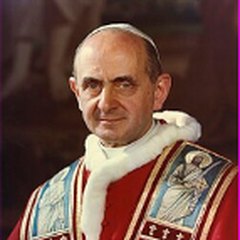
Paul VI visits Uganda, the first pope to visit sub-Saharan Africa.
Paul VI traveled to Kampala, honored the Uganda Martyrs he had canonized five years earlier, and visited Namugongo, where a great shrine now stands. He also met with bishops from across Africa during the trip and urged the African Church to take ownership of its faith in its own cultural expression. Today Namugongo draws huge crowds of pilgrims every year on Martyrs' Day.