386 to 2025
Augustine's Influence
How one bishop in North Africa shaped sixteen centuries of faith and thought.
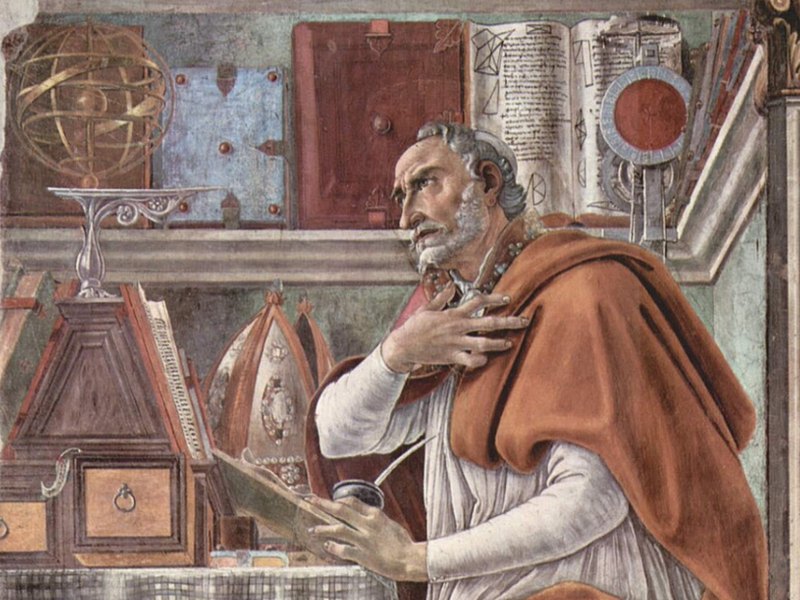
After the Bible, few writers have shaped Western Christianity as much as St. Augustine of Hippo. Popes, monks, scholastics, poets and philosophers all argued with him, and many of them claimed him as their own. This timeline follows his influence from his conversion in Milan to the election of an Augustinian friar as pope.
His life and works · 386 to 430
386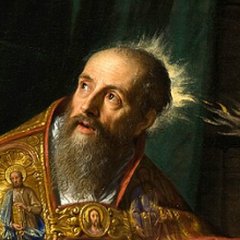
Augustine is converted in a garden in Milan after hearing a child's voice say: Take up and read.
He opened the letters of St. Paul and read Romans 13. Moved also by the preaching of St. Ambrose and the prayers of his mother, St. Monica, he was baptized by Ambrose at Easter in 387. He later became Bishop of Hippo in North Africa.
c. 397The Confessions tells the story of his restless heart and its turn to God.
It opens with his most famous line: You have made us for yourself, O Lord, and our heart is restless until it rests in you. Often called the first Western autobiography, it has never gone out of print and has shaped how Christians write about the inner life ever since.
413
Augustine begins The City of God after the sack of Rome by the Goths in 410.
Pagans blamed the disaster on the abandonment of the old gods. Augustine answered over thirteen years with a history of two cities, one built on love of God and one on love of self. The book shaped Christian thinking about history, politics and the Church for a thousand years.
430Augustine dies on August 28 while the Vandals besiege Hippo.
He left more than a hundred books, some three hundred letters and hundreds of sermons. His library survived the fall of the city, and his writings spread across the Latin world.
Early heirs · 529 to c. 800
529The Council of Orange affirms his teaching that salvation begins with God's grace.
The bishops in southern France rejected the idea that people can take the first step toward God by their own strength. Their canons drew heavily on Augustine and on his disciple Prosper of Aquitaine, and Pope Boniface II approved them.
590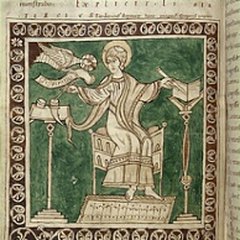
Gregory the Great becomes pope and passes Augustine's thought on to the Middle Ages.
Gregory's books on the moral life and on the work of pastors were read in every monastery, and they carried Augustine's ideas in simpler form. Gregory was later counted with Augustine among the great Latin Doctors.
c. 800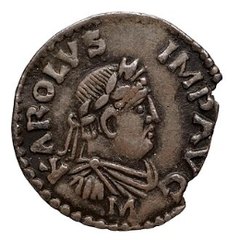
Charlemagne has The City of God read aloud at his meals.
His biographer Einhard wrote that it was among his favorite books. Charlemagne's court scholars copied Augustine's works widely, and many of the oldest manuscripts that survive come from this revival of learning.
The Middle Ages · 1077 to 1336
1077St. Anselm writes the Proslogion, following Augustine's path of faith seeking understanding.
Anselm wrote that nothing in his work disagreed with the Fathers, above all Augustine, and he is often called a second Augustine. Augustine had written: Believe so that you may understand.
1120St. Norbert founds the Premonstratensians under the Rule of St. Augustine.
The rule, based on Augustine's guidance for the community of men and women around him, asks members to share all things and to be of one mind and heart in God. Hundreds of communities of canons and nuns adopted it.
c. 1150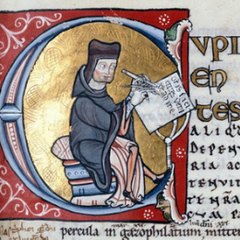
Peter Lombard compiles his Sentences, a textbook built largely from Augustine.
For centuries every student of theology had to lecture on it, so Augustine's words were studied in every university of Europe. Augustine is by far its most quoted source.
1216The Dominicans are approved and take the Rule of St. Augustine as their own.
St. Dominic had been a canon living under the rule, and he chose it for his new Order of Preachers, adding constitutions of his own.
1256The Augustinian friars are united into one order by Pope Alexander IV.
The Grand Union brought together groups of hermits in Italy who lived by Augustine's rule. The Order of St. Augustine went on to found schools, parishes and missions around the world.
1265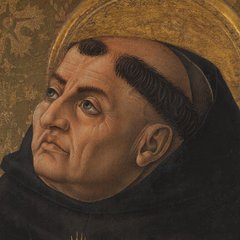
St. Thomas Aquinas begins the Summa Theologiae, where Augustine is the Father he quotes most.
Aquinas often answered a question by setting Augustine beside Aristotle, and he joined the two into a single account of faith and reason.
1298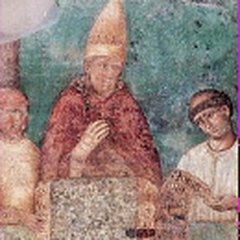
Boniface VIII names Augustine one of the four great Doctors of the Latin Church.
The others were St. Ambrose, St. Jerome and St. Gregory the Great. Their feasts were raised to a higher rank throughout the Church.
1336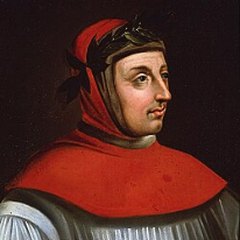
Petrarch opens the Confessions at the top of Mont Ventoux.
After climbing the mountain he read: Men go out to admire the heights of mountains and forget themselves. He wrote that he turned his eyes inward. The letter describing the climb is often seen as a beginning of the Renaissance.
Early modern times · 1565 to 1670
1565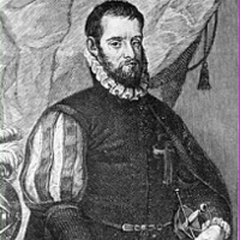
St. Augustine, Florida is named for the saint, because the Spanish fleet first saw land on his feast day.
Pedro Menéndez de Avilés first sighted the Florida coast on August 28, 1565, Augustine's feast day, and named the place San Agustín. He founded the settlement on September 8 with a Mass of thanksgiving. It is the oldest continuously inhabited European settlement in the continental United States.
1637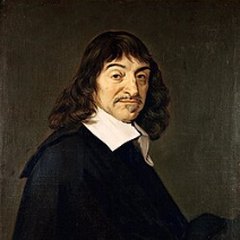
René Descartes writes: I think, therefore I am.
When Antoine Arnauld read Descartes' Meditations in 1641, he pointed out that Augustine had made a similar argument in The City of God: If I am mistaken, I exist.
1640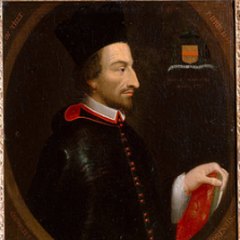
Cornelius Jansen's Augustinus is published two years after his death.
The book claimed to give Augustine's true teaching on grace, but its stress on human helplessness went beyond him. Pope Innocent X condemned five propositions drawn from it in 1653, and the Jansenist dispute divided French Catholics for a century.
1643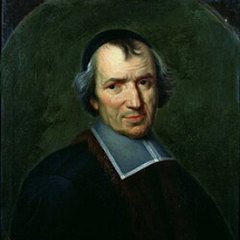
Antoine Arnauld defends Jansenism from the convent of Port-Royal.
Arnauld, a brilliant theologian, made Port-Royal near Paris the center of the movement. His friend Blaise Pascal took its side in the Provincial Letters.
1670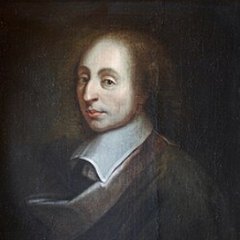
Pascal's Pensées is published, full of Augustine's sense of human greatness and misery.
Pascal wrote that we are made for God and are restless without him, an echo of the Confessions. The notes he left for a defense of Christianity became one of the classics of French literature.
The modern age · 1839 to 2025
1839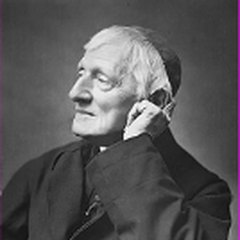
John Henry Newman is shaken by a phrase of Augustine's.
Reading about the ancient Donatist schism, he met Augustine's words: The whole world judges securely. Newman said the phrase struck him with a power he had never felt before, and six years later he became a Catholic.
1929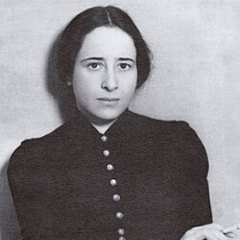
Hannah Arendt writes her doctoral thesis on Augustine's idea of love.
She studied under Karl Jaspers at Heidelberg. Augustine stayed with her for life, and she often quoted his words that a beginning was made so that there would be man.
1953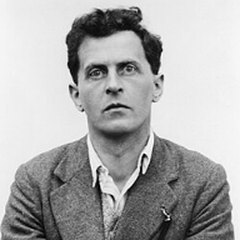
Ludwig Wittgenstein's Philosophical Investigations opens with a passage from the Confessions.
The book, published after his death, begins with Augustine's memory of learning to speak as a child, and uses it to question how words get their meaning. Wittgenstein called the Confessions perhaps the most serious book ever written.
1953Joseph Ratzinger completes his doctoral thesis on Augustine's idea of the Church as the People of God.
Augustine remained his favorite teacher for the rest of his life.
1986St. John Paul II marks 1,600 years since Augustine's conversion with the letter Augustinum Hipponensem.
He called Augustine a father of the Church and of Western culture, and urged readers to take up his works.
2008Benedict XVI calls Augustine a friend and a contemporary.
On January 16, 2008, near the end of five Wednesday audiences on Augustine, he said: When I read St Augustine's writings, I do not get the impression that he is a man who died more or less 1,600 years ago; I feel he is like a man of today: a friend, a contemporary who speaks to me. The year before, he had prayed at Augustine's tomb in Pavia.
2025Robert Francis Prevost, an Augustinian friar, is elected pope on May 8 and takes the name Leo XIV.
He is the first Augustinian pope and the first from the United States. He had led the whole Augustinian order from 2001 to 2013. From the balcony of St. Peter's he said: I am a son of St. Augustine.