1870 to 1953
Hilaire Belloc
The fighting Catholic writer of comic verse, long walks and fierce history.
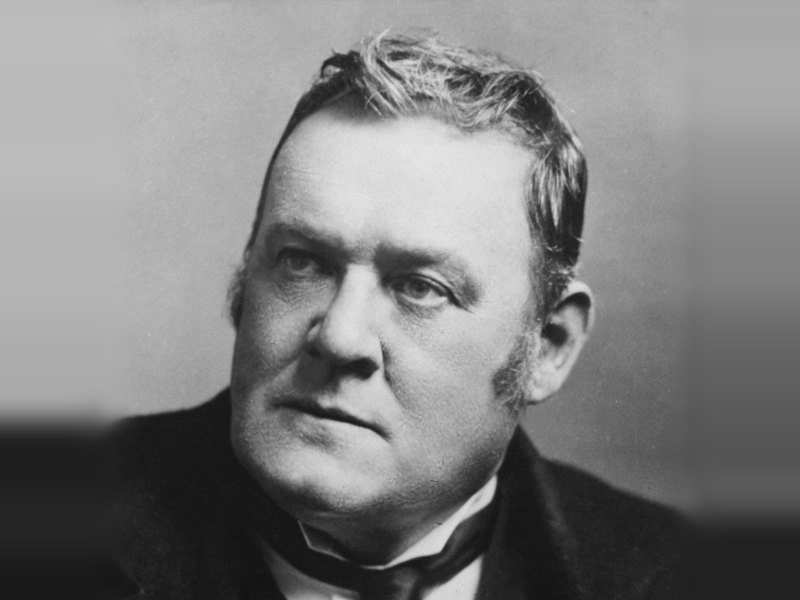
Joseph Hilaire Pierre René Belloc was half French and half English, a Catholic from birth, and one of the most combative writers of his age. He wrote nonsense verse that children still recite, travel books, novels, biographies and dozens of histories arguing that the Catholic faith made Europe. With his friend G. K. Chesterton he attacked big business and big government alike. He was also capable of real prejudice, especially against Jews, and an honest account of his life has to include that too.
Two countries · 1870 to 1895
1870
Hilaire Belloc is born on July 27 at La Celle-Saint-Cloud, near Paris, just as the Franco-Prussian War begins.
His father, Louis Belloc, was a French lawyer. His mother, Bessie Rayner Parkes, was an English campaigner for women's rights who had become a Catholic in 1864. The family fled to England ahead of the Prussian armies, and their house was looted.
1872Louis Belloc dies, and Bessie raises Hilaire and his sister Marie in England.
Money troubles soon followed, and the family moved to the village of Slindon in Sussex. Belloc loved Sussex for the rest of his life. His sister became the novelist Marie Belloc Lowndes.
1880
Belloc enters the Oratory School in Birmingham, founded by John Henry Newman.
Newman, now St. John Henry Newman, had just been made a cardinal and still lived at the Oratory next door. The school gave Belloc a solid classical education and a lasting pride in English Catholic history.
1891Belloc does his French military service in an artillery regiment near Toul.
He still held French citizenship and served for about a year. The experience left him with a lifelong love of soldiering and military history.
1893Belloc goes up to Balliol College, Oxford, and wins first-class honors in history in 1895.
He was a star debater and served as president of the Oxford Union. He hoped for a college fellowship but never received one, a disappointment he blamed partly on prejudice against his religion.
Poet, walker, politician · 1896 to 1910
1896Belloc marries Elodie Hogan, an Irish-American Catholic, in Napa, California, on June 15.
He had met her in London in 1890 and crossed much of America, partly on foot, to see her. They settled in England and had five children.
1896The Bad Child's Book of Beasts launches his comic verse, followed in 1907 by Cautionary Tales.
The Cautionary Tales mock Victorian moral stories, with children like Matilda, who told lies and was burned to death, and Jim, who ran away from his nurse and was eaten by a lion. They are still in print and still loved.
1902
The Path to Rome tells of his pilgrimage on foot from France to Rome, and he becomes a British subject.
In 1901 he set out from Toul, vowing to walk the whole way, hear Mass every morning and reach Rome for the feast of Sts. Peter and Paul. He broke some of his vows, admitted it cheerfully, and arrived on June 29. The book is a classic of travel writing and Catholic joy.
1906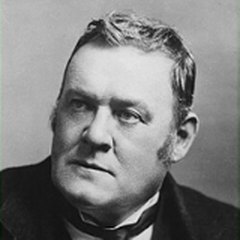
Belloc is elected to Parliament as Liberal member for Salford South.
When opponents raised his religion, he reportedly held up his rosary at a meeting and said that if voters rejected him for his faith, he would thank God for sparing him the job. He won anyway. That year he also bought King's Land, a house in Sussex that was his home for the rest of his life.
1908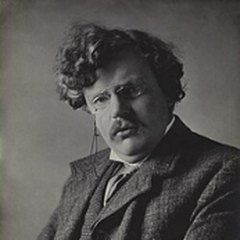
George Bernard Shaw names them the Chesterbelloc, a single four-legged creature made of Belloc and G. K. Chesterton.
Shaw meant it as a joke about two friends who always seemed to argue as one. Belloc, a Catholic from birth, helped draw Chesterton toward the Church, which he entered in 1922.
1910Belloc leaves Parliament, convinced the party system is a sham.
He did not stand at the December 1910 election. In 1911 he and Cecil Chesterton, Gilbert's brother, attacked the cozy deals between party leaders in a book called The Party System.
Battles and grief · 1911 to 1922
1912The Servile State argues that modern capitalism and socialism both lead toward a new kind of slavery.
Belloc said most people would end up working for others and owning nothing. His answer, later called distributism, was to spread property among as many families as possible, an idea drawn from Pope Leo XIII's teaching.
1912The Marconi scandal: Belloc's paper accuses government ministers of corruption.
Senior ministers had bought shares in a Marconi company while the government was negotiating a contract with a related firm. Belloc and Cecil Chesterton exposed it in their paper, the Eye-Witness. But they also stressed that several of the men involved were Jewish, an ugly note that ran through much of Belloc's writing.
1914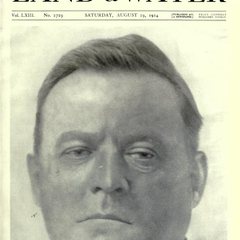
Elodie dies on February 2, and months later Belloc becomes Britain's best-known war commentator.
She died at 45, probably of cancer. Belloc reportedly wore black mourning for the rest of his life and kept her room closed. During the First World War his weekly articles in the magazine Land and Water were read by huge numbers.
1918His eldest son, Louis, is killed flying with the Royal Air Force over France.
Louis went missing in late August 1918, weeks before the war ended. His body was never found.
1920Europe and the Faith sums up his view of history: "The Faith is Europe. And Europe is the Faith."
Belloc argued that the Catholic Church had formed European civilization from Roman times, and that the Reformation had broken it. Historians criticized his sweeping style, but the book inspired generations of Catholic readers.
1922The Jews claims to seek peace between Jews and Christians but treats Jews as a permanent problem.
Belloc condemned persecution, yet argued that Jews were a foreign nation living inside Europe and repeated harmful stereotypes. Friends and critics alike recorded his antisemitism in conversation as well as in print. He later condemned Nazi persecution of the Jews, but his prejudice remains a real stain on his legacy.
Defender of the faith · 1925 to 1953
1925The Cruise of the Nona mixes sailing, memories and reflections on faith and politics.
The Nona was his small sailing boat, and the book follows a voyage around the coasts of Britain. Many readers consider it his most personal book.
1928How the Reformation Happened retells the breakup of Christendom from a Catholic point of view.
Belloc wrote popular histories and biographies at great speed to support his family, among them lives of Cromwell, Richelieu and Charles I.
1938The Great Heresies surveys the great challenges to the Church, from Arianism to the modern age.
Its chapter on Islam predicted that the Muslim world would one day regain its strength, a prediction many readers have since found striking.
1941 to 1942His son Peter dies on active service, and the next year a stroke ends Belloc's writing life.
Peter, a Royal Marines officer, died of pneumonia in Scotland in April 1941. Belloc never fully recovered from the stroke and spent his last decade quietly at King's Land.
1953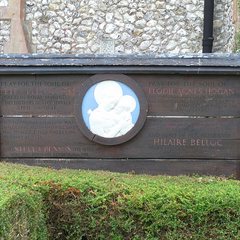
Belloc dies on July 16 at Guildford and is buried at West Grinstead in Sussex.
He died days after a fall at his fireplace. At his requiem Mass, Mgr. Ronald Knox said no one of his time had fought so hard for the good things. He lies at the Shrine of Our Lady of Consolation, the church where he had often gone to Mass.