c. 30 to 2024
Sacred Music
How the Church learned to pray in song, from the psalms of the upper room to chant, polyphony and the organ.
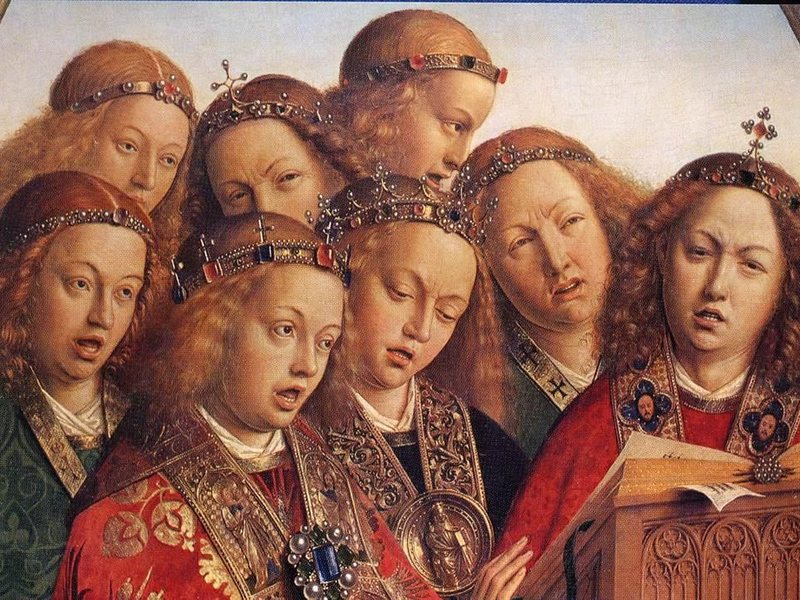
Christians have sung their prayers from the very beginning. The first believers took up the psalms of Israel and wrote new hymns to Christ. That singing grew into Gregorian chant, then into polyphony for many voices and grand Masses with orchestra. Popes and councils have often asked what makes music truly sacred, and their answer keeps returning to one idea: music should serve the words and lift the heart to God.
Songs of the early Church · c. 30 to 600
c. 30Jesus and the apostles sing a hymn after the Last Supper before going out to the Mount of Olives.
The Gospels of Matthew and Mark record the hymn, most likely the psalms sung at the Passover meal. Decades later St. Paul urged the Colossians to sing psalms, hymns and spiritual songs.
c. 112A Roman governor reports that Christians meet before dawn to sing a hymn to Christ as to a god.
Pliny the Younger, governing a province in what is now Turkey, wrote to Emperor Trajan about the Christians he had questioned. His letter is one of the earliest outside descriptions of Christian worship, and singing is at the heart of it.
386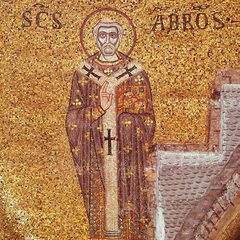
St. Ambrose teaches his people new hymns while they hold his church in Milan against the imperial court.
When the empress tried to take a church for the Arian party, Ambrose and his flock stayed inside for days, singing hymns and psalms in the Eastern style. St. Augustine, then preparing for baptism, wrote that the singing moved him to tears. Some of his hymns are still sung today.
Chant and notation · c. 750 to 1100
c. 750 to 850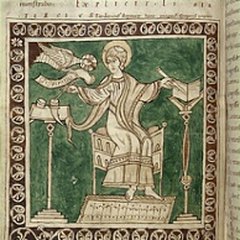
Gregorian chant takes shape as Frankish kings adopt the Roman way of singing the Mass.
Pepin the Short and Charlemagne wanted their churches to worship like Rome, and the Roman chant blended with local Frankish singing. The result was named after Pope St. Gregory the Great, who died in 604. Medieval art shows the Holy Spirit as a dove singing into his ear, but that is a pious legend: historians credit many anonymous singers.
c. 1025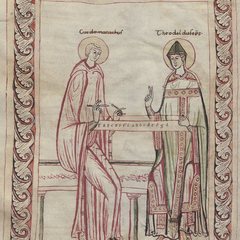
Guido of Arezzo, a Benedictine monk, sets out a staff of lines that lets singers read a melody they have never heard.
Before Guido, chant was learned by ear over many years. His treatise, the Micrologus, and his use of lines and spaces made exact pitch visible. He also taught the syllables ut, re, mi, fa, sol, la from a hymn to St. John the Baptist, the ancestor of do-re-mi.
The age of polyphony · c. 1200 to 1610
c. 1200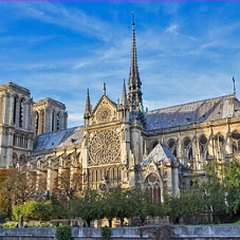
The singers of Notre-Dame in Paris weave chant into soaring music for several voices.
Polyphony means many independent voices sung together. Léonin and then Pérotin, working at the new cathedral of Notre-Dame, built long, ornamented pieces over held notes of chant. Pérotin even wrote for four voices.
c. 1324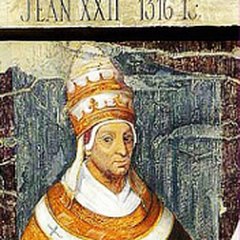
Pope John XXII complains that showy new music is drowning out the chant.
In a decree from Avignon he criticized singers who chopped melodies into fragments and filled them with fast notes, so that the words were lost. It was the first of many papal efforts to keep church music serving the text.
1562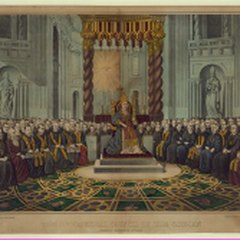
The Council of Trent bans anything lascivious or impure from music at Mass.
Some bishops complained that polyphony buried the words, and some Masses were built on popular love songs. The council's decree stayed general, and a commission of cardinals in Rome later tested whether polyphony could keep the text clear. See Councils for more on Trent.
1567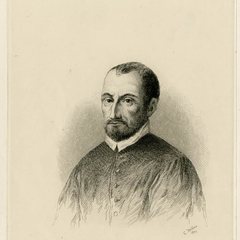
Palestrina publishes the Pope Marcellus Mass, the work later said to have saved church music.
Giovanni Pierluigi da Palestrina, choirmaster in Rome, wrote music of calm, clear lines. A story that first appeared in 1607 claims this Mass persuaded the council not to ban polyphony. It is a legend: Trent never planned a ban. Still, Palestrina's style became the model of sacred polyphony for centuries.
c. 1592 to 1595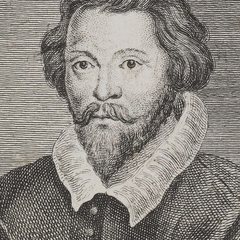
William Byrd, a Catholic in Protestant England, quietly prints three Latin Masses.
Byrd served Elizabeth I's Chapel Royal yet was repeatedly fined for refusing to attend Anglican services. His Masses for three, four and five voices were printed without title pages, for secret Masses in Catholic homes. His Gradualia of 1605 and 1607 supplied music for the whole church year.
1605Tomás Luis de Victoria publishes his Requiem for the Empress Maria, a high point of Spanish polyphony.
Victoria, a priest from Ávila, trained in Rome and then served the widowed empress at a convent in Madrid. His music is known for its intense, prayerful feeling.
1610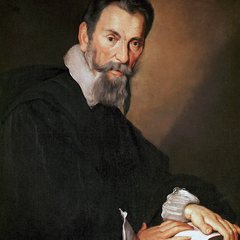
Claudio Monteverdi dedicates his Vespers of the Blessed Virgin to Pope Paul V.
The collection mixes old chant with the dramatic new style of opera. Monteverdi became choirmaster of St. Mark's in Venice in 1613 and was ordained a priest in 1632.
From Bach to Solesmes · 1733 to 1903
1733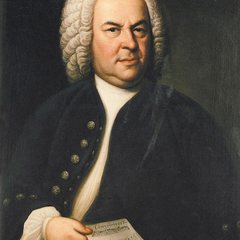
Johann Sebastian Bach, a Lutheran, presents a Latin Kyrie and Gloria to the Catholic court of Dresden.
Bach later expanded them into the Mass in B minor, finished near the end of his life. It is often counted among the greatest works of Western music.
1791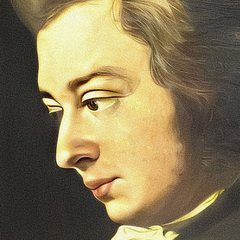
Wolfgang Amadeus Mozart writes the tender Ave verum corpus and dies with his Requiem unfinished.
Mozart grew up in the service of the Archbishop of Salzburg and wrote many Masses. His Requiem, left incomplete at his death in December 1791, was finished by his pupil Franz Xaver Süssmayr.
1798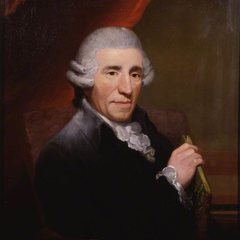
Joseph Haydn composes his Mass in Time of Distress, later called the Nelson Mass.
It is one of six great Masses Haydn wrote between 1796 and 1802 for the Esterházy princes. Critics later felt such orchestral Masses turned the liturgy into a concert.
1833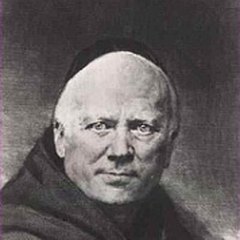
Dom Prosper Guéranger refounds the abbey of Solesmes in France and begins a revival of chant.
The French Revolution had emptied the monasteries. Guéranger's monks, above all Dom Joseph Pothier and Dom André Mocquereau, studied the oldest manuscripts to recover the melodies in place of the heavy, distorted versions then in use. Their work became the basis of the official Vatican chant books from 1905.
1903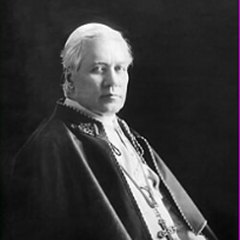
Pope St. Pius X issues Tra le sollecitudini, naming chant the supreme model of church music.
Signed on November 22, the feast of St. Cecilia, patron of musicians, it praised Palestrina's polyphony, banned the piano and theatrical styles, and first used the phrase active participation of the faithful. It also kept women out of liturgical choirs, a rule later dropped.
Council and renewal · 1931 to 2024
1931 to 1947French Catholic composers Olivier Messiaen and Maurice Duruflé draw new music out of faith and chant.
Messiaen became organist of La Trinité in Paris in 1931 and served there for some sixty years, writing music full of Catholic theology. Duruflé's Requiem of 1947 is built almost entirely on the Gregorian chants of the Mass for the dead.
1963The Second Vatican Council gives Gregorian chant pride of place and praises the pipe organ.
Its constitution on the liturgy, Sacrosanctum Concilium, also welcomed the people's own languages and other music that suits worship. In practice, chant largely vanished from parishes in the following years, replaced by hymns and folk songs. See The Mass Through History.
1974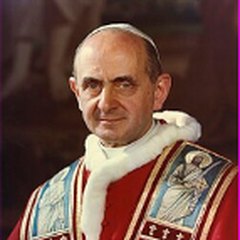
Pope St. Paul VI sends every bishop Jubilate Deo, a small book of chants every Catholic should know.
The collection held simple Latin chants for the Mass and familiar hymns, so that Catholics everywhere could still sing together.
2010James MacMillan, a Scottish Catholic composer, writes a Mass for Pope Benedict XVI's visit to Britain.
MacMillan is one of several living composers writing serious music for worship. Many Catholics also love the luminous choral works of the Estonian Arvo Pärt, who is Orthodox. Chant, too, is finding new young choirs.
2024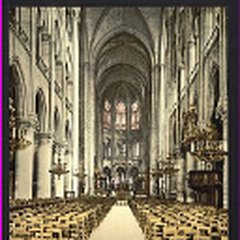
The great organ of Notre-Dame sounds again as the cathedral reopens after the 2019 fire.
Its roughly 8,000 pipes survived the blaze but had to be cleaned of toxic dust. At the reopening on December 7, the Archbishop of Paris called on the instrument to awaken, and it answered in turn with improvisations from its four organists.