c. 30 to 2021
The Mass Through History
How the celebration of the Eucharist developed over two thousand years.
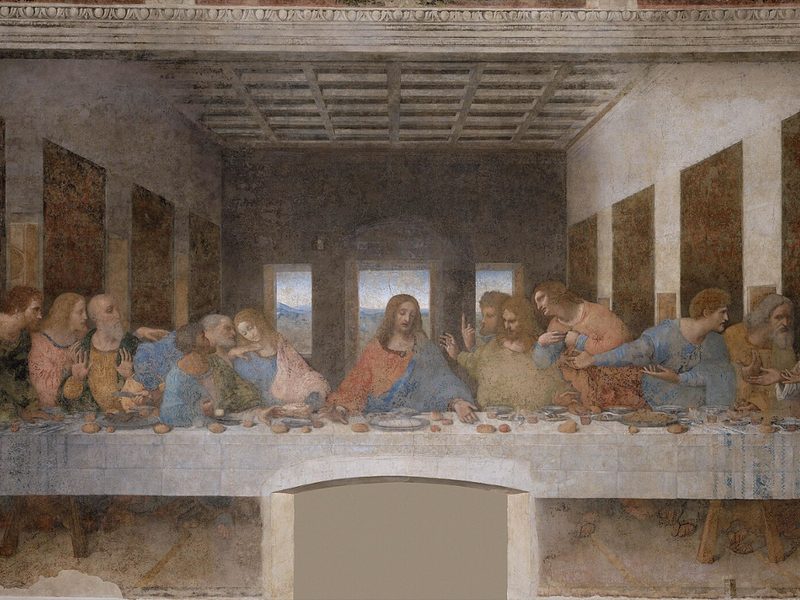
At the Last Supper, Jesus took bread and wine and told his disciples, "Do this in memory of me." Christians have gathered to keep that command ever since. The language, music and ceremonies around it have changed over the centuries, but the heart of the Mass, the Eucharist, has remained.
Early and medieval · c. 30 to 1264
c. 30The Last Supper: Jesus gives the bread and cup and says, "Do this in memory of me."
On the night before he died, Jesus shared a Passover meal with his apostles. The Gospels of Matthew, Mark and Luke and St. Paul all describe him taking bread and wine and calling them his body and blood. The Church sees this as the institution of the Eucharist and of the priesthood, and every Mass makes present what began that night.
c. 54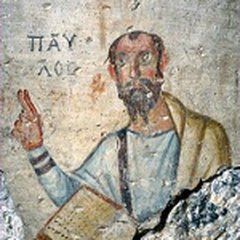
St. Paul writes 1 Corinthians, the earliest written account of the Last Supper.
Paul wrote to the troubled Christian community in Corinth, probably from Ephesus. Correcting abuses at their gatherings, he reminded them of what he had received about the Lord's Supper. Because his letter likely predates the written Gospels, it is generally considered the oldest surviving account of the words Jesus spoke over the bread and cup.
c. 100The Didache gives early prayers for the Eucharist.
The Didache, or Teaching of the Twelve Apostles, is a short early Christian manual covering morals, baptism, fasting and prayer. It includes thanksgiving prayers over the cup and the bread and asks Christians to gather on the Lord's Day. Lost for centuries, it was rediscovered in a manuscript published in the 1880s, giving scholars a rare look at early worship.
c. 150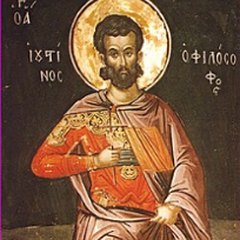
St. Justin Martyr describes Sunday worship, with readings, prayers and the Eucharist.
Justin, a philosopher who became a Christian, wrote his First Apology to the Roman emperor to defend his faith. In it he describes Christians gathering on Sunday to hear the writings of the apostles and prophets, listen to a homily, pray, and share bread and wine over which thanks has been given. The outline is still recognizable in the Mass today.
c. 215The Apostolic Tradition, traditionally attributed to Hippolytus, holds a prayer later adapted as Eucharistic Prayer II.
This church order describes ordinations and baptism and includes a eucharistic prayer. Scholars debate who wrote it and where, so the link to Hippolytus of Rome is uncertain. After Vatican II, its prayer was adapted into the short Eucharistic Prayer II, now one of the most commonly heard prayers at Mass.
c. 380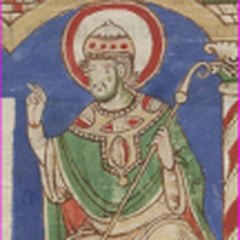
Latin replaces Greek in Rome's liturgy, around the time of Pope Damasus.
The early Roman church worshiped mainly in Greek, the common language of the empire's Christians. By the later fourth century Latin had become the everyday language of Rome, and the liturgy shifted to it, a change scholars often link to the time of Pope Damasus. Latin then remained the language of the Western liturgy for some sixteen centuries.
1264Urban IV establishes the feast of Corpus Christi.
Devotion to the Eucharist grew strongly in the Middle Ages, inspired in part by the visions of St. Juliana of Liège. Pope Urban IV extended the feast to the whole Church, and tradition holds that St. Thomas Aquinas wrote its texts, including hymns still sung today. The feast spread widely in the following century, along with processions honoring the Blessed Sacrament.
Trent to today · 1570 to 2021
1570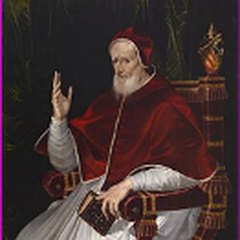
Pius V's Roman Missal standardizes the Mass across the Latin Church.
After the Council of Trent, Pope Pius V issued a revised Roman Missal to bring order to the varied practices of the time. Churches with their own rites more than two centuries old could keep them, but most of the Latin Church adopted the new book. With only modest changes, this form of the Mass was celebrated for about four hundred years.
1903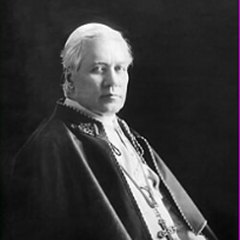
Pius X calls for active participation and restores Gregorian chant.
Soon after his election, Pius X issued a document on sacred music that called Gregorian chant the Church's own music and urged the faithful to take part actively in the liturgy. That phrase helped spark the twentieth century liturgical movement. He also encouraged frequent Communion, and his reforms prepared the ground for later changes.
1910Pius X lowers First Communion to about age seven.
Before this decree, many children waited until around age twelve or later for their First Communion. Pius X taught that children could receive once they reached the age of reason and knew the difference between the Eucharist and ordinary bread. The change transformed parish life, and he is often remembered as the pope of the Eucharist.
1955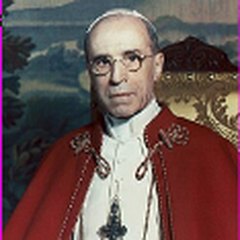
Pius XII restores the ancient Holy Week liturgy, including the Easter Vigil at night.
Over the centuries the Easter Vigil had drifted to Holy Saturday morning, losing much of its meaning. After allowing an experimental night vigil in the early 1950s, Pius XII restored the whole of Holy Week, returning the main services to fitting hours. This reform was an important step toward the wider liturgical renewal of the Second Vatican Council.
1963Sacrosanctum Concilium, Vatican II's constitution on the liturgy.
This was one of the first two documents approved by the Second Vatican Council. It called for the full, conscious and active participation of the faithful and described the liturgy as the source and summit of the Church's life. It opened the door to wider use of local languages and a richer selection of Scripture readings.
1969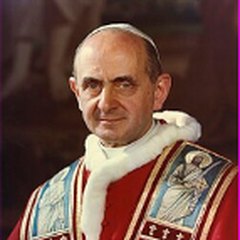
Paul VI promulgates the new Roman Missal, in use from 1970.
Following the Council's call for reform, Paul VI approved a revised Missal with a new order of Mass, more Bible readings over a multi-year cycle, and new eucharistic prayers. Translated into many languages, it allowed most Catholics to pray the Mass in their own tongue. It is the ordinary form of the Roman Rite celebrated in most parishes today.
2007Summorum Pontificum: Benedict XVI widens use of the 1962 Missal.
Benedict XVI allowed priests to celebrate the Mass from the 1962 Missal more freely, without first needing their bishop's permission. He described the older and newer Missals as two forms of the one Roman Rite, calling the older one the extraordinary form. He hoped the two would enrich each other and help heal divisions.
2011New English translation of the Missal begins in the U.S. on the First Sunday of Advent.
The new translation followed Vatican guidelines asking for English closer to the Latin original. Familiar responses changed, so people now answer and with your spirit, and the Creed begins with I believe. Parishes spent months preparing, and many Catholics found the new wording more formal and richer in biblical imagery.
2021Traditionis Custodes: Francis restricts use of the 1962 Missal.
Pope Francis reversed much of Summorum Pontificum, placing celebration of the older Mass under the authority of each diocesan bishop. He said he acted to protect the unity of the Church and called the reformed liturgy the unique expression of the Roman Rite. The decision was welcomed by some and caused real pain for others devoted to the older form.