529 to 1950
Religious Orders
Communities of monks, friars, sisters and priests that shaped the Church's prayer, learning and service.
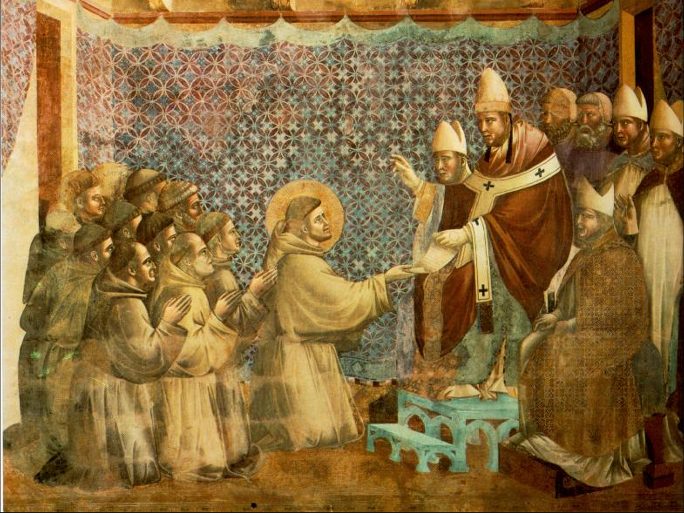
From the first monasteries, Christians have banded together under a common rule to pray, work and serve. Monks kept learning alive through the Middle Ages, friars brought preaching to the growing towns, and later orders built schools, hospitals and missions around the world.
Monks · 529 to 1100
c. 529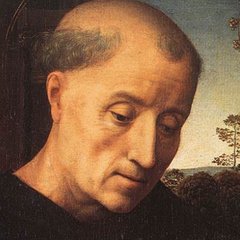
St. Benedict founds Monte Cassino, where he later writes the Rule that guides Western monasticism.
Benedict moved to Monte Cassino after years as a hermit and leader of monks near Subiaco. His Rule asked monks to live together under an abbot, balancing prayer, reading and manual work, with a famous spirit of moderation. Over the following centuries it became the standard rule for monasteries across Western Europe.
910Cluny Abbey is founded in France and becomes the center of a great monastic reform.
Duke William of Aquitaine founded Cluny in Burgundy and placed it directly under the pope, free from control by local lords and bishops. A series of gifted abbots made it a model of solemn liturgy and discipline. Hundreds of houses joined its network, and its reforming spirit helped shape the wider reform of the medieval Church.
1084
St. Bruno founds the Carthusians at the Grande Chartreuse.
Bruno, a respected teacher at Reims, sought a life of greater solitude and settled with a few companions in a remote valley in the Alps near Grenoble. The Carthusians combine the life of hermits in individual cells with some shared prayer. They are known as an order that has never needed major reform, and they still keep their silent way of life today.
1098Cîteaux is founded, origin of the Cistercians. St. Bernard of Clairvaux joins around 1112.
Robert of Molesme and a group of monks founded Cîteaux to follow the Rule of St. Benedict more strictly and simply. The young community struggled until Bernard arrived with a group of relatives and friends. Bernard founded the abbey of Clairvaux, and his preaching and writing helped the Cistercians spread across Europe.
Friars · 1200s
1209
St. Francis of Assisi wins Innocent III's approval for his brothers' way of life.
Francis and his first companions traveled to Rome with a short rule drawn mostly from the Gospels. Pope Innocent III gave verbal approval, and tradition says he had dreamed of a poor man holding up the crumbling Lateran basilica. The brothers, called Friars Minor, went out to preach and to live without property.
1212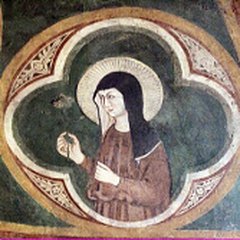
St. Clare of Assisi founds the order now known as the Poor Clares.
Clare, a young noblewoman of Assisi, was inspired by Francis's preaching and left home secretly to join him. She and the women who followed her lived an enclosed life of prayer and strict poverty at San Damiano. Clare wrote a rule for her sisters, believed to be the first written by a woman for women, and the order spread widely.
1216
The Dominicans, St. Dominic's Order of Preachers, are approved by Honorius III.
Dominic gathered his first friars in Toulouse to preach against the Albigensian heresy. Pope Honorius III confirmed the new order, whose members studied deeply, lived simply and moved from place to place to preach. Dominicans soon settled in major university cities, and their scholars included St. Thomas Aquinas and St. Albert the Great.
New forms of service · 1535 to 1950
1535
St. Angela Merici founds the Ursulines to educate girls.
Angela Merici, an Italian laywoman in Brescia, gathered a company of women who lived in their own homes while devoting themselves to God and to teaching girls. She named them after St. Ursula. After her death the Ursulines gradually became an enclosed teaching order and opened schools across Europe and in the Americas.
1540
The Jesuits, St. Ignatius of Loyola's Society of Jesus, are approved by Paul III.
Ignatius and his companions had vowed to serve wherever the pope sent them. Pope Paul III approved the Society of Jesus in 1540, and Ignatius was elected its first superior general. The Jesuits grew quickly, founding schools and colleges and sending missionaries to Asia and the Americas.
1633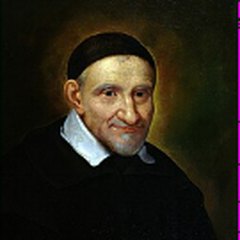
St. Vincent de Paul and St. Louise de Marillac found the Daughters of Charity to serve the poor.
Vincent de Paul, a French priest, had already organized charitable groups of wealthy ladies, but he needed women who could serve the poor full time. Louise de Marillac trained young women from simple backgrounds to nurse the sick and care for the needy in their homes. Unlike enclosed nuns of the time, the Daughters worked out in the streets and hospitals.
1859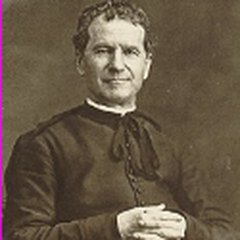
St. John Bosco founds the Salesians to care for poor young people.
John Bosco was a priest in Turin who gathered poor and neglected boys, offering them schooling, trades and faith with a gentle, cheerful approach. He named his society after St. Francis de Sales, known for his kindness. The Salesians, joined later by sisters co-founded with St. Mary Mazzarello, became one of the largest religious families in the world.
1911Maryknoll is founded as the first U.S.-based Catholic foreign mission society.
Two American priests, James Anthony Walsh and Thomas Frederick Price, founded the Catholic Foreign Mission Society of America, with approval from Pope Pius X. It took the name Maryknoll from its hilltop home in New York. Its priests, brothers and the Maryknoll Sisters went on to serve in China, Latin America, Africa and elsewhere.
1950St. Teresa of Calcutta founds the Missionaries of Charity.
After working alone in Calcutta's slums, Mother Teresa was joined by former students, and the archdiocese approved the Missionaries of Charity. The sisters wear a white sari with blue borders and take a special vow of wholehearted free service to the poorest of the poor. The congregation now works in many countries, alongside branches of brothers and priests.