c. 30 to 2025
The Sacred Heart and Divine Mercy
Two devotions that invite the world to trust in the love of Christ's heart.
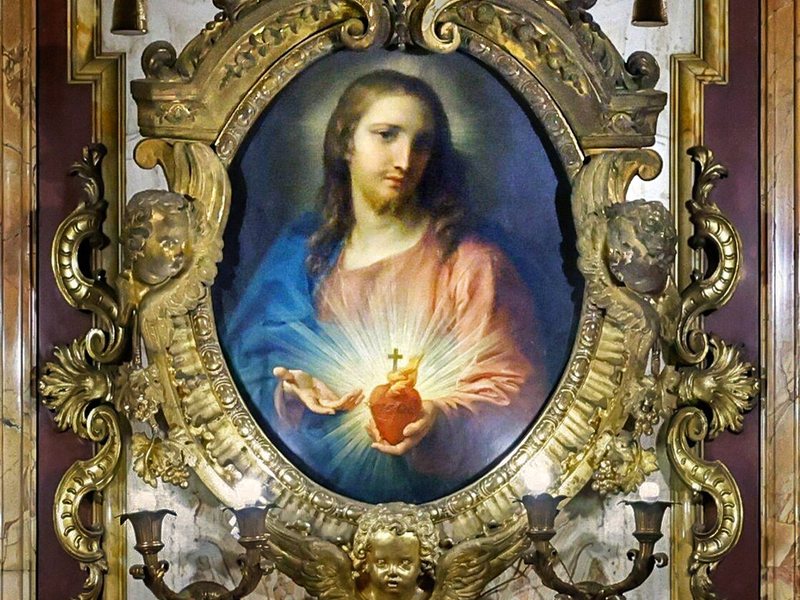
Devotion to the Sacred Heart honors the love of Jesus, shown in his heart pierced on the cross. It began in the prayers of medieval mystics, grew through the visions of St. Margaret Mary Alacoque in seventeenth-century France, and became one of the most popular Catholic devotions in the world. In the twentieth century a Polish nun, St. Faustina Kowalska, carried the same message of merciful love in a new form, the Divine Mercy. Both were doubted and opposed for a time, and both were embraced by popes.
The wounded side · c. 30 to 1300
c. 30A soldier pierces the side of Jesus on the cross, and blood and water flow out.
St. John's Gospel records the moment. Early Christian writers such as St. Augustine saw in it the birth of the Church and her sacraments, as Eve was formed from the side of Adam.
c. 1140
St. Bernard of Clairvaux preaches that the wounds of Christ open a way into the secret of his heart.
In his sermons on the Song of Songs, Bernard read the clefts of the rock as Christ's wounds, a refuge for the soul. Medieval monks and nuns increasingly prayed to the wound in Christ's side as a doorway to his love.
c. 1290
St. Gertrude the Great and St. Mechtilde describe visions of the heart of Jesus at Helfta in Germany.
The two Benedictine nuns wrote of the divine heart as a source of love, rest and healing. Gertrude told of a vision in which St. John, who leaned on Jesus at the Last Supper, said the heartbeat he heard was a secret kept for later ages.
Paray-le-Monial · 1672 to 1690
1672
St. John Eudes celebrates the first liturgical feast of the Sacred Heart of Jesus in his communities in France.
Eudes, a priest from Normandy, had already promoted a feast of the Heart of Mary. He wrote prayers and a Mass for the Heart of Jesus. Popes later honored him as the father of liturgical devotion to the Sacred Hearts.
1673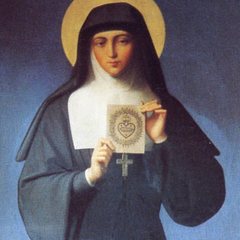
St. Margaret Mary Alacoque, a Visitation nun at Paray-le-Monial, has her first vision of the Sacred Heart.
On December 27, the feast of St. John, she felt Jesus invite her to rest on his heart, as John had done. Her superiors and some theologians thought her deluded, and she suffered much doubt and criticism.
1675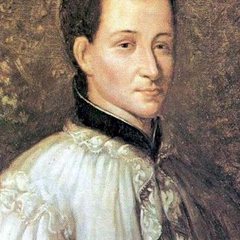
In the great apparition, Jesus asks for a feast of his heart, and St. Claude La Colombière believes her.
She reported Jesus showing his heart and saying it had loved people so much yet received ingratitude. He asked for a feast on the Friday after the octave of Corpus Christi, Communion on First Fridays and an hour of prayer on Thursday nights. Claude, a Jesuit priest sent to Paray that year, became her confessor and defender.
1690Margaret Mary dies on October 17 at Paray-le-Monial, aged 43.
Claude La Colombière had died in 1682, and his writings spread her message. She was canonized in 1920, John Eudes in 1925 and Claude in 1992. Paray-le-Monial is still a major place of pilgrimage.
A devotion for the whole Church · 1720 to 1956
1720The Bishop of Marseille consecrates his plague-stricken city to the Sacred Heart.
The plague killed tens of thousands in the city. Bishop Henri de Belsunce stayed to care for the sick, and his act made the devotion widely known in France.
1765Pope Clement XIII approves a feast of the Sacred Heart for Poland and a confraternity in Rome.
The devotion had fierce critics, especially the Jansenists, a strict movement that found it sentimental. In 1794 Pope Pius VI condemned their attacks on it.
1856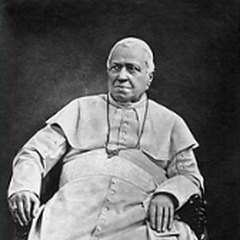
Blessed Pius IX extends the feast of the Sacred Heart to the whole Catholic Church.
Bishops around the world had asked for it. Pius IX also beatified Margaret Mary in 1864. Parishes, schools and religious orders named for the Sacred Heart multiplied.
1875 to 1919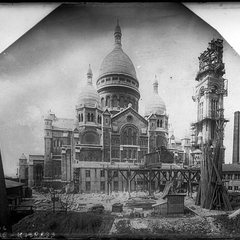
The Basilica of Sacré-Cœur rises on the hill of Montmartre in Paris.
French Catholics vowed to build it after the defeat of 1870, as an act of penance and hope. Because it stands near where the Paris Commune began, many on the left saw it as a political symbol. Begun in 1875, it was consecrated in 1919.
1899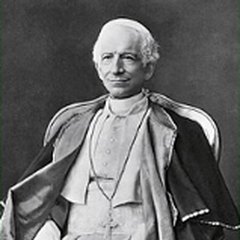
Pope Leo XIII consecrates the whole human race to the Sacred Heart.
He announced it in his encyclical Annum sacrum and reportedly called it the greatest act of his long pontificate. He was moved partly by letters from a German nun in Portugal, Blessed Mary of the Divine Heart, who died just before the consecration.
1928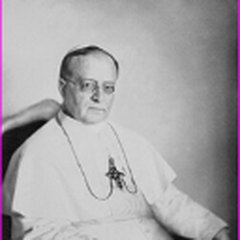
Pope Pius XI asks Catholics to make reparation to the Sacred Heart in Miserentissimus Redemptor.
Reparation means offering prayer and love to make up for sin and indifference. Pius XI also raised the feast to a higher rank. Many families had by then enthroned an image of the Sacred Heart in their homes.
1956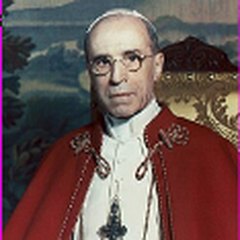
Pope Pius XII roots the devotion in Scripture and theology in Haurietis aquas.
Written for the hundredth anniversary of the universal feast, it taught that the heart of Jesus is a symbol of his divine and human love, not just a private piety.
Divine Mercy · 1931 to 2025
1931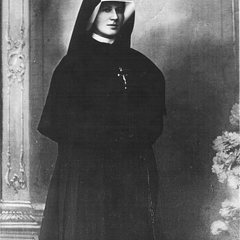
St. Faustina Kowalska, a Polish nun, sees Jesus with rays of red and pale light streaming from his heart.
On February 22 at her convent in Płock, she understood that he wanted an image painted with the words Jesus, I trust in you. She also recorded his request for a feast of Mercy on the Sunday after Easter.
1934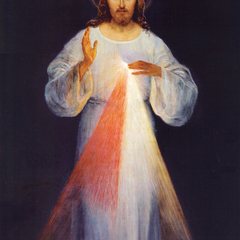
The first Divine Mercy image is painted in Vilnius by Eugeniusz Kazimirowski under Faustina's direction.
Her confessor, Blessed Michael Sopoćko, arranged the painting. It was first shown publicly in 1935 at the Gate of Dawn shrine in Vilnius. Faustina died in Kraków on October 5, 1938, aged 33, leaving a diary of her experiences.
1959The Holy See forbids spreading the devotion in the forms Faustina proposed.
Rome, it was later explained, had worked from faulty translations of her diary and confused reports. In 1978, after new documents were studied, and with support from Kraków's Cardinal Karol Wojtyła, the ban was declared no longer binding. Months later Wojtyła became Pope John Paul II.
2000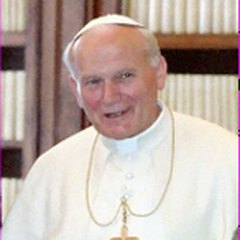
John Paul II canonizes Faustina and declares the Sunday after Easter Divine Mercy Sunday for the whole Church.
The canonization took place on April 30, the Sunday after Easter. In 2002 the pope entrusted the world to Divine Mercy at the shrine in Kraków where she is buried.
2005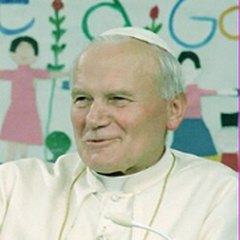
Pope St. John Paul II dies on April 2, the vigil of Divine Mercy Sunday.
Many saw the timing as fitting for the pope who had championed the devotion. He was beatified on Divine Mercy Sunday 2011 and canonized on Divine Mercy Sunday 2014. See John Paul II.
2024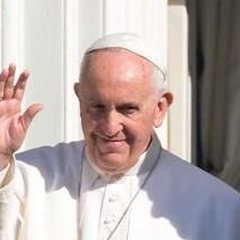
Pope Francis writes Dilexit nos, an encyclical on the love of the Heart of Jesus.
Published on October 24, during the 350th anniversary of the Paray-le-Monial visions, it warned that the modern world risks losing its heart. Francis, who had also called a Jubilee of Mercy in 2015 and 2016, drew the two devotions together.
2025The Paray-le-Monial jubilee closes on June 27, the feast of the Sacred Heart.
The anniversary year had opened on December 27, 2023, exactly 350 years after Margaret Mary's first vision. Pilgrims from many countries came to the chapel where she prayed.