c. 250 BC to 1979
The Bible
How the Scriptures were gathered into one book, translated and spread.
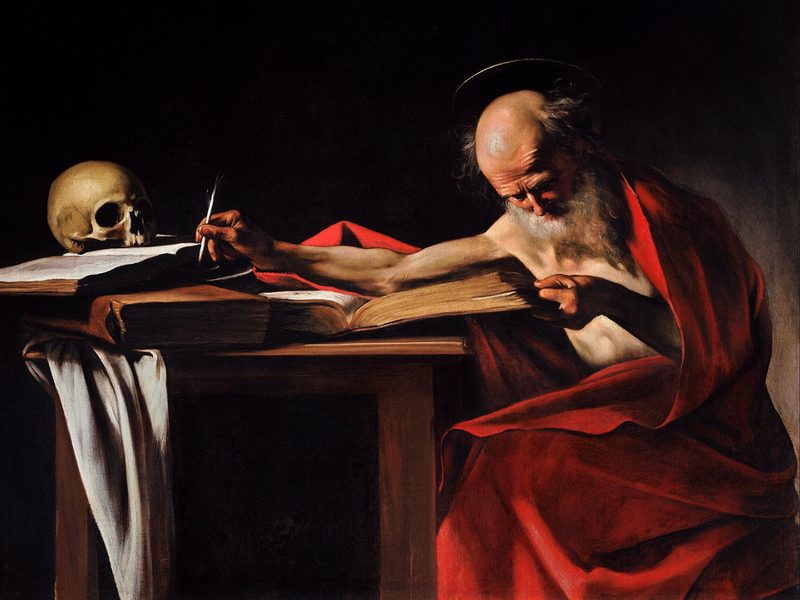
The Bible is not one book but a library of 73, written over more than a thousand years. Catholics believe it is the inspired word of God. This timeline follows how those books were gathered, translated into Greek and Latin and then the languages of the world, copied by hand, and finally printed.
Forming the canon · c. 250 BC to 405
c. 250 BCThe Septuagint, the Greek translation of the Hebrew Scriptures, begins in Alexandria.
Jewish scholars in Alexandria, Egypt, began translating the Hebrew Scriptures into Greek for Jews who no longer spoke Hebrew, starting with the five books of Moses. A legend says seventy-two translators did the work, which gave it the name Septuagint. Many early Christians, including New Testament writers, quoted it, and it remains the Old Testament of the Eastern churches.
c. 50–100
The New Testament books are written.
Paul's letters came first, written to young churches around the Mediterranean, followed by the Gospels, Acts and other letters. Their authors wrote in Greek, the common language of the eastern Roman world. Communities copied and shared these writings, read them aloud in worship, and slowly recognized which ones belonged in the Christian Scriptures.
367
St. Athanasius lists the 27 books of the New Testament in his Easter letter.
Athanasius, bishop of Alexandria, sent yearly letters announcing the date of Easter. In one of them he listed the books Christians should read as Scripture, and his New Testament list matches exactly the 27 books used today. It is the earliest known list to do so, though discussion about a few books continued in some places for a while.
382
Pope Damasus asks St. Jerome to revise the Latin Gospels, work that grows into the Vulgate.
Jerome was a gifted scholar working as Pope Damasus's secretary when he was asked to correct the many uneven Latin versions of the Gospels. He later moved to Bethlehem and translated much of the Old Testament directly from the Hebrew. His work became known as the Vulgate, meaning the common or popular version.
393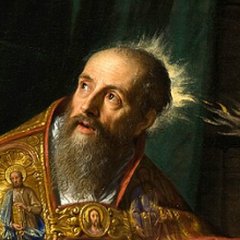
Council of Hippo, followed by Carthage in 397, lists the books of the Bible.
These regional councils in North Africa, where St. Augustine was an influential voice, set out a list of the books to be read in church. Their list includes the Old Testament books Catholics still use, including those Protestants later called the Apocrypha, along with the 27 New Testament books. Rome supported this canon, which was later confirmed by Florence and Trent.
c. 405Jerome's Vulgate is largely complete and becomes the Bible of the Latin West.
Jerome spent decades on his translation, and by the early fifth century it was largely complete. At first some readers resisted it, including St. Augustine, who worried about departing from familiar texts. Over time it won out, and for more than a thousand years it was the Bible of Western Europe, shaping its theology, liturgy and languages.
Copying and printing · c. 715 to 1610
c. 715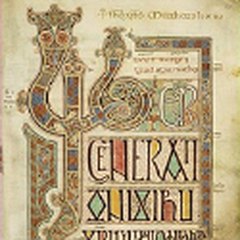
The Lindisfarne Gospels are made in northern England.
These richly decorated Gospel books were made at the monastery on Lindisfarne, a small island off England's northeast coast, traditionally by Bishop Eadfrith. They blend Celtic, Anglo-Saxon and Mediterranean art in dazzling patterns. In the tenth century a priest named Aldred added an Old English translation between the lines, the oldest surviving English version of the Gospels. The book is now in the British Library.
c. 1382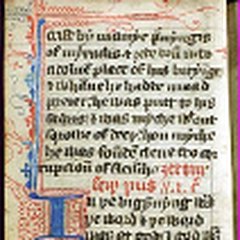
The Wycliffe Bible translates the Vulgate into English.
Followers of the Oxford scholar John Wycliffe produced the first complete Bible in English, translated from the Latin Vulgate. Because Wycliffe and his Lollard followers were linked to teachings the Church condemned, English church leaders restricted unauthorized translations in the early 1400s. Even so, many copies circulated by hand.
c. 1455The Gutenberg Bible is the first major book printed with movable type.
Johannes Gutenberg printed this Latin Vulgate Bible in Mainz, Germany, using movable metal type. It showed that printed books could be as beautiful as hand-copied manuscripts. Printing made Bibles and other books far cheaper and more widely available, and fewer than fifty copies of this famous edition survive today.
1546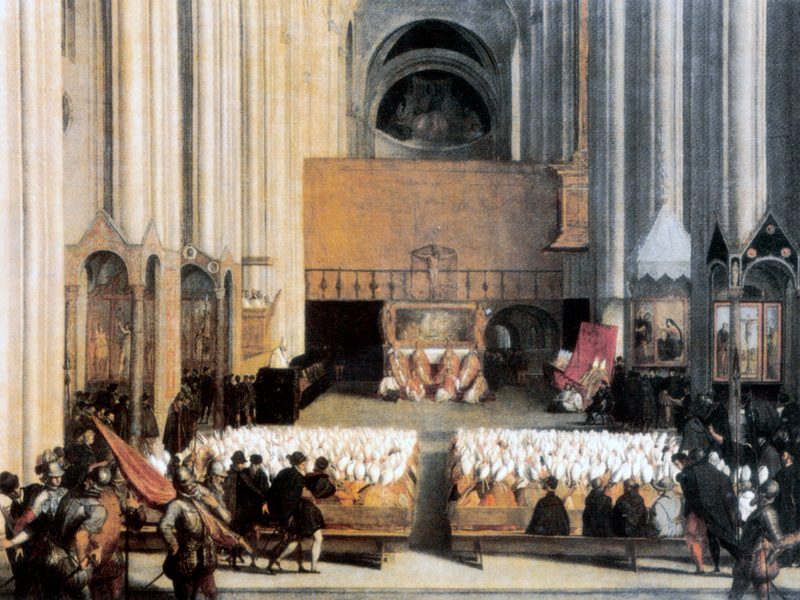
Council of Trent formally defines the canon of Scripture.
Responding to Protestant reformers who rejected several Old Testament books, the Council of Trent issued a decree naming every book of the Bible as sacred and canonical. Its list matched the one held since the ancient councils. Trent also declared the Vulgate the authentic Latin text for public use, which led to the later official editions.
1582The Rheims New Testament appears in English, followed by the Douay Old Testament in 1609–10.
English Catholic exiles at the English College in Reims, France, led by Gregory Martin, translated the Bible from the Latin Vulgate. The New Testament came out first and the Old Testament followed from Douai. In the eighteenth century Bishop Richard Challoner revised it, and that version served English-speaking Catholics for about two hundred years.
1592The Clementine Vulgate becomes the standard Latin Bible.
After Trent, the popes worked on an official edition of the Vulgate. An edition issued under Sixtus V in 1590 was found to have many errors and was quickly withdrawn. Under Clement VIII a corrected edition appeared in 1592, and it remained the standard Latin Bible of the Catholic Church until the twentieth century.
The modern era · 1943 to 1979
1943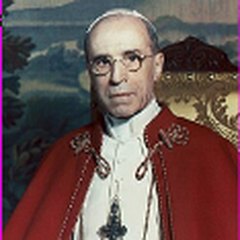
Divino Afflante Spiritu, Pius XII: encourages scholarly study from the original languages.
Pius XII wrote this encyclical for the fiftieth anniversary of Leo XIII's letter on Scripture. He encouraged Catholic scholars to study the Bible in its original Hebrew, Aramaic and Greek and to understand the literary forms the biblical authors used. Often called the Magna Carta of Catholic biblical scholarship, it led to a flowering of research and new translations.
1965Dei Verbum, Vatican II's constitution on divine revelation.
This dogmatic constitution explains how God reveals himself through Scripture and Tradition, which the Church's teaching office serves. It teaches that the Bible was written under divine inspiration by human authors. It also urged that the faithful have easy access to Scripture and called the study of the Bible the soul of theology.
1970The New American Bible is published.
Sponsored by the American bishops, this was the first complete Catholic Bible in English translated from the original languages rather than the Latin Vulgate. Begun decades earlier, it built on the new freedom given by Divino Afflante Spiritu. It has since been revised, and it forms the basis of the readings heard at Mass in the United States.
1979The Nova Vulgata becomes the official Latin Bible of the Church.
After Vatican II, scholars revised Jerome's Vulgate against the best Hebrew and Greek texts while keeping its classic Latin style. St. John Paul II promulgated the finished work as the typical edition. The Church now uses it as the reference text for liturgical books and as a guide when translating Scripture for worship.