1927 to 2022
Pope Benedict XVI
The shy Bavarian theologian who became pope, and then surprised the world by stepping down.
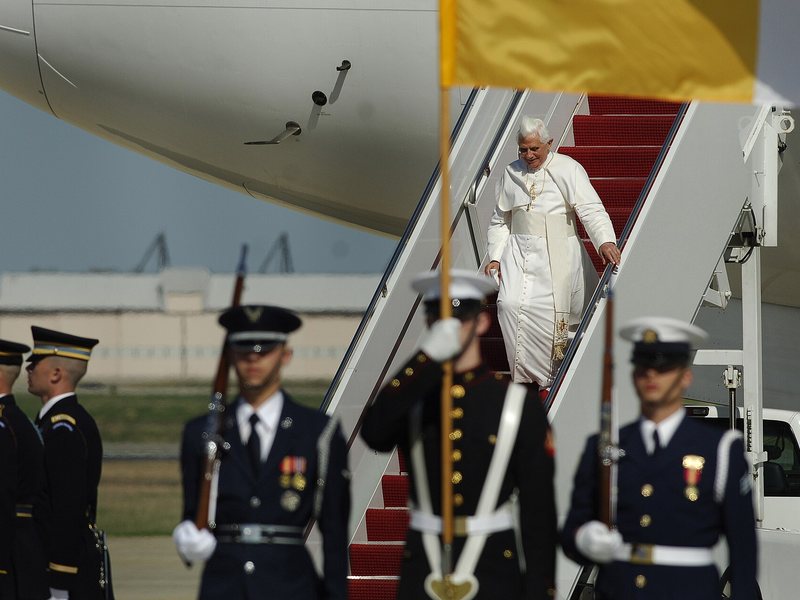
Joseph Ratzinger grew up in rural Bavaria under the shadow of Nazism, became one of the leading Catholic theologians of the 20th century, and spent nearly a quarter century as the Church's chief guardian of doctrine. Elected pope at 78, he wrote on love, hope and the life of Jesus, and faced storms over Islam, the old Latin Mass and clergy sexual abuse. In 2013 he became the first pope in about 600 years to resign.
A Bavarian boyhood · 1927 to 1951
1927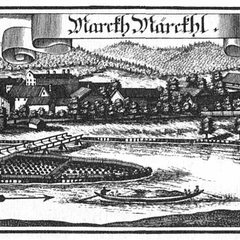
Joseph Ratzinger is born on April 16, Holy Saturday, in Marktl am Inn, Bavaria.
He was born in the early morning and baptized that same day with the Easter water just blessed at the Holy Saturday vigil, a coincidence he later treasured as a sign of his whole life. His father, also named Joseph, was a rural police officer who strongly opposed the Nazis and read an anti-Nazi Catholic newspaper. His mother, Maria, had worked as a hotel cook. Joseph was the youngest of three children, after his sister Maria and his brother Georg. Because his father was moved from post to post, the family lived in several small Bavarian towns before settling near Traunstein in 1937.
1941 to 1945The war years: the teenage seminarian is enrolled in the Hitler Youth and later drafted, then deserts.
Joseph entered the minor seminary in Traunstein in 1939. Membership in the Hitler Youth was required by law, and he was enrolled when he turned 14 in 1941, though he later said he avoided its meetings. In 1943 his seminary class was drafted into an anti-aircraft unit guarding sites around Munich. He was then sent to the Reich Labor Service and later to the infantry. In spring 1945, as the regime collapsed, he deserted and walked home to Traunstein, a risky choice since deserters could be shot. Soon afterward American troops held him in prisoner-of-war camps, including one at Neu-Ulm. He was released in June 1945.
1951Joseph and Georg Ratzinger are ordained priests together on June 29 in Freising Cathedral.
Cardinal Michael von Faulhaber of Munich ordained them on the feast of Sts. Peter and Paul, along with dozens of other men. Joseph later recalled a lark rising from the altar as the old cardinal laid hands on him, which he took as a small word of encouragement. Georg became a church musician and, from 1964 to 1994, director of the Regensburg cathedral boys' choir, the famous Domspatzen. Joseph spent about a year as an assistant priest in a busy Munich parish, hearing confessions and teaching youth. Then he turned to teaching at the seminary in Freising, the work that would fill the next quarter century.
Theologian and bishop · 1953 to 1981
1953 to 1957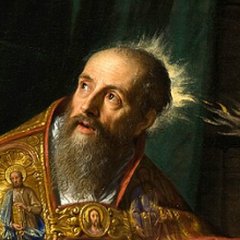
Ratzinger earns his doctorate with a study of St. Augustine, then qualifies as a professor with work on St. Bonaventure.
His doctoral thesis, finished at the University of Munich in 1953, studied how Augustine understood the Church as the people and house of God. His second thesis, required to become a professor, examined Bonaventure's theology of history and revelation. One examiner, the theologian Michael Schmaus, objected so strongly that it was nearly rejected, and Ratzinger saved it only by cutting and revising it. Augustine remained his favorite teacher for life, a thinker he said spoke to him as a friend. He went on to teach at Freising, Bonn, Münster, Tübingen and Regensburg, and his lectures drew crowds of students.
1962 to 1965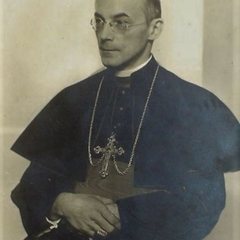
At the Second Vatican Council, the young professor serves as a theological adviser, or peritus.
He came as adviser to Cardinal Josef Frings of Cologne, who relied on the young professor to help draft speeches. One of them, in November 1963, sharply criticized the methods of the Holy Office, the Vatican's doctrinal office. Ratzinger was then seen as a reformer, and he was later named an official peritus, an expert adviser to the council. He contributed to work on Dei Verbum, the council's teaching on Scripture and revelation. Later he warned against readings of the council that treated it as a break with the Church's past. As pope, in 2005, he called instead for a hermeneutic, or way of reading, that saw reform within continuity.
1968Introduction to Christianity, based on his lectures on the Apostles' Creed, becomes a modern classic.
The book grew out of lectures he gave in 1967 at Tübingen to students from every department, not only theologians. Walking through the Apostles' Creed line by line, it explained the faith for doubtful modern readers and argued that belief is not a leap in the dark but trust in a God who is reason and love. It has been translated into many languages and is still widely read. The student revolts of 1968 at Tübingen troubled him deeply, as he saw Marxist slogans crowd out the faith even in the theology faculty. In 1969 he moved to the new university at Regensburg, where his brother Georg already lived.
1972Ratzinger helps found Communio, an international theology journal.
His partners included the Swiss theologian Hans Urs von Balthasar and the French Jesuit Henri de Lubac, both great figures of the council era. Ratzinger had earlier helped with Concilium, a journal founded in 1965, but he came to feel it pushed theology away from the Church's tradition. Communio, whose name means communion or fellowship, sought to renew theology by drawing on Scripture, the liturgy and the Church Fathers, the great teachers of the early centuries. National editions sprang up in German, Italian, English and other languages, and the journal still appears in many of them today. Several of its early editors later became bishops or cardinals.
1977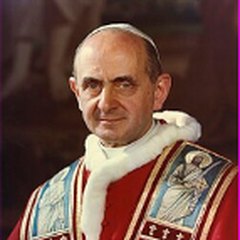
Paul VI names him Archbishop of Munich and Freising, and makes him a cardinal three months later.
Paul VI named him archbishop in March 1977. He was ordained a bishop on May 28 and made a cardinal on June 27, 1977, a rare move from the lecture hall straight to a major see. He chose the motto Co-workers of the Truth, from the Third Letter of John. His coat of arms included the crowned Moor of Freising and the bear of St. Corbinian, Freising's first bishop. In 1978 he voted in both conclaves of that year, which elected John Paul I and then John Paul II. His time in Munich lasted under five years, but it would come under scrutiny decades later.
Guardian of doctrine · 1981 to 2005
1981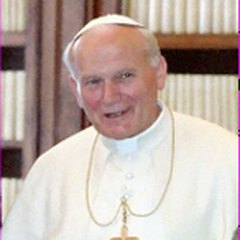
John Paul II calls him to Rome as Prefect of the Congregation for the Doctrine of the Faith.
Appointed in November 1981, he took up the post in early 1982. The office guards Catholic teaching, and as prefect he also led the Pontifical Biblical Commission and the International Theological Commission. He became John Paul's closest theological partner. He issued two instructions on liberation theology, in 1984 and 1986, which welcomed concern for the poor but rejected Marxist analysis. Critics called him the Church's enforcer for disciplining theologians such as Leonardo Boff of Brazil, who was ordered to a year of silence in 1985. From 2001 his office also handled the gravest abuse cases against priests, which gave him an early, close view of the crisis.
1992The Catechism of the Catholic Church, prepared by a commission he chaired, is published.
The project began after the 1985 Synod of Bishops asked for a single summary of Catholic belief. Ratzinger chaired a commission of cardinals and bishops, while a young Dominican, Christoph Schönborn, later cardinal of Vienna, served as editorial secretary. Drafts went to every bishop in the world, and thousands of comments came back. The finished book has four parts: the creed, the sacraments, the moral life and prayer. It was the first full catechism for the whole Church since the Roman Catechism of 1566, issued after the Council of Trent. John Paul II formally promulgated it in a document dated October 11, 1992, thirty years after Vatican II opened.
Pope Benedict XVI · 2005 to 2013
2005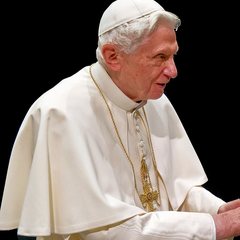
Ratzinger is elected pope on April 19 and takes the name Benedict XVI.
John Paul II had died on April 2. As dean of the College of Cardinals, Ratzinger preached at his funeral and, on the eve of the conclave, warned against what he called a dictatorship of relativism. The cardinals chose him on the second day, on the fourth ballot. He was 78, the oldest man elected in nearly three centuries, and the first German pope in almost a thousand years. From the balcony of St. Peter's he called himself a simple, humble worker in the Lord's vineyard.
He explained his name at his first general audience. It honored Benedict XV, who had worked for peace during World War I, and St. Benedict, the father of Western monasticism and patron of Europe, whose monks helped shape the continent's Christian roots (see monasticism). Many observers expected a stern pope. Instead, crowds found a gentle, soft-spoken teacher who preferred to explain the faith rather than scold.
2006Deus caritas est, God Is Love, his first encyclical, is published in January.
The letter is dated Christmas Day 2005 and was released on January 25, 2006. Its first part explained how human love, eros, and self-giving love, agape, belong together and are fulfilled in God, who is love. The second part described the Church's works of charity as an essential part of her life, not an optional extra, alongside preaching and the sacraments. Readers were struck by its warmth. Two more encyclicals followed: Spe salvi, on Christian hope, in 2007, and Caritas in veritate, Charity in Truth, on the economy and human development after the financial crisis, in 2009.
2006The Regensburg lecture on faith and reason sparks anger across the Muslim world.
On September 12 he spoke at the University of Regensburg, where he had once taught. His theme was that faith and reason belong together, and that violence in God's name goes against God's nature. To make the point he quoted the 14th-century Byzantine emperor Manuel II Palaiologos, whose harsh words about Muhammad called the Prophet's teachings evil and inhuman. Much of the lecture was in fact aimed at the West, criticizing a narrow idea of reason that shuts out God.
Protests and violence followed, and several churches were attacked. Benedict said he was deeply sorry for the reaction and that the words were not his own view. He met ambassadors from Muslim countries, and in November he prayed in silence in Istanbul's Blue Mosque. In 2007, 138 Muslim scholars answered with an open letter, A Common Word Between Us and You, which led to a Catholic-Muslim Forum that first met in Rome in 2008.
2007Summorum Pontificum lets any priest celebrate Mass with the 1962 Latin Missal.
Released on July 7, 2007, the document said the Latin Mass as it stood before the post-council reforms had never been abolished. Until then priests generally needed their bishop's permission to use it. Benedict described the new Mass and the older one as two forms, ordinary and extraordinary, of the one Roman Rite. He hoped to heal divisions over the liturgy. Many welcomed it, others saw it as a step back. In 2009 his outreach to the traditionalist Society of St. Pius X caused a storm when one bishop freed from excommunication proved to be a Holocaust denier. Benedict admitted the Vatican had erred. Pope Francis restricted the older Mass in 2021.
2007 to 2012Jesus of Nazareth, his three-volume study of Christ, appears while he is pope.
He began the work as a cardinal in 2003 and kept writing in spare hours as pope. The first volume, published in 2007, ran from Jesus' baptism to the Transfiguration. The second, in 2011, covered Holy Week through the Resurrection, and a shorter third volume on the infancy stories appeared in late 2012. He wrote it as a personal work, not official teaching, and invited readers to disagree with him. His aim was to show that the Jesus of the Gospels is the real Jesus of history, against scholarship that split the two apart. The books became international bestsellers in many languages.
2008On his visit to the United States, Benedict meets privately with victims of clergy abuse.
The April trip took him to Washington and New York. He was welcomed at the White House by President George W. Bush on his 81st birthday and celebrated Mass at the new Nationals Park. On the flight over he told reporters he was deeply ashamed of the abuse. On April 17, at the papal embassy in Washington, he met quietly with a small group of survivors from the Archdiocese of Boston, listened to their stories and prayed with them. It was the first such meeting by a pope. In New York he addressed the United Nations, visited a synagogue, prayed at Ground Zero and said Mass at Yankee Stadium.
2010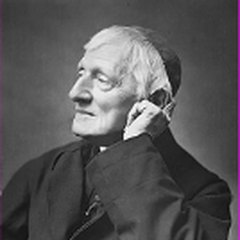
In Britain, Benedict beatifies John Henry Newman at Cofton Park, Birmingham, on September 19.
It was the first state visit of a pope to the United Kingdom, and it began with Queen Elizabeth II in Edinburgh on September 16. Some had predicted hostile crowds, but large numbers turned out. He addressed leaders in Westminster Hall, where St. Thomas More had been tried, and spoke about the place of faith in public life. He also prayed with the Archbishop of Canterbury at Westminster Abbey. Benedict had decided that beatifications would normally be led by others, but he made an exception to beatify Newman, a scholar he long admired, himself. Pope Francis canonized Newman in 2019.
2005 to 2013The abuse crisis marks his years in Rome, with real reforms and lasting criticism.
As a cardinal, in 2005 Good Friday meditations, he spoke of how much filth there was in the Church, even among priests. As pope he met victims on several trips, in the United States, Australia, Malta, Britain and Germany. In 2010, after Irish government reports exposed decades of abuse and cover-up, he wrote to the Catholics of Ireland, telling victims he was truly sorry and rebuking bishops for grave errors. The same year he toughened church law, lengthening the time limit for prosecuting abuse and treating child pornography as a grave crime.
Vatican figures later showed nearly 400 priests dismissed in 2011 and 2012. In 2006 he removed Fr. Marcial Maciel, the founder of the Legionaries of Christ, from public ministry, and in 2010 placed the order under Vatican control. Critics argued that he and the Vatican moved too slowly, including on Maciel, whose case had stalled for years while Ratzinger led the doctrinal office.
2013Benedict announces his resignation on February 11, effective February 28.
He spoke in Latin at a routine meeting of cardinals called to approve canonizations, and many in the room did not at first understand. He said that after examining his conscience before God, he had concluded his strength of mind and body was no longer adequate for the office. Church law allows a pope to resign freely, but it had almost never happened. No pope had resigned since Gregory XII in 1415, who stepped down to help end the Great Western Schism, when rival claimants divided the Church.
On February 28 he flew by helicopter to Castel Gandolfo, and at 8 p.m. the papacy fell vacant. He took the new title pope emeritus and kept the name Benedict XVI. Some praised his humility and realism, while others worried about having two men in white. He promised obedience to his successor, and on March 13 the cardinals elected Pope Francis.
Pope emeritus · 2013 to 2022
2013 to 2022As pope emeritus, he lives a life of prayer in the Mater Ecclesiae monastery in the Vatican.
After two months at Castel Gandolfo he moved into the small monastery inside the Vatican Gardens on May 2, 2013. He was cared for by his secretary, Archbishop Georg Gänswein, and a household of consecrated laywomen. He prayed, read, played the piano and received visitors. He occasionally appeared beside Pope Francis, as at the canonization of John XXIII and John Paul II in 2014 and the opening of the Holy Year of Mercy in 2015. He mostly kept his promise of silence, though a few writings drew debate. In June 2020 he visited his dying brother Georg in Regensburg, his only trip outside Italy after resigning. Georg died on July 1.
2022A Munich report finds he mishandled four abuse cases as archbishop, and he asks forgiveness.
The January report, by the law firm Westpfahl Spilker Wastl, which the archdiocese hired, reviewed how abuse was handled in Munich from 1945 to 2019. It said that in four cases he failed to act against abusive priests while archbishop, which he denied. One concerned a priest from another diocese who was accepted into Munich in 1980 and later abused again. He corrected an error about attending a 1980 meeting, after minutes showed he had been there, calling it an editing mistake by his team. In a February letter he expressed deep sorrow and asked forgiveness of all victims, while his lawyers disputed the findings.
2022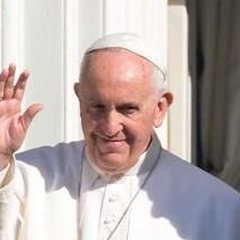
Benedict dies on December 31 at 95, and Pope Francis presides at his funeral.
He died at his monastery on the last morning of 2022. His last words were reportedly Lord, I love you, spoken in Italian in the night to a nurse. Nearly 200,000 people filed past his body in St. Peter's Basilica over three days. The funeral was held in St. Peter's Square on January 5, 2023, a simple rite, as he had asked, and a rare case of a pope burying his predecessor. His spiritual testament, released the day he died, urged Catholics to stand firm in the faith. He is buried in the grottoes beneath St. Peter's, in the tomb that once held John Paul II.