c. 30 to 451
The Early Church
How a small Jewish sect in Jerusalem became the faith of the Roman Empire, and settled its creed.
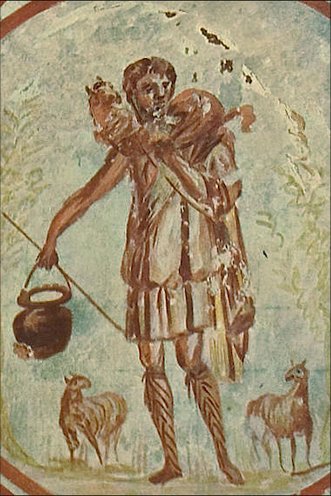
The first Christians were a small band of Jewish followers of Jesus in Jerusalem. Within three centuries, through preaching, persecution and the witness of martyrs, the faith spread across the Roman world. This timeline follows that growth, from Pentecost to the councils that put the Church's belief about Christ into words.
Apostles and martyrs · c. 30 to 300
c. 30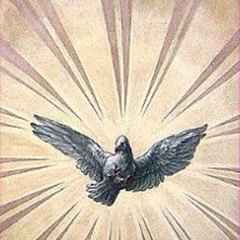
Crucifixion and Pentecost in Jerusalem. The apostles begin preaching the risen Christ.
Jesus of Nazareth was crucified under the Roman governor Pontius Pilate around the time of Passover. According to the Acts of the Apostles, the Holy Spirit came upon the disciples at Pentecost, and Peter preached to crowds in Jerusalem. That day is often called the birthday of the Church, as the first community of believers began to grow.
c. 49Council of Jerusalem rules that Gentile converts need not follow the full Mosaic law.
As non-Jews joined the Church, believers argued over whether they had to be circumcised and keep the full Law of Moses. Peter, James, Paul and Barnabas met with the elders in Jerusalem, as described in Acts 15. They asked Gentiles to avoid only a few practices, opening the way for Christianity to spread across the Roman world.
64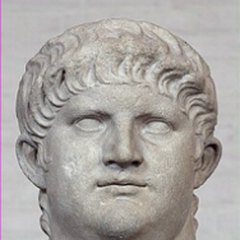
Nero's persecution follows the fire of Rome. Tradition holds that Peter and Paul are martyred there in these years.
A great fire swept Rome in 64, and the historian Tacitus records that Nero blamed the Christians and had many put to cruel deaths. Ancient tradition holds that Peter was crucified and Paul beheaded in Rome during the following years. Their tombs became places of pilgrimage, now marked by St. Peter's Basilica and St. Paul Outside the Walls.
70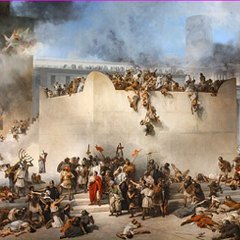
The Temple falls to Roman armies, and Christianity grows apart from Judaism.
Roman armies under Titus crushed a Jewish revolt and destroyed Jerusalem and its Temple. With the Temple gone, Judaism reorganized around the rabbis and the synagogue, while Christians, increasingly Gentile, developed their own worship and leadership. Over the following decades the two communities grew into clearly separate faiths.
c. 110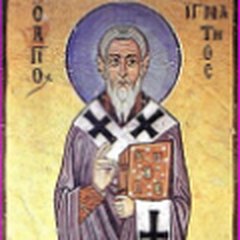
Ignatius of Antioch, on his way to martyrdom, writes the earliest known use of "the Catholic Church".
Ignatius was bishop of Antioch, one of the great early Christian cities, when he was arrested and taken to Rome to die. Along the way he wrote seven letters to churches, urging unity around their bishop. In his letter to the Smyrnaeans he used the phrase the Catholic Church, meaning the universal Church gathered around Christ.
c. 150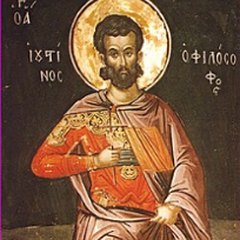
Justin Martyr describes Sunday worship, the earliest detailed account of the Mass.
Justin, a philosopher who became Christian, wrote his First Apology to the emperor to defend believers against false rumors. He described Christians gathering on Sunday to hear the writings of the apostles and prophets, pray and share bread and wine as the Eucharist. The shape he sketched still underlies the Mass, and Justin himself was martyred in Rome around 165.
250Emperor Decius launches the first empire-wide persecution.
Emperor Decius ordered every inhabitant of the empire to sacrifice to the Roman gods and obtain a certificate proving it. Christians who refused faced prison, torture or death, and Pope Fabian was among the martyrs. Many others gave in, and after Decius died in 251 the Church debated how to receive these lapsed Christians back.
Empire and creed · 300 to 451
303The Great Persecution under Diocletian, the last and harshest.
Diocletian and his co-emperors issued edicts ordering churches destroyed, Scriptures burned and clergy arrested, and later demanded that all Christians sacrifice. The persecution was harshest in the East, where it lasted for years under Galerius and Maximinus. It finally ended with edicts of toleration, beginning with Galerius in 311.
313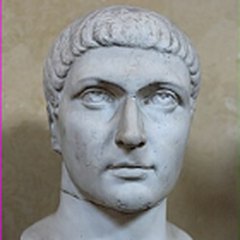
Edict of Milan: Constantine and Licinius grant Christians freedom of worship.
After Constantine won control of the West, he met Licinius, emperor in the East, at Milan. They agreed on a policy granting religious freedom to all and returning confiscated church property to Christians. The so-called edict was really a set of letters, but it ended state persecution and began Christianity's rise to a public role in the empire.
325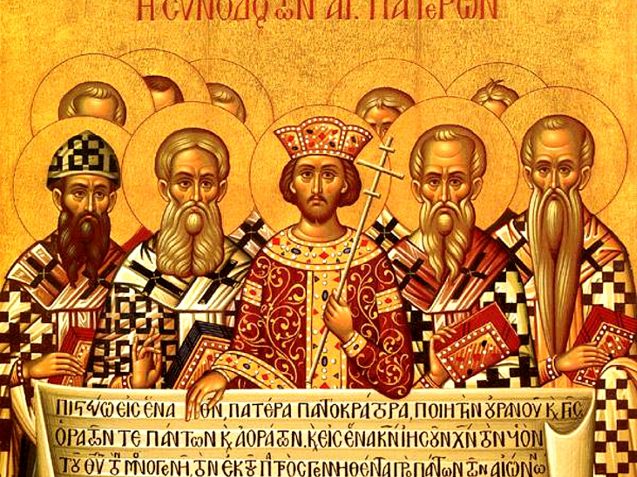
Council of Nicaea condemns Arianism and produces the first form of the Nicene Creed.
Arius, a priest of Alexandria, taught that the Son of God was created and not fully divine. Constantine called bishops from across the empire to Nicaea, the first ecumenical council. They declared the Son of one substance with the Father and also addressed the date of Easter, though arguments over Arianism continued for decades.
380Edict of Thessalonica makes Nicene Christianity the religion of the empire.
Emperor Theodosius I, with his co-emperors Gratian and Valentinian II, decreed that all their subjects should follow the faith taught by the bishops of Rome and Alexandria. Those who rejected it were labeled heretics. The next year the Council of Constantinople reaffirmed and expanded the Nicene Creed, and paganism was steadily restricted in the years that followed.
382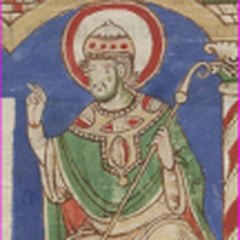
Pope Damasus asks Jerome to revise the Latin Gospels, work that grows into the Vulgate Bible.
Jerome, a brilliant scholar, served as secretary to Pope Damasus, who asked him to correct the inconsistent Latin versions of the Gospels. Jerome later moved to Bethlehem and translated much of the Old Testament directly from Hebrew. His Vulgate became the standard Bible of the Western Church, and the Council of Trent later declared it authentic.
397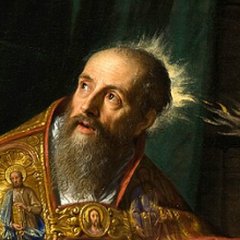
Council of Carthage affirms the list of books of the Bible.
African bishops meeting at Carthage, with Augustine of Hippo present, confirmed a list of scriptural books first set out at Hippo in 393. Their list matches the Old and New Testament books in Catholic Bibles today. Local councils like this reflected a growing consensus, though the canon was formally defined for the whole Church only at Trent.
451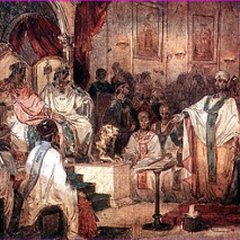
Council of Chalcedon defines Christ as one person in two natures, divine and human.
The council met near Constantinople to settle bitter disputes about how Christ is both God and man. Drawing on a letter from Pope Leo the Great, it taught that Christ is one person in two natures, unmixed and undivided. Several churches in Egypt, Syria and Armenia rejected the decision, leading to a lasting split with the Oriental Orthodox churches.
Dates before 100 are approximate.
← All timelines