386 to 2016
Great Saints Through the Ages
A few of the men and women whose lives reshaped the Church in their time.
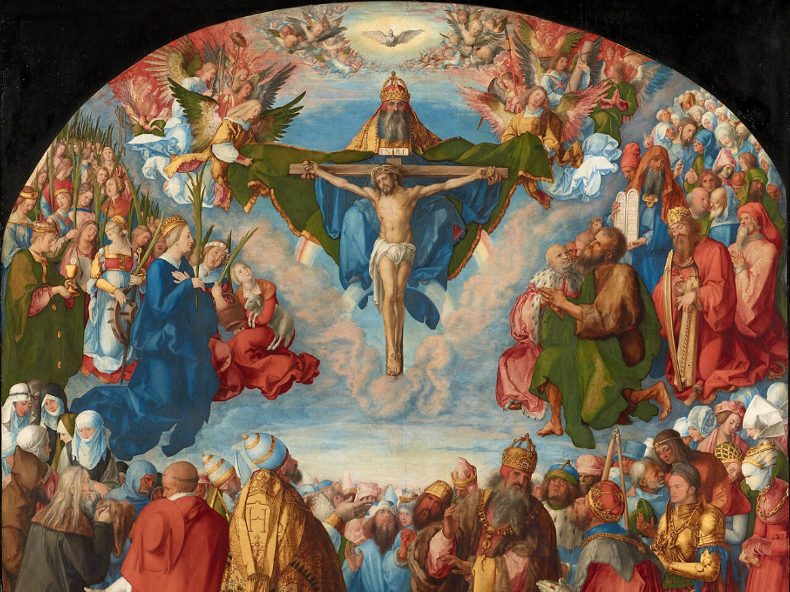
Saints are men and women the Church holds up as models of holiness and believes are with God in heaven. They come from every age and walk of life: hermits and queens, scholars and servants, missionaries and mothers. Here are some whose lives reshaped the Church in their time.
Late antiquity and the Middle Ages · 386 to 1431
386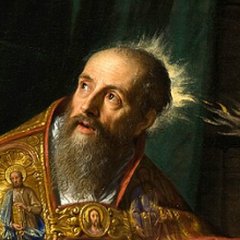
St. Augustine converts in Milan. His Confessions and City of God shape Western thought.
Augustine was a brilliant teacher of rhetoric from North Africa who had long searched for truth, influenced by the preaching of Bishop Ambrose of Milan and the prayers of his mother, St. Monica. He was baptized by Ambrose in 387 and later became bishop of Hippo. His writings on grace, sin and the Church remain among the most influential in Christian history.
432St. Patrick begins his mission to Ireland, by traditional dating.
As a teenager Patrick was kidnapped from Roman Britain and enslaved in Ireland, where he turned to prayer before escaping home. Years later he returned as a bishop to preach to the people who had once held him captive. His own short writings, the Confession and a letter, survive, and he became Ireland's best-loved patron saint.
c. 529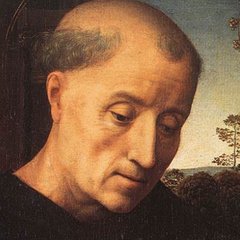
St. Benedict founds Monte Cassino. His Rule guides Western monasticism.
Benedict of Nursia left the distractions of Rome to live as a hermit before gathering monks around him. At Monte Cassino, on a hilltop between Rome and Naples, he wrote a balanced Rule built on prayer, work and community life. Benedictine monasteries later preserved learning across Europe, and Benedict was named a patron saint of Europe in 1964.
1209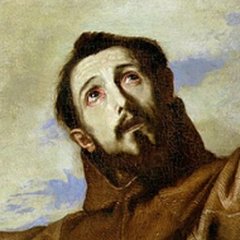
St. Francis of Assisi wins approval for his order of friars, devoted to poverty.
Francis, the son of a wealthy cloth merchant, gave up his inheritance to live in radical poverty and serve the poor and the sick. When his small band of followers grew, he went to Rome and received Pope Innocent III's verbal approval for their simple way of life. The Franciscans spread rapidly, preaching across Europe and beyond.
1216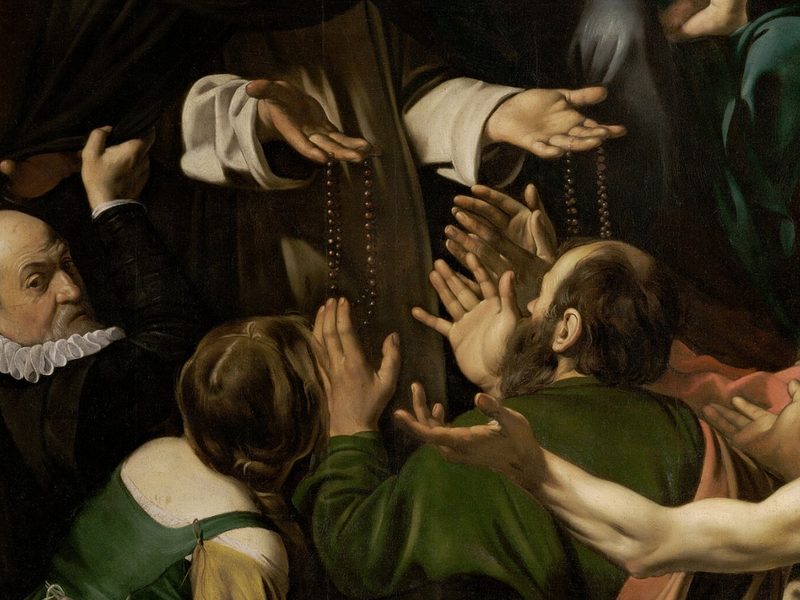
St. Dominic's Order of Preachers is approved.
Dominic de Guzmán, a Spanish priest, saw how poorly prepared preaching was failing to answer the Albigensian heresy in southern France. He founded a community of well-educated friars who would live simply and preach the faith, and Pope Honorius III approved it in 1216. Dominicans soon became leading teachers at the new universities.
c. 1266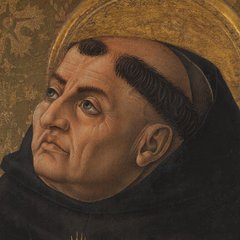
St. Thomas Aquinas begins the Summa Theologiae, which he works on until shortly before his death in 1274.
Thomas Aquinas, a Dominican friar, wrote the Summa as a clear guide to theology for students, joining the faith with reason drawn from Aristotle. Late in 1273 he stopped writing after a profound experience at Mass, saying all he had written seemed like straw, and the work was left unfinished. It remains a cornerstone of Catholic theology.
1376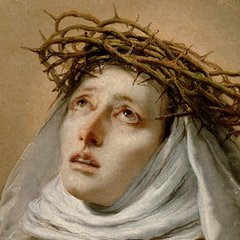
St. Catherine of Siena urges Pope Gregory XI to leave Avignon. He returns the papacy to Rome in 1377.
For about seventy years the popes had lived in Avignon, in southern France, which many Christians saw as a scandal. Catherine, a laywoman and mystic from Siena, wrote boldly to the pope and traveled to Avignon to urge him home. Her courage made her a patron of Italy and Europe, and she was later named a Doctor of the Church.
1431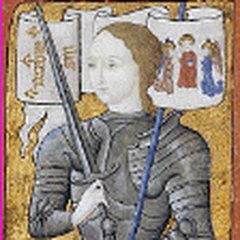
St. Joan of Arc is burned at Rouen. She is canonized in 1920.
Joan, a peasant girl from Domrémy, said heavenly voices called her to help France during the Hundred Years' War, and she helped lift the siege of Orléans in 1429. Captured and handed to the English, she was tried by a pro-English church court and executed. A later retrial declared her innocent, and she is a patron saint of France.
Reform and the modern age · 1540 to 2016
1540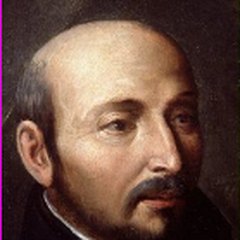
St. Ignatius of Loyola's Society of Jesus is approved.
Ignatius was a Basque soldier whose conversion began while recovering from a cannonball wound. With companions he met as a student in Paris, he formed the Society of Jesus, which Pope Paul III approved in 1540. The Jesuits became famous for their schools and universities, their missionaries such as St. Francis Xavier, and the Spiritual Exercises Ignatius wrote.
1562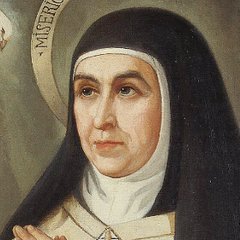
St. Teresa of Ávila founds her first reformed Carmelite convent.
Teresa felt that her large Carmelite convent in Ávila had grown too relaxed, so she opened the small convent of St. Joseph to live a stricter life of prayer and poverty. She went on to found many more reformed houses and worked with St. John of the Cross to reform the friars. Her writings on prayer made her a Doctor of the Church.
1858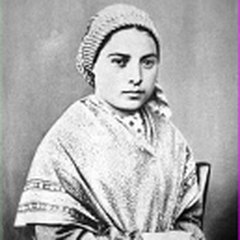
St. Bernadette reports visions of Mary at Lourdes.
Bernadette Soubirous was a poor, sickly fourteen-year-old when she said a beautiful lady appeared to her in a grotto near Lourdes. The lady called herself the Immaculate Conception, and a spring Bernadette uncovered soon drew pilgrims seeking healing. Bernadette later became a nun in Nevers and was canonized in 1933.
1897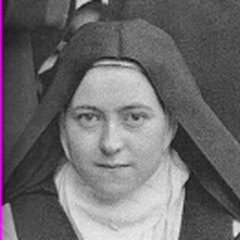
St. Thérèse of Lisieux dies at 24. Her "little way" makes her a Doctor of the Church.
Thérèse entered the Carmelite convent at Lisieux at fifteen and died of tuberculosis after a hidden life. Her autobiography, The Story of a Soul, taught that holiness comes through small acts done with great love and trust in God. It became a worldwide favorite, and Pope John Paul II named her a Doctor of the Church in 1997.
1950St. Teresa of Calcutta founds the Missionaries of Charity. She is canonized in 2016.
Mother Teresa, an ethnic Albanian nun from Skopje teaching in India, felt called to serve the poorest of the poor in the slums of Calcutta. Her new congregation cared for the dying, orphans, lepers and the abandoned, and it spread around the world. She received the Nobel Peace Prize in 1979, and Pope Francis canonized her in Rome.
2002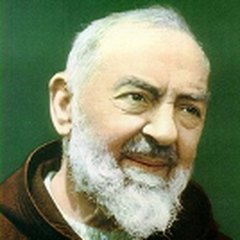
St. Padre Pio, the Capuchin friar known for the stigmata, is canonized.
Padre Pio was an Italian Capuchin who lived for decades at San Giovanni Rotondo, where crowds came for his Masses and confession. He bore wounds like those of Christ for about fifty years and founded a large hospital called the Home for the Relief of Suffering. He died in 1968, and Pope John Paul II canonized him.