325 to 1965
The 21 Ecumenical Councils
The gatherings of bishops the Catholic Church counts as ecumenical, and what each is best remembered for.
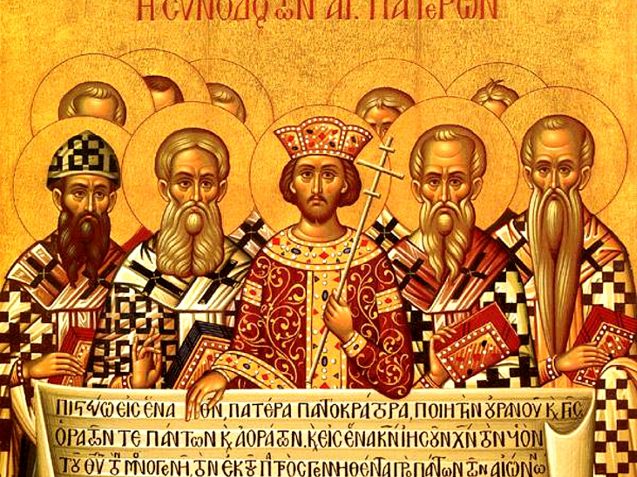
When serious questions about the faith arose, bishops from across the Church gathered in council to settle them. The Catholic Church counts 21 of these ecumenical councils. Their decisions gave us the Nicene Creed, the canon of Scripture, the reforms of Trent and the renewal of Vatican II.
The first seven · 325 to 787
325Nicaea I condemns Arianism and affirms the Son is one in being with the Father.
Emperor Constantine summoned bishops to Nicaea, in modern Turkey, to settle a dispute stirred by the priest Arius, who taught that the Son was a created being. The bishops declared the Son to be of the same substance as the Father and produced the first form of the Nicene Creed. The council also addressed how to calculate the date of Easter.
381
Constantinople I affirms the divinity of the Holy Spirit and expands the Creed.
Called by Emperor Theodosius I, this council confronted those who denied that the Holy Spirit is fully God. It expanded the Nicene Creed, adding the lines about the Spirit as Lord and giver of life who is worshipped and glorified with the Father and the Son. This version is essentially the Creed many Christians still recite at Sunday worship.
431Ephesus proclaims Mary as Theotokos, Mother of God.
Nestorius, archbishop of Constantinople, objected to calling Mary Mother of God, preferring Mother of Christ. Led by Cyril of Alexandria, the council insisted that Jesus is one divine person, so Mary truly bore God made flesh. Nestorius was deposed, and the title Theotokos became central to devotion to Mary in both East and West.
451
Chalcedon defines Christ as one person in two natures.
The largest of the early councils was called to answer those who blended Christ's divine and human natures into one. A letter from Pope Leo the Great, known as his Tome, shaped its definition that Christ is fully God and fully man, unmixed yet undivided. Several eastern churches, today called Oriental Orthodox, did not accept the decision, causing a lasting division.
553
Constantinople II condemns the writings known as the Three Chapters.
Emperor Justinian hoped to win back Christians who had rejected Chalcedon. The council condemned writings of three earlier theologians, Theodore of Mopsuestia, Theodoret of Cyrus and Ibas of Edessa, judged to lean toward Nestorianism. Pope Vigilius resisted for a time but eventually accepted the decision, which caused controversy in the West and did little to heal the eastern split.
680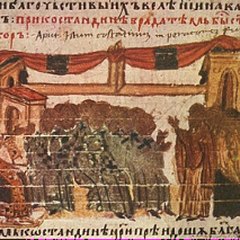
Constantinople III teaches that Christ has both a divine and a human will.
Some theologians, hoping to reconcile divided churches, taught that Christ had only one will, a view called monothelitism. The council rejected it, teaching that Christ's human will freely and fully agreed with his divine will. Drawing on the work of Maximus the Confessor and Pope Agatho, it also posthumously condemned Pope Honorius I for supporting the error.
787Nicaea II upholds the veneration of icons.
The Byzantine Empire had been torn by iconoclasm, a movement that destroyed religious images as idolatrous. Convened under Empress Irene, the council taught that images may be honored, while worship belongs to God alone, and that honor shown to an image passes to the one it depicts. Iconoclasm later returned briefly before being ended for good in 843.
Medieval councils · 869 to 1517
869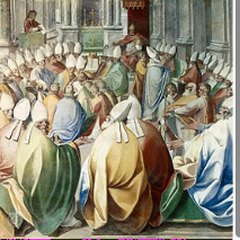
Constantinople IV deposes Patriarch Photius.
Photius, a brilliant scholar, had been made patriarch after his predecessor Ignatius was removed, sparking a dispute with Rome. The council deposed Photius and restored Ignatius. Photius was later reinstated, and Eastern Orthodox churches recognize a later council of 879 to 880 instead, so this assembly is counted as ecumenical mainly in the Catholic tradition.
1123Lateran I confirms the Concordat of Worms on the appointment of bishops.
The Investiture Controversy had pitted popes against emperors over who could appoint and install bishops. The Concordat of Worms, agreed in 1122 between Pope Callixtus II and Emperor Henry V, left spiritual investiture to the Church while allowing the emperor a role in temporal matters. Lateran I was the first council recognized as ecumenical to meet in the West.
1139Lateran II deals with the aftermath of a papal schism and declares clerical marriages invalid.
Pope Innocent II called the council after a schism in which a rival, Anacletus II, had claimed the papacy. It annulled measures of the rival party and passed reforming canons, including one stating that marriages attempted by priests and others in major orders were not true marriages. This strengthened the Western rule of clerical celibacy.
1179Lateran III requires a two-thirds majority of cardinals to elect a pope.
Pope Alexander III called the council after a long schism in which Emperor Frederick Barbarossa had backed rival popes. To prevent future disputed elections, it ruled that a pope must be chosen by two-thirds of the cardinals. That basic requirement still shapes papal conclaves today, and the council also addressed heresy and clerical discipline.
1215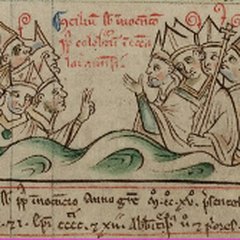
Lateran IV uses the term transubstantiation and requires yearly confession and Communion.
Called by Innocent III, this was the largest council of the Middle Ages, drawing bishops, abbots and envoys from across Christendom. It used the word transubstantiation to describe the change of bread and wine into Christ's body and blood. It also required Catholics to confess at least once a year and receive Communion at Easter, a rule still in force.
1245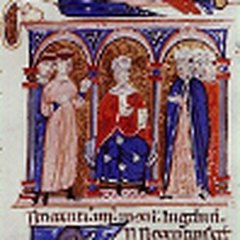
Lyon I deposes Emperor Frederick II.
Pope Innocent IV fled Italy to Lyon amid a bitter struggle with Emperor Frederick II, whose power threatened the Papal States. The council declared Frederick deposed, accusing him of perjury, sacrilege and suspicion of heresy. Frederick ignored the sentence and kept fighting until his death in 1250, and the conflict weakened both the empire and the papacy.
1274Lyon II attempts reunion with the Eastern churches and sets conclave rules.
Pope Gregory X called the council, and envoys of Byzantine Emperor Michael VIII accepted union with Rome, largely for political reasons. The union was rejected by most eastern clergy and faithful and soon collapsed, while the council also issued rules locking the cardinals in conclave until they chose a pope. Bonaventure died during the council, and Thomas Aquinas died on his way there.
1311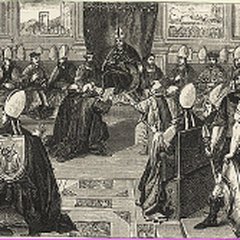
Vienne suppresses the Knights Templar.
King Philip IV of France pressed Pope Clement V to act against the Templars, a wealthy military order whose members had been arrested and tortured into confessions. The council did not find them guilty, but Clement suppressed the order by papal decree in 1312. Most of their property passed to the Knights Hospitaller, and Grand Master Jacques de Molay was burned in 1314.
1414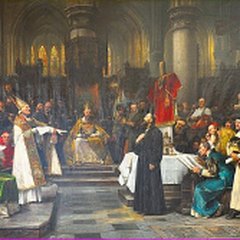
Constance ends the Western Schism with the election of Martin V.
Called with support from Emperor Sigismund, the council faced three rival popes. It accepted one resignation, deposed the other two claimants, and in 1417 elected Martin V, restoring a single papacy. The council also condemned the Bohemian reformer Jan Hus, who was burned at the stake despite a promise of safe conduct, a decision that fueled lasting conflict in Bohemia.
1431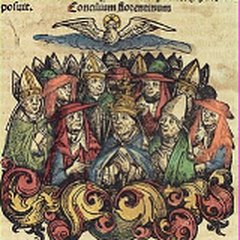
Basel-Ferrara-Florence reaches a brief union with the Greek Church in 1439.
The council began in Basel but quarrelled with the pope, who moved it to Ferrara and then Florence. There, Greek leaders hoping for western help against the Ottoman Turks agreed to a decree of union. It was rejected by many in the East and did not survive the fall of Constantinople in 1453, while a remnant at Basel elected an antipope.
1512Lateran V addresses church reform on the eve of the Reformation.
Opened by Julius II and continued under Leo X, the council issued decrees on preaching, clerical conduct and other reforms, but they were not seriously enforced. It closed in March 1517. Just months later Martin Luther posted his ninety-five theses, and the Reformation revealed how much more sweeping reform many believed was needed.
The modern councils · 1545 to 1965
1545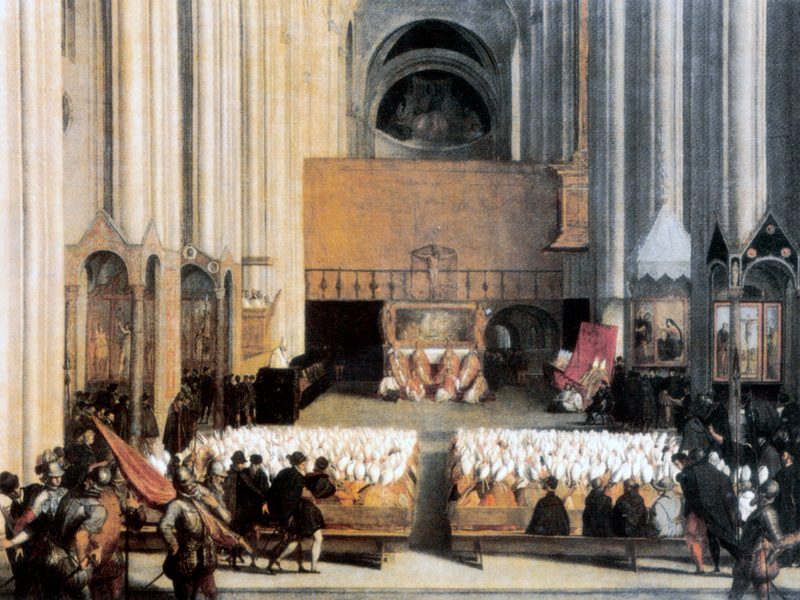
Trent answers the Reformation, defines doctrine on Scripture and the sacraments, and founds seminaries.
Meeting in three periods over nearly two decades, the council clarified Catholic teaching on Scripture and Tradition, justification and the seven sacraments. It ordered every diocese to train priests in seminaries and tackled abuses in church life. Its work led to the Roman Catechism and a standard Roman Missal, shaping Catholic life for about four centuries.
1869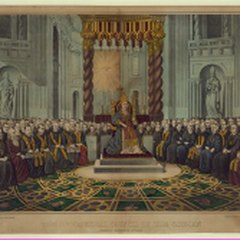
Vatican I defines papal primacy and infallibility.
Called by Pius IX, the council issued a document on faith and reason and the constitution Pastor Aeternus on the papacy. It taught that the pope has full authority over the whole Church and is protected from error when solemnly defining faith or morals. The council was suspended when Italian troops seized Rome in 1870 and never formally resumed.
1962Vatican II renews the liturgy and the Church's engagement with the modern world, closing in 1965.
Opened by John XXIII and closed by Paul VI, the council gathered bishops from around the world in four sessions. Its documents allowed Mass in local languages, encouraged Bible reading, stressed the role of laypeople, and opened new dialogue with other Christians, other religions and modern society. It remains the defining event of the modern Catholic Church.
Years show when each council opened. Several met over many sessions.
← All timelines