1874 to 1936
G. K. Chesterton
The cheerful giant of paradox who argued his way into the Catholic Church.
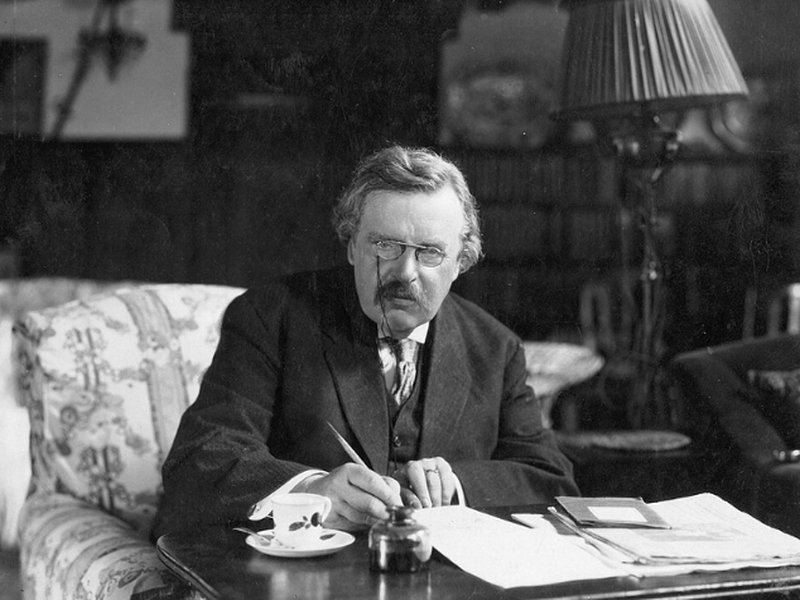
Gilbert Keith Chesterton was a journalist, novelist, poet and debater whose wit and love of paradox made him one of the best-known writers in the English-speaking world. He came to Christian faith as a young man, defended it in books like Orthodoxy and The Everlasting Man, and at 48 became a Catholic. Along the way he created Father Brown, the gentle priest-detective still loved by readers and viewers today.
Young writer · 1874 to 1908
1874
Gilbert Keith Chesterton is born in Kensington, London, on May 29.
His family were comfortable, liberal and only loosely religious, and he was baptized in the Church of England. His father ran a family estate-agency business and loved toy theaters and drawing, which young Gilbert loved too.
1893Chesterton studies art at the Slade School in London and passes through a time of doubt and gloom.
He never finished a degree. He later wrote that in these years he wrestled with dark thoughts and pessimism and came out of them with a deep gratitude for the simple fact that things exist, a wonder that runs through all his work.
c. 1900
Chesterton meets Hilaire Belloc, the Catholic writer who becomes his closest friend and ally.
The two argued for the same causes so often that George Bernard Shaw nicknamed them the Chesterbelloc. Belloc, a Catholic from birth, had a lasting influence on Chesterton's thinking about faith, history and society.
1901
Chesterton marries Frances Blogg, a devout Anglican who helps draw him toward Christian faith.
They married at St. Mary Abbots in Kensington. Frances managed his chaotic schedule and their home for the rest of his life. They had no children, but they loved having children around them.
1903The Blatchford debate: Chesterton answers the atheist editor Robert Blatchford in a long newspaper battle over God and free will.
Blatchford, editor of the socialist paper The Clarion, attacked Christianity and argued that people have no free will. Chesterton replied in a series of articles, and the exchange helped him work out the defense of the faith he later gave in Orthodoxy. He also took on the rationalist writer Joseph McCabe in his book Heretics.
1904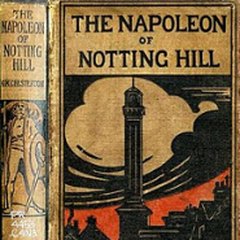
The Napoleon of Notting Hill, his first novel, imagines a London where every borough fights for its own dignity.
The story, set in the future, celebrates local loyalty against a dull, faceless modern state, a theme he returned to throughout his life.
1905
Heretics takes on the leading writers of the day, including Shaw, Kipling and H. G. Wells.
Chesterton argued that each of these thinkers had a philosophy whether he admitted it or not, and that it mattered whether that philosophy was true. A critic challenged him to set out his own beliefs, and he answered with his next book.
1908Orthodoxy sets out how Chesterton came to believe the Christian creed, the same year as The Man Who Was Thursday.
In Orthodoxy he described setting out to build his own philosophy and finding that orthodox Christianity had got there first. The Man Who Was Thursday, a wild comic thriller about anarchists and detectives, appeared the same year.
Fame and Father Brown · 1909 to 1921
1909The Chestertons move from London to Beaconsfield, a small town in Buckinghamshire.
He kept writing at a tremendous pace: essays for newspapers every week, poems, biographies and novels. Beaconsfield remained their home for the rest of his life.
1911The Innocence of Father Brown introduces a modest priest-detective who solves crimes by understanding sinners.
Chesterton based Father Brown partly on his friend Fr. John O'Connor, a Catholic priest in Yorkshire whose knowledge of human evil surprised him. Five collections of Father Brown stories followed.
1911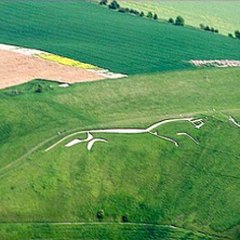
The Ballad of the White Horse, a long poem about King Alfred's fight against the Danes, is published.
The poem tells how Mary appears to Alfred in his darkest hour. It became one of his best-loved works and was read for comfort by many during the world wars.
1914Chesterton collapses with a serious illness and lies in a coma for weeks into 1915.
He was working himself very hard and had grown very heavy. His recovery was slow, and friends feared for his life during that winter.
1918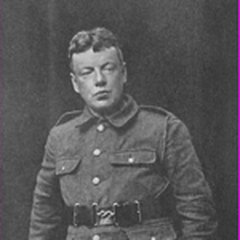
Cecil Chesterton, his younger brother and a Catholic convert, dies in France after serving in the war.
Cecil had become a Catholic in 1912 and enlisted as a private. He died of illness in a military hospital weeks after the armistice. Gilbert took over his brother's newspaper in his memory.
The Catholic years · 1922 to 1936
1922Chesterton is received into the Catholic Church on July 30 by Fr. John O'Connor.
The ceremony took place in a makeshift chapel at the Railway Hotel in Beaconsfield, since the town had no Catholic church building of its own. He wrote that the Church was the only thing that saves a man from the degrading slavery of being a child of his age.
1923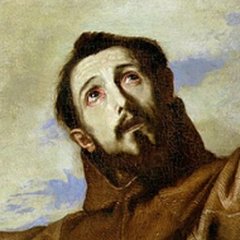
St. Francis of Assisi, his first book as a Catholic, presents the saint as a joyful lover of God and creation.
Chesterton had loved Francis since his youth. The short biography was aimed at readers who admired Francis but did not understand his faith.
1925The Everlasting Man retells the story of humanity and of Christ as a reply to H. G. Wells.
The book argued that human beings and the coming of Christ are both utterly unique in history. C. S. Lewis later credited it with helping him toward Christian faith. That year Chesterton also launched G.K.'s Weekly, his own paper.
1926The Distributist League is founded, and Frances follows her husband into the Catholic Church.
Chesterton and Belloc championed distributism, the idea, drawn from Catholic social teaching, that property and small businesses should be spread among as many families as possible. Frances was received into the Church that year.
1927Do We Agree? Chesterton debates George Bernard Shaw before a packed London hall, with Belloc in the chair.
Shaw, the famous playwright and freethinker, was Chesterton's favorite opponent and a close friend. They argued in print and on stage for decades about religion, socialism and property. This debate, held at Kingsway Hall, was published the next year as a short book.
1930Chesterton lectures at the University of Notre Dame in Indiana and receives an honorary degree.
He spent several weeks there giving lectures on history and literature, and loved the American students and the football crowds. He made several lecture tours of the United States.
1931Chesterton debates Clarence Darrow, the famous agnostic lawyer, in New York on the question Will the World Return to Religion?
Darrow had become famous for defending the teaching of evolution at the Scopes trial in 1925. The two met at the Mecca Temple in New York before a crowd of several thousand. Chesterton argued that the modern world, having given up faith, would find itself returning to it.
1933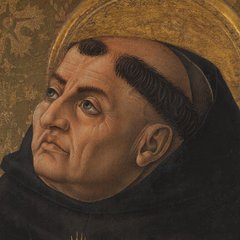
St. Thomas Aquinas, his short life of the great theologian, wins praise from leading scholars.
The French philosopher Étienne Gilson, a leading expert on Aquinas, called it the best book ever written on the saint. Chesterton reportedly dictated much of it with little research at hand.
1934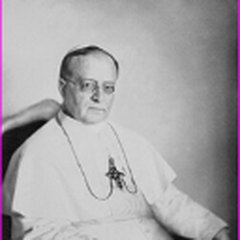
Pius XI names Chesterton a Knight Commander of the Order of St. Gregory the Great.
The papal honor recognized his service to the Church through his writing. It was one of several honors he received in his final years.
1936Chesterton dies at home in Beaconsfield on June 14, and Pius XI calls him a defender of the Catholic faith.
His last words were reportedly a greeting to Frances and to his secretary. The pope's telegram of sympathy honored him as a gifted defender of the Catholic faith. His Autobiography was published later that year.
His legacy · 2013 to today
2013Father Brown, a BBC One series based on his detective priest, begins with Mark Williams in the title role.
Loosely drawn from Chesterton's stories, the series moves the little priest to an English village in the 1950s. First shown on January 14, 2013, it became a long-running daytime favorite, with new series still being made.
2013The Bishop of Northampton asks a priest to study whether a cause for Chesterton's canonization should be opened.
Admirers around the world, many of them in the American Chesterton Society, had long hoped for a cause. In 2019 the bishop decided not to open one for now, citing among his reasons the lack of a local devotion to Chesterton. His books remain widely read, and Father Brown lives on in film and television.