1st century to today
St. Joseph
How the quiet carpenter of Nazareth became the patron of the whole Church.
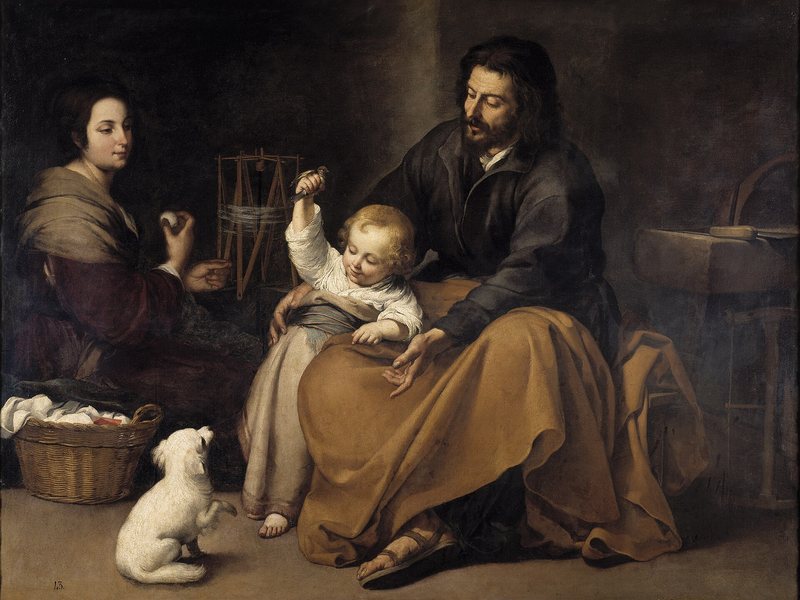
The Gospels never record a single word spoken by Joseph, yet he protected Mary and raised Jesus as his own son. For centuries Christians honored him quietly. Then, from the late Middle Ages on, preachers, saints and popes brought him forward, until he was named Patron of the Universal Church. This timeline follows that slow growth, from the Gospel stories through Teresa of Ávila and Brother André to the Year of St. Joseph proclaimed by Pope Francis.
In the Gospels and early memory · 1st century to c. 1000
1st century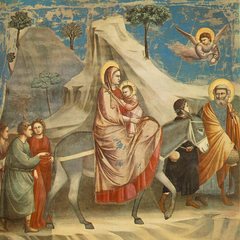
Joseph appears in the Gospels of Matthew and Luke as the husband of Mary and the guardian of Jesus.
Matthew calls him a righteous man and tells of the dreams in which an angel guides him: to take Mary as his wife, to flee into Egypt, and to return. Luke shows him at Bethlehem and at the finding of the twelve-year-old Jesus in the Temple. After that he disappears from the story, and most Christians have assumed he died before Jesus began his ministry.
c. 150The Protoevangelium of James, a popular non-biblical story, pictures Joseph as an elderly widower.
This text is one of the apocrypha, early writings the Church never accepted as Scripture. It tried to explain the Gospels' mention of the brothers of Jesus by giving Joseph children from an earlier marriage. Its picture of an old Joseph shaped Christian art for centuries, though the Church has never taught it as fact.
383St. Jerome argues that Joseph, like Mary, lived a life of virginity.
Writing against a Roman named Helvidius, Jerome held that the brothers of Jesus were relatives such as cousins. His view became the common one in the Latin West. A later Egyptian work, the History of Joseph the Carpenter, shows that Christians in the East were also telling stories in his honor.
c. 800 to 1000Joseph's name appears on March 19 in some Western martyrologies, the Church's lists of saints' days.
For centuries this was a simple mention rather than a great feast. Devotion to him grew mostly among monks, and later among Servites and Franciscans, who began keeping his feast in the 1300s.
A devotion grows · 1400 to 1700
c. 1400 to 1416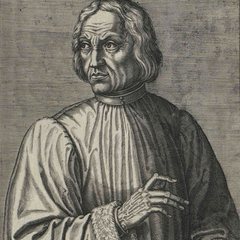
Jean Gerson, chancellor of the University of Paris, campaigns for wider honor to Joseph.
Gerson wrote an office for the marriage of Mary and Joseph and a long Latin poem about him. At the Council of Constance (1414 to 1418) he urged the whole Church to celebrate a feast in Joseph's honor.
c. 1420s to 1440s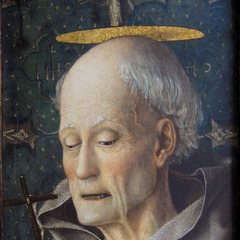
St. Bernardine of Siena, the great Franciscan preacher, spreads devotion to Joseph across Italy.
Bernardine drew huge crowds in the towns of Italy. His sermon on Joseph as the faithful guardian of God's treasures is still read by priests and religious in the Liturgy of the Hours on March 19.
c. 1479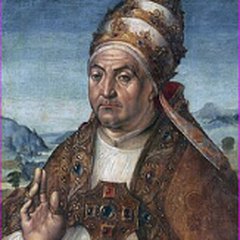
Pope Sixtus IV, a Franciscan, adds the feast of St. Joseph on March 19 to the Roman calendar.
Sources date the change to around 1479 to 1481. It was at first a modest feast, but it put Joseph into the prayer of the whole Latin Church for the first time.
1562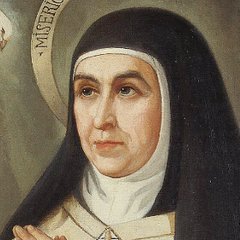
St. Teresa of Ávila opens her first reformed convent and names it for St. Joseph.
Teresa believed Joseph had healed her after a long illness, and in her autobiography she urged everyone to try asking his help. St. Joseph's in Ávila opened on August 24, 1562. She went on to name many of her later convents for him, and her Carmelites carried his devotion around the world.
1621Pope Gregory XV makes March 19 a holy day of obligation for the whole Church.
A holy day of obligation is one on which Catholics are expected to attend Mass. In this era Joseph also became a patron of the missions: in 1624 missionaries placed New France, in today's Canada, under his protection.
Patron of the Church · 1847 to 1937
1847Pius IX extends a feast of the Patronage of St. Joseph to the whole Church.
The feast, already kept by the Carmelites and others, celebrated Joseph as protector. It prepared the way for the much larger step Pius took twenty-three years later.
1870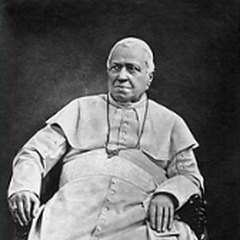
Pius IX declares Joseph Patron of the Universal Church on December 8.
The decree, Quemadmodum Deus, came in a dark year for the pope: Italian troops had taken Rome in September, and the First Vatican Council had been suspended. Just as Joseph had protected the Holy Family, Pius placed the whole Church under his care.
1889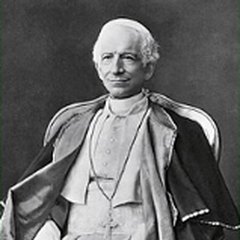
Leo XIII writes Quamquam pluries, the first encyclical devoted to St. Joseph.
Issued on August 15, it presented Joseph as a model for fathers and for working people. Leo also gave Catholics the prayer beginning To you, O blessed Joseph, to be said after the Rosary in October. Many parishes still pray it.
1904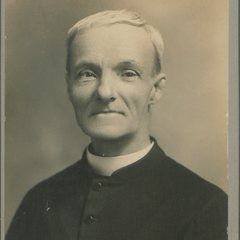
Brother André Bessette builds a small chapel to St. Joseph on Mount Royal in Montreal.
A humble doorkeeper of the Congregation of Holy Cross, André sent the sick who came to him to pray to Joseph, and many reported cures. Work on a great basilica began in 1924. St. Joseph's Oratory, finished in 1967, is the largest church in Canada. André died in 1937 and was canonized in 2010.
Modern popes and St. Joseph · 1920 to today
1920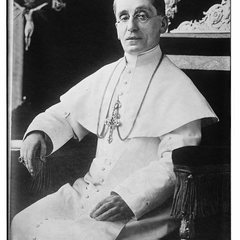
Benedict XV marks fifty years of Joseph's patronage and holds him up to workers.
In his letter Bonum sane, written after the First World War, Benedict urged working people to look to Joseph rather than to revolutionary movements. The line Blessed be St. Joseph, her most chaste spouse was added to the Divine Praises, a prayer said at Benediction, in this period.
1955Pius XII creates the feast of St. Joseph the Worker on May 1.
May 1 was already celebrated as May Day by labor and socialist movements. Pius gave the day a Christian meaning, presenting the carpenter of Nazareth as a sign of the dignity of human work.
1962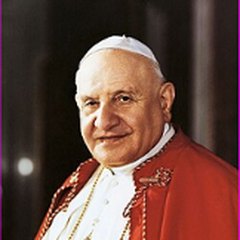
John XXIII adds Joseph's name to the Roman Canon, the oldest Eucharistic Prayer of the Mass.
John, born Angelo Roncalli, had a deep devotion to Joseph and had already named him patron of the Second Vatican Council. The change was announced in November 1962, while the council was meeting, and took effect on December 8.
1989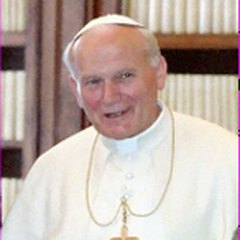
John Paul II writes Redemptoris Custos, Guardian of the Redeemer, on Joseph's place in the story of salvation.
Issued on August 15, the hundredth anniversary of Leo XIII's encyclical, it reflected on Joseph as husband, father and worker, and on his silent faith.
2013Joseph's name is added to Eucharistic Prayers II, III and IV at Mass.
The decree had been prepared under Benedict XVI, born Joseph Ratzinger, and was confirmed by Pope Francis, who had begun his own ministry on March 19, 2013. It was published on May 1, 2013.
2020 to 2021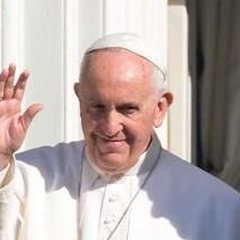
Pope Francis writes Patris corde, With a Father's Heart, and opens a Year of St. Joseph.
Published on December 8, 2020, the 150th anniversary of Joseph's patronage, the letter, written during the COVID-19 pandemic, praised him as a creatively courageous father. Francis said he kept a statue of the sleeping Joseph on his desk and tucked prayer requests beneath it. The Year ran until December 8, 2021.
2021Seven new invocations are added to the Litany of St. Joseph.
The additions, announced on May 1, 2021, include Guardian of the Redeemer, Servant of Christ, Patron of exiles, Patron of the afflicted and Patron of the poor. Catholics still honor Joseph each year on March 19 and May 1.