1300 to 2025
Holy Years and Jubilees
Seven centuries of pilgrims walking to Rome through a Holy Door.
A Holy Year, or Jubilee, is a year of pardon and pilgrimage that takes its name from the jubilee of the Old Testament. Since 1300, popes have called them first every hundred years, then every fifty, thirty-three and now twenty-five, with extra ones for special anniversaries. Pilgrims pass through the Holy Doors of Rome's great basilicas, which are opened at the start of the year and sealed again at its end.
The first Holy Years · 1300 to 1500
1300
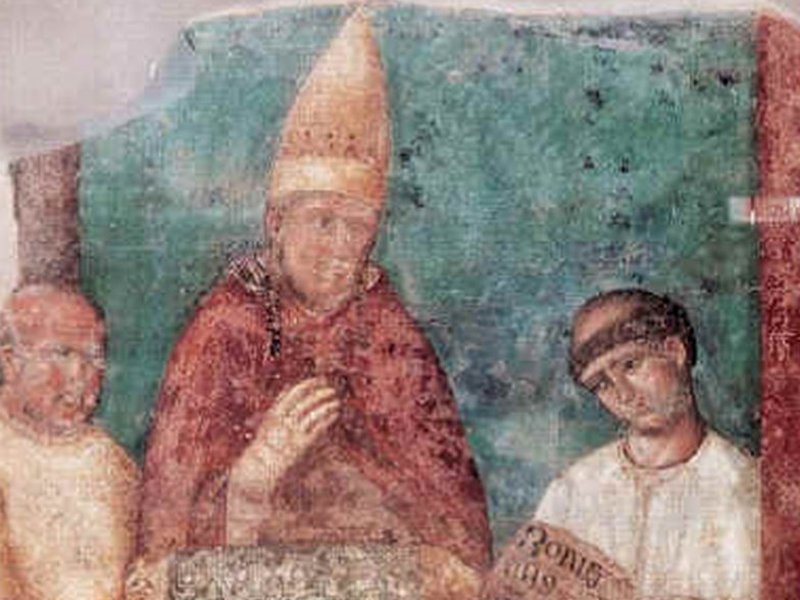
Boniface VIII proclaims the first Holy Year, promising a special pardon to pilgrims who visit Rome.
Crowds poured into Rome that year, drawn by rumors of a great centenary pardon. Boniface's bull of February 22, 1300 set the terms, including visits to the basilicas of St. Peter and St. Paul. Dante set his Divine Comedy in that spring, and the chronicler Giovanni Villani described the crowds.
1350
Clement VI, living in Avignon, sets a Jubilee every 50 years, and pilgrims flock to Rome again.
Romans asked the pope not to make them wait a hundred years. In 1343 Clement VI agreed to a fifty-year cycle, echoing the Jubilee of the Old Testament, and added the Lateran Basilica to the churches to visit. He did not come to Rome himself, and St. Bridget of Sweden was among the pilgrims.
1390Urban VI shortens the wait to 33 years, the length of Christ's life, and Boniface IX holds the Jubilee.
Urban VI announced the change in 1389 but died before the year began. During the Western Schism, with rival popes, Boniface IX presided over the Jubilee, and St. Mary Major became the fourth basilica on the pilgrims' route.
1450
Nicholas V holds a great Jubilee, but a crush of pilgrims on a Roman bridge kills nearly two hundred people.
Thousands came to Rome, and Nicholas V canonized St. Bernardine of Siena during the year. In December a panic on the crowded bridge leading to St. Peter's left many dead, and the pope later cleared the approaches to the bridge.
1475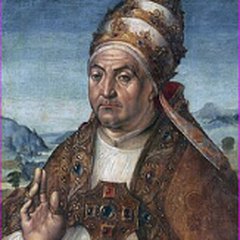
Sixtus IV holds the first Holy Year under the new 25-year rule and builds a bridge for pilgrims.
In 1470 Paul II set a Holy Year every 25 years so that each generation could share in one, and that rule still holds. Sixtus IV built the Ponte Sisto across the Tiber for the crowds, and work on the Sistine Chapel began around this time.
1500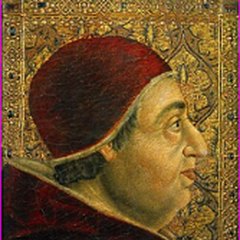
Alexander VI opens the Holy Door of St. Peter's with a set ceremony on Christmas Eve 1499.
Holy Doors already existed, but Alexander VI gave their opening the solemn form, with the pope knocking and the walled door being taken down, followed for centuries afterward. The door is opened at the start of the year and sealed again at its end.
Pilgrims through war and change · 1575 to 1900
1575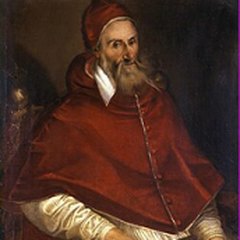
Gregory XIII welcomes huge crowds, and St. Philip Neri's confraternity feeds and houses them.
Philip Neri had founded the Confraternity of the Most Holy Trinity of Pilgrims in 1548. In this Holy Year its members cared for many thousands of poor pilgrims, washing their feet and serving them meals, an example later Jubilees followed.
1825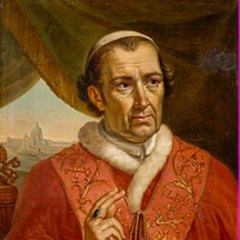
Leo XII holds the only full Holy Year of the 1800s after the Napoleonic wars.
No Jubilee was held in 1800 because Rome was in turmoil after the French occupation and the death of Pius VI. Leo XII revived the tradition in 1825. In 1850 there was none, since Pius IX had fled the revolution in Rome.
1875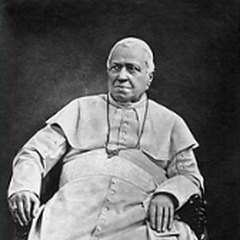
Pius IX proclaims a Jubilee, but with the Papal States lost, the Holy Door stays closed.
Italian troops had taken Rome in 1870, and Pius IX saw himself as a prisoner in the Vatican. He granted the Jubilee indulgence but held none of the usual public ceremonies.
1900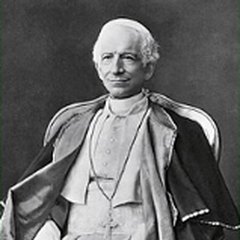
Leo XIII, aged 89, opens the Holy Door to begin a new century.
Leo XIII had dedicated the human race to the Sacred Heart in 1899 and opened the Holy Year on Christmas Eve that year. Railways brought pilgrims from across Europe in greater numbers than ever before.
The modern Jubilees · 1933 to 2025
1933
Pius XI holds an extraordinary Jubilee for the 1,900th anniversary of Christ's death and resurrection.
The Holy Year of the Redemption ran from April 1933 to April 1934, outside the usual 25-year rhythm. Pius XI had already held the ordinary Holy Year of 1925, when he also canonized St. Thérèse of Lisieux.
1950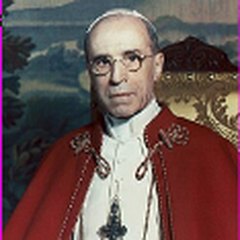
Pius XII defines the dogma of Mary's Assumption during the Holy Year.
After the Second World War, millions of pilgrims came to Rome. On November 1, 1950 Pius XII solemnly declared that Mary was taken body and soul into heaven, and that year he also announced that excavations had found the tomb of St. Peter beneath the basilica.
1975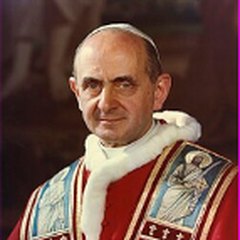
Paul VI calls a Holy Year of renewal and reconciliation.
It was the first Holy Year after the Second Vatican Council. Paul VI canonized Elizabeth Ann Seton, the first saint born in what is now the United States, during the year.
2000John Paul II leads the Great Jubilee for the 2,000th anniversary of Christ's birth.
He opened the Holy Door on Christmas Eve 1999, asked forgiveness for the sins of Christians in a service in March 2000, and traveled to the Holy Land. About two million young people gathered at Tor Vergata outside Rome for World Youth Day that August.
2015Francis opens an Extraordinary Jubilee of Mercy, with Holy Doors in dioceses around the world.
Francis opened the first Holy Door of the year in Bangui, Central African Republic, on November 29, 2015, ahead of St. Peter's on December 8. For the first time every diocese could open its own Door of Mercy, so people could share in the Jubilee without traveling to Rome.
2025The Jubilee of Hope: Francis opens it as Pilgrims of Hope, and Leo XIV brings it to a close.
Francis opened the Holy Door of St. Peter's on December 24, 2024, and later opened one in a Roman prison. He died in April 2025, during the Holy Year. His successor, Leo XIV, the first pope from the United States, closed the Jubilee in January 2026.