Pius XI issued this encyclical for the fortieth anniversary of Rerum Novarum, in the middle of the Great Depression. It gave the classic statement of subsidiarity: larger bodies, including the state, should not take over what families, communities and smaller groups can do for themselves, but should support them. The idea had roots in earlier teaching, and it remains a cornerstone of Catholic thinking about society.
1891 to 2025
Catholic Social Teaching
The major documents on work, justice, peace, development and care for creation.
As factories transformed the world in the 1800s, popes began writing about the rights of workers, the duties of the wealthy and the common good. Over more than a century that teaching has grown to cover wages, war and peace, poverty, migration and care for the earth. Its starting point is simple: every person has a God-given dignity.
Foundations · 1891 to 1965
1891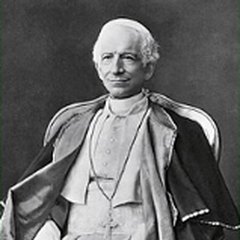
Rerum Novarum, Leo XIII: workers' rights to fair wages and to form unions.
Pope Leo XIII wrote this encyclical as the Industrial Revolution left many factory workers poor and overworked. He rejected both socialism and unchecked capitalism, defending private property while insisting that employers pay a wage a worker can live on. It is usually seen as the founding document of modern Catholic social teaching, and later popes marked its anniversaries with documents of their own.
1931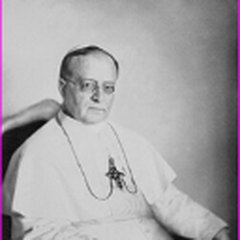
Quadragesimo Anno, Pius XI: first names the principle of subsidiarity.
Pius XI issued this encyclical for the fortieth anniversary of Rerum Novarum, in the middle of the Great Depression. It gave the classic statement of subsidiarity: larger bodies, including the state, should not take over what families, communities and smaller groups can do for themselves, but should support them. The idea had roots in earlier teaching, and it remains a cornerstone of Catholic thinking about society.
1961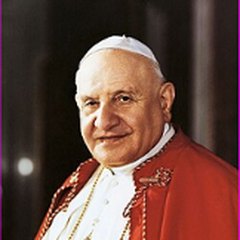
Mater et Magistra, John XXIII: on Christianity and social progress.
John XXIII marked seventy years since Rerum Novarum by looking at a world changed by technology, farming crises and the gap between rich and poor nations. He called for justice between countries as well as within them. The letter also praised the method of see, judge, act, which Catholic lay movements used to turn faith into practical action.
1963
Pacem in Terris, John XXIII: peace and human rights, addressed to all people of good will.
John XXIII wrote this encyclical shortly after the Cuban Missile Crisis brought the world close to nuclear war. It was the first papal encyclical addressed not only to Catholics but to all people of good will, and it set out a list of human rights and duties as the foundation of peace. He died only a couple of months later.
1965
Gaudium et Spes, Vatican II: the Church in the modern world.
This pastoral constitution was the last document approved by the Second Vatican Council. It opens by saying the joys and hopes, griefs and anxieties of people today are also those of Christ's followers. It addresses marriage and family, culture, economic life, politics and peace, and it shaped how the Church speaks to the wider world.
Development and dignity · 1967 to 2004
1967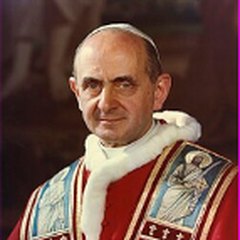
Populorum Progressio, Paul VI: development as the new name for peace.
Paul VI wrote this encyclical as many former colonies were seeking a way out of poverty. He argued that true development means the growth of the whole person and every people, not just economic output. His line that development is the new name for peace became famous, and John Paul II later honored the letter with Sollicitudo Rei Socialis.
1981
Laborem Exercens, John Paul II: the dignity of human work.
John Paul II wrote this encyclical for the ninetieth anniversary of Rerum Novarum, at a time when the Solidarity trade union movement was rising in his native Poland. He taught that work is a key to human dignity and that people matter more than the capital they work with. Its release was delayed after the assassination attempt on him that year.
1987
Sollicitudo Rei Socialis, John Paul II: solidarity and global development.
Written for the twentieth anniversary of Populorum Progressio, this encyclical looked at a world split between East and West and between North and South. John Paul II named solidarity as a virtue, a firm commitment to the common good, and spoke of structures of sin that trap people in poverty. It widened the Church's attention to global inequality.
1991
Centesimus Annus, John Paul II: the economy and society after communism.
John Paul II issued this encyclical for the hundredth anniversary of Rerum Novarum, just after communism collapsed in Eastern Europe. He explained why the Soviet system failed and recognized the value of free markets, while warning that markets need a strong legal and moral framework. He insisted that people must never be reduced to mere tools of the economy.
2004
Compendium of the Social Doctrine of the Church gathers the teaching in one volume.
The Pontifical Council for Justice and Peace prepared this book at the request of John Paul II. It organizes more than a century of papal and conciliar teaching into themes such as human dignity, the common good, subsidiarity and solidarity. It quickly became a standard reference for students, parishes and anyone wanting the whole picture in one place.
Recent teaching · 2009 to 2025
2009
Caritas in Veritate, Benedict XVI: love and truth in the global economy.
Benedict XVI published this encyclical in 2009, soon after the global financial crisis. He argued that charity must be joined to truth, and that business and economics need ethics, trust and a place for generosity, not only profit. He also called for reform of international institutions and linked care for the environment to human development.
2015
Laudato Si', Francis: care for our common home.
Pope Francis took the title from St. Francis of Assisi's Canticle of the Creatures, which praises God for creation. The encyclical treats climate change, pollution and the loss of biodiversity as moral issues, stressing that harm to the earth falls hardest on the poor. It introduced the idea of integral ecology and drew wide attention before the Paris climate talks.
2020
Fratelli Tutti, Francis: fraternity and social friendship.
Francis signed this encyclical in Assisi during the COVID-19 pandemic. Built around the parable of the Good Samaritan, it calls for a love that crosses borders and for a politics devoted to the common good. Francis said he was encouraged by his dialogue with the Grand Imam of Al-Azhar, Ahmad al-Tayeb, with whom he had signed a document on human fraternity.
2025
Dilexi Te, Leo XIV: his first apostolic exhortation, on love for the poor.
Pope Francis had begun this document before his death, and Leo XIV completed it and made it his own. Released in October 2025, it teaches that love for the poor lies at the heart of the Gospel and cannot be separated from faith. It draws on Scripture and the saints to call the whole Church to stand close to those in need.