385 to today
The Inquisition: History and Myth
What the Church's courts for heresy really were, and how a legend grew far larger than the record.
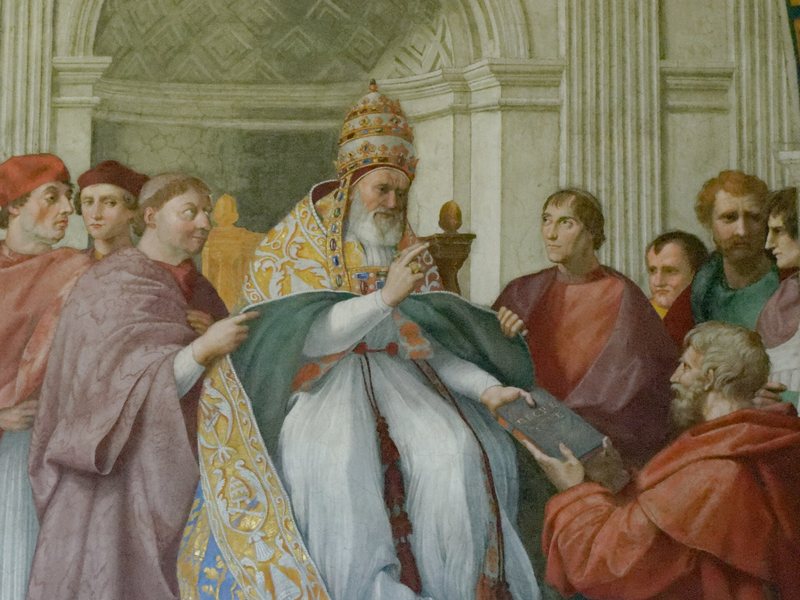
In medieval Europe, heresy was not only a sin but a crime against public order, punished by kings and sometimes by mobs. The inquisitions were church courts created to bring that violence under law: written charges, trained judges, defense, and a goal of reconciling the accused. Most cases ended in penance, not death. Some courts, above all royal ones like Spain's, were harsh, and the Church has said so. But modern research in the archives, encouraged by the Church herself, shows a story very different from the popular legend.
Heresy and the law · 385 to 1184
385
Emperor Maximus executes Priscillian, a Spanish bishop accused of heresy, and saints protest.
Roman law already treated heresy as a crime against the state. Priscillian, bishop of Ávila, led an ascetic movement that rival Spanish bishops, chief among them Ithacius of Ossonoba, accused of Gnostic and Manichaean errors. They carried the case to the usurping emperor Magnus Maximus at Trier, where Priscillian was tried on a charge of sorcery and beheaded with several companions. St. Martin of Tours had begged the emperor not to shed blood over a church dispute, and St. Ambrose of Milan refused communion with the accusing bishops. Pope Siricius also disapproved, and Ithacius was later deposed. For centuries afterward, executions for heresy were rare in the West.
c. 1144
St. Bernard of Clairvaux insists that faith must be won by persuasion, after a crowd burns heretics in Cologne.
Most early burnings of heretics were the work of rulers or mobs, not churchmen. King Robert II of France burned a group of canons at Orléans in 1022, and around 1143 the people of Cologne seized accused heretics and burned them against the clergy's wishes. Everwin, provost of the Premonstratensian house at Steinfeld, wrote to St. Bernard for guidance. Bernard answered in his sermons on the Song of Songs. Of the Cologne crowd he said that he approved their zeal but not their deed, because faith is to be persuaded, not imposed. In 1145 he traveled to southern France himself to preach against heresy.
1184
Pope Lucius III issues Ad abolendam at Verona, ordering bishops to seek out heresy in their dioceses.
Issued on November 4 in the presence of Emperor Frederick Barbarossa, the decree joined the authority of pope and emperor against heresy. It named the movements of the day, among them the Cathars and the Poor of Lyons, or Waldensians, and placed them under excommunication. Bishops were to visit suspect parishes once or twice a year and have trustworthy residents name, under oath, anyone holding secret heretical meetings. The accused could clear themselves, while the obstinate were handed to secular rulers for punishment. It was not yet an inquisition with its own judges, but it replaced rumor and lynching with a process run by the Church.
The medieval inquisition · c. 1200 to 1456
c. 1200The Cathars spread through southern France and northern Italy, alarming bishops and rulers alike.
The Cathars, also called Albigensians after the town of Albi, taught that the material world was the work of an evil power. They rejected the sacraments, the Incarnation and the resurrection of the body, and condemned marriage and the swearing of oaths. An inner circle called the perfect lived by severe fasting, while ordinary believers hoped to receive the sect's single rite, the consolamentum, near death. Medieval society rested on oaths of loyalty, so princes saw a threat to public order itself. When the papal legate Peter of Castelnau was murdered in January 1208, Innocent III called the Albigensian Crusade, a long war against the Cathars' noble protectors.
1206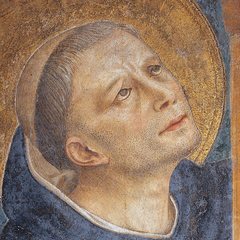
St. Dominic begins preaching among the Cathars, living in poverty to win them by example and argument.
In 1206 the Spanish canon Dominic de Guzmán and his bishop, Diego of Osma, met papal envoys in Languedoc who were failing to win back the Cathars. Diego urged them to give up horses and fine clothes and go on foot, begging, as the apostles had. Dominic debated Cathar leaders in public at towns such as Fanjeaux and Montréal, and founded a house at Prouille for women converts. His Order of Preachers, approved by Pope Honorius III in December 1216, was built for study and preaching. Contrary to legend, Dominic was never an inquisitor. He died at Bologna on August 6, 1221, a decade before the papal inquisition began.
1231 to 1233Pope Gregory IX sends trained judges, mostly Dominican and Franciscan friars, to try heresy cases.
Emperor Frederick II had already decreed death by burning for heretics in Lombardy in 1224, and local lords and crowds still acted on their own. Pope Gregory IX, a canon lawyer, answered by sending judges who held their authority directly from Rome. From 1231 he commissioned inquisitors in Germany and Italy, and in 1233 he entrusted the work in southern France to the Dominicans, soon joined by Franciscans. An inquisitor usually opened with a public sermon and a period of grace, often two weeks to a month, during which those who came forward freely received light penances. Educated judges and a fixed procedure took the place of local passions.
1252Innocent IV permits torture in heresy cases, following Roman law, within strict limits.
The bull Ad extirpanda, issued on May 15, came weeks after Cathar sympathizers murdered the Dominican inquisitor St. Peter of Verona near Milan. Roman law, revived in the universities, already allowed torture to test the word of suspects, and secular courts used it far more freely. Innocent IV permitted it in heresy cases only without loss of limb or danger of life. Later church lawyers added that it could be applied only once, and that a confession made under torture counted only if the accused repeated it freely afterward. Peter, who by tradition wrote the Creed in his own blood as he died, was canonized in 1253.
c. 1324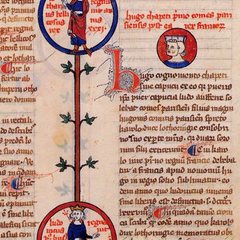
Bernard Gui, inquisitor of Toulouse, completes a manual on how to conduct trials.
Bernard Gui, a Dominican from the Limousin, served as inquisitor at Toulouse from 1307 to 1323 and then became bishop of Lodève. His manual, the Practica, described the beliefs of Cathars, Waldensians, Beguins and others in careful detail and gave model forms for each step of a trial. Because his book of sentences survives, he is one of the best documented judges of the Middle Ages. Recent research counts 636 people (or communities) convicted by his tribunals, of whom no more than about 45 were executed. Most received penances such as pilgrimages, crosses sewn on their clothes, or prison. The villain of Umberto Eco's The Name of the Rose was far harsher than the record.
1431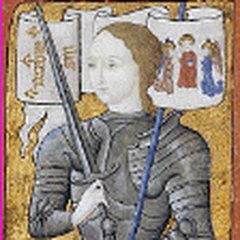
St. Joan of Arc is tried at Rouen by a court serving the English and burned on May 30.
Joan, a peasant girl from Domrémy who believed God had sent her to save France, lifted the English siege of Orléans in 1429 and saw Charles VII crowned at Reims. Burgundian troops captured her at Compiègne in May 1430 and sold her to the English, who wanted her discredited. The trial was run by Pierre Cauchon, bishop of Beauvais and a partisan of the English, and against church law she was held in a military prison guarded by English soldiers. Joan asked to be taken before the pope, and her appeal was ignored. Condemned as a relapsed heretic, she was burned in the Old Market square of Rouen at about nineteen.
1456
A papal retrial declares Joan's condemnation null on July 7.
Charles VII, who had retaken Rouen, wanted the verdict reviewed, and Joan's aged mother, Isabelle Romée, and her brothers petitioned Rome. Pope Callixtus III authorized a new trial in 1455, led by Jean Bréhal, the Inquisitor of France. The court heard more than a hundred witnesses, from her childhood neighbors to soldiers who had fought beside her, and examined the records of the first trial. On July 7, 1456, it declared the condemnation null, citing fraud, coercion and violations of procedure. Joan was beatified by St. Pius X in 1909 and canonized by Benedict XV in 1920. She is a patron saint of France.
Spain, Rome and Galileo · 1478 to 1633
1478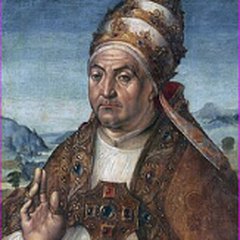
Sixtus IV allows Ferdinand and Isabella to name inquisitors, creating the Spanish Inquisition.
Spain was home to many conversos, Jews who had accepted baptism, a great number of them after the riots of 1391. Some were suspected of keeping their old faith in secret, and popular resentment of them ran high. At the request of Ferdinand and Isabella, Sixtus IV issued the bull Exigit sinceras devotionis affectus on November 1, 1478. Unlike the medieval courts, the new tribunal answered to the Crown, which appointed its officials, later governed it through a royal council called the Suprema, and kept its confiscations. The first inquisitors began work in Seville in 1480, and the first auto-da-fé, a public reading of sentences, took place there in February 1481.
1482Sixtus IV protests that Spain's inquisitors are driven by greed and are condemning the innocent.
In a bull dated April 18, the pope complained that the inquisitors of Aragon were moved by greed rather than zeal for the faith, and that faithful Christians had been imprisoned, tortured and condemned on the word of enemies, rivals and servants, without real proof. He ordered that the accused have counsel, that they learn who had testified against them, and that appeals to Rome be allowed. King Ferdinand protested angrily, and within months the pope suspended the bull. Rome went on hearing appeals from conversos and pressing for restraint, though the Crown guarded its control of the tribunal jealously.
1483Tomás de Torquemada, a Dominican and Isabella's confessor, becomes Inquisitor General.
Torquemada, prior of the Dominican house of Santa Cruz in Segovia, was a nephew of the noted theologian Cardinal Juan de Torquemada and lived austerely himself. In 1484 he drew up written instructions for the tribunals. He also urged the monarchs toward their decree of March 31, 1492, which expelled Spain's Jews, a measure of the Crown; Pope Alexander VI admitted many of the exiles to Rome and the Papal States. The early decades were the harshest: Henry Kamen estimates about 2,000 executions between 1480 and 1530. Llorente later credited Torquemada alone with more than 10,000 burnings. He died at Ávila in 1498.
1542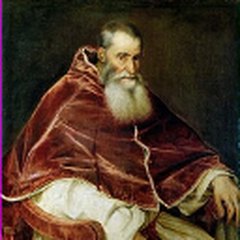
Paul III founds the Roman Inquisition, a commission of cardinals, after approving Portugal's in 1536.
Portugal's Inquisition was approved in 1536 at the request of King John III. The Roman body, set up by the bull Licet ab initio on July 21, 1542, was different: a commission of six cardinals, among them Gian Pietro Carafa, the future Paul IV, answering to the pope rather than a king. It met the spread of Protestant teaching in Italy, and historians such as John Tedeschi have found it careful and generally milder than Spain's. In 1588 Sixtus V organized it as the Congregation of the Holy Office. Its best-known death sentence fell on the former Dominican Giordano Bruno, burned in Rome in 1600 chiefly for denying doctrines such as the Trinity.
1559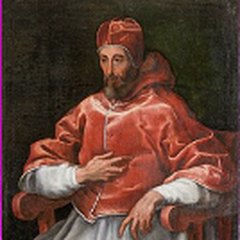
Paul IV publishes the Index of Forbidden Books, a list of works Catholics were not to read.
Printing had made books cheap and quick to spread, and with them came Protestant tracts and pamphlets of every kind. Paul IV's Index was severe, banning all the works of some authors outright. The Council of Trent issued a milder version in 1564 under Pius IV, and Pius V created a Congregation of the Index in 1571 to keep it current. Many listed books could be read with permission. Leo XIII revised the rules in 1897. The last edition appeared in 1948, and in 1966 the Church announced that the Index no longer had the force of church law, while urging Catholics to keep using prudence in what they read.
1567The Black Legend begins with a Protestant pamphlet against the Spanish Inquisition printed in Heidelberg.
The book, Sanctae Inquisitionis Hispanicae Artes, or Some Arts of the Holy Spanish Inquisition, appeared under the name Reginaldus Gonsalvius Montanus. Its real authors were probably Spanish Protestant exiles. It came out as the Dutch revolt against Philip II was beginning, and within two years it was translated into English, French, Dutch and German. Its lurid picture of secret trials and cruel tortures, joined to tales of Spanish conduct in the Americas and the Netherlands, shaped Protestant views of Catholic Spain for centuries. The Spanish writer Julián Juderías named this tradition the Black Legend in 1914.
1614The Spanish Inquisition rejects witch-hunting after its inquisitor Alonso de Salazar Frías finds no proof of witchcraft.
In November 1610 an auto-da-fé at Logroño sentenced people from the Basque village of Zugarramurdi accused of forming a witches' coven. Six were burned, and five more who had died in prison were burned in effigy. One of the three judges, Alonso de Salazar Frías, had his doubts. Sent to investigate in 1611, he heard some 1,800 people, many of them children, and found the confessions worthless, observing that there had been no witches until people began talking and writing about them. The Inquisition's instructions of August 1614 set strict rules of evidence, and burnings for witchcraft in Spain effectively ended. Secular courts elsewhere, Catholic and Protestant, went on executing tens of thousands.
1616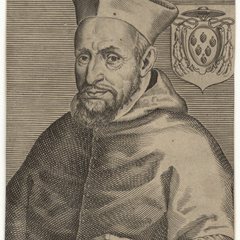
St. Robert Bellarmine tells Galileo not to hold or defend that the earth moves around the sun.
Copernicus, a canon of the Church, had dedicated his sun-centered theory to Pope Paul III in 1543. But in 1616 it was not yet proven. No one could detect the yearly shift in the stars' positions it predicted, which was first measured in 1838, and theologians judged it contrary to the plain sense of Scripture. In a 1615 letter, Bellarmine wrote that if a real proof were found, Scripture would have to be read anew with great care. On February 26, 1616, he conveyed the Church's order to Galileo, and on March 5 Copernicus's book was suspended until corrected. Galileo was not punished, and Bellarmine gave him a certificate saying so.
1633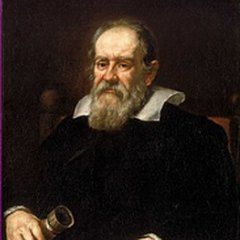
Galileo is tried in Rome and found vehemently suspected of heresy for his Dialogue.
Galileo's Dialogue Concerning the Two Chief World Systems, published in Florence in 1632, argued for the moving earth and put a favorite argument of Pope Urban VIII, once his admirer, in the mouth of a character named Simplicio. Urban felt betrayed, and the Holy Office judged that Galileo had broken the order of 1616. On June 22 Galileo abjured. He was not tortured or put in a dungeon, and the famous line about the earth still moving is a later legend. He spent his last years under house arrest at his villa at Arcetri near Florence, where he wrote his Two New Sciences, and died there in 1642.
Legend and reckoning · 1817 to today
1817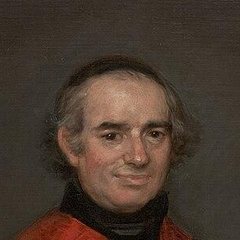
Juan Antonio Llorente, a former official of the Inquisition, publishes a hostile history with inflated numbers.
Llorente had served as secretary of the Inquisition's court in Madrid from 1789 to 1791. He later backed the regime of Joseph Bonaparte and fled to France when it fell. His Critical History of the Spanish Inquisition, published in Paris in 1817 and 1818, claimed 31,912 burnings, and he reportedly destroyed some of the documents he had used. Joined to Voltaire and other Enlightenment critics, who had made the auto-da-fé a byword in works such as Candide, his book fixed the popular image for more than a century. Historians such as Henry Kamen and Edward Peters have since shown how far it exceeds the record.
1834The Spanish Inquisition is abolished for good on July 15 by the regent Maria Christina.
The tribunal had been suppressed by Napoleon's decrees of Chamartín in 1808 and by the Cortes of Cádiz in 1813, then restored by Ferdinand VII in 1814 and abolished again in 1820. The final decree came on July 15, 1834, from the regent Maria Christina, who governed for her young daughter Isabella II. Studying the case summaries the local tribunals sent to the Suprema for 1540 to 1700, Gustav Henningsen and Jaime Contreras counted 44,674 trials and 826 executions in person, under 2 percent. Roughly a quarter of the cases concerned careless or erroneous statements about the faith, and most ended in penances, fines or acquittal.
1965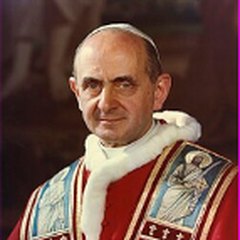
Paul VI renames the Holy Office the Congregation for the Doctrine of the Faith, and the Index ends in 1966.
Pius X had already dropped the word Inquisition from its title in 1908, renaming it the Supreme Sacred Congregation of the Holy Office. Paul VI's reform, issued on December 7, 1965, the eve of the closing of the Second Vatican Council, gave it a new name and a new emphasis: promoting sound doctrine, not only correcting error. On June 14, 1966, it announced that the Index no longer bound as church law. Cardinal Joseph Ratzinger, later Benedict XVI, led it from 1981 to 2005. Since 2022 it has been the Dicastery for the Doctrine of the Faith, and it still guards church teaching and judges the gravest crimes under church law.
1992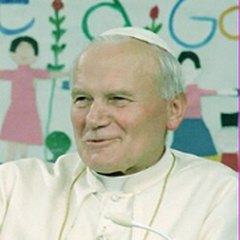
St. John Paul II closes a study of the Galileo case, acknowledging the theologians' error.
In 1979, marking the centenary of Albert Einstein's birth, John Paul II asked for a fresh and honest study of the Galileo case, and a commission began work in 1981. Cardinal Paul Poupard presented its conclusions on October 31, 1992, to the Pontifical Academy of Sciences. In his address that day, the pope called the affair a tragic mutual incomprehension. He said the theologians of the time had erred in treating a question of science as a matter of faith, and that Galileo, a sincere believer, had understood how to read Scripture better than his opponents did. Faith and reason, he said, cannot truly contradict each other, since both come from God.
1998 to 2004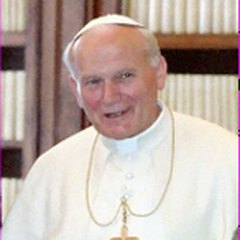
The Church opens its archives and asks pardon, then publishes what historians found.
The archives of the Holy Office opened to scholars on January 22, 1998, and historians of many backgrounds met at a Vatican symposium that October. On the Day of Pardon, March 12, 2000, in the Great Jubilee year, John Paul II and his cardinals asked God's forgiveness for sins committed by Christians in the service of truth, including the use of force. It was the Church's own humble act, made freely and in prayer.
The symposium volume, edited by Agostino Borromeo, was presented on June 15, 2004. Presenting it, Borromeo cited about 125,000 trials in Spain, with roughly 1 percent ending in execution, and 5.7 percent of some 13,000 defendants in Portugal sentenced to death. Many executions, including most witch burnings, were the work of civil courts. In a letter for the occasion, the pope wrote that asking forgiveness first requires exact knowledge of the facts.