c. 30 to 2025
Popes Who Shaped History
Turning points of the papacy across two millennia.
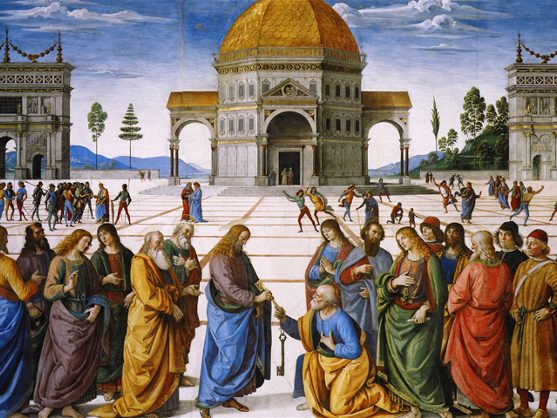
The pope is the bishop of Rome and the successor of St. Peter, whom Catholics believe Jesus made the rock of his Church. Some 267 men have held the office. These are the ones whose choices changed the course of the Church, and often of the world.
Ancient and medieval · c. 30 to 1300
c. 30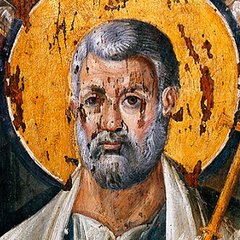
St. Peter, named by Jesus as the rock of the Church, is counted as the first pope.
Peter was a Galilean fisherman named Simon, the brother of Andrew, when Jesus called him. Jesus gave him the new name Peter, from the word for rock, and in Matthew's Gospel tells him that on this rock he will build his Church. Peter denied Jesus three times on the night of the arrest, yet the risen Lord restored him and charged him to feed his sheep. In the Acts of the Apostles he preaches on Pentecost and leads the early Church in Jerusalem.
Tradition holds that he later led the Church in Rome and was martyred there under Emperor Nero, probably in the mid-60s. An early tradition says he asked to be crucified upside down, feeling unworthy to die as his Lord had. He was buried on the Vatican Hill, and St. Peter's Basilica stands over the place. Excavations beneath it in the 1940s found an ancient shrine.
452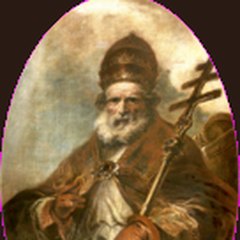
Leo the Great meets Attila the Hun and persuades him to turn back from Rome.
Leo became pope in 440, as the Western Empire crumbled. In 452 Attila's armies had already ravaged northern Italy when Leo travelled north with a small Roman delegation to meet him near Mantua. After the meeting Attila withdrew, though historians note that famine and disease in his army likely helped. Three years later, when the Vandals sacked Rome in 455, Leo reportedly persuaded their king Gaiseric to spare the city from burning and slaughter. Leo was also a gifted teacher: his letter on the two natures of Christ was acclaimed at the Council of Chalcedon in 451. He is a Doctor of the Church.
590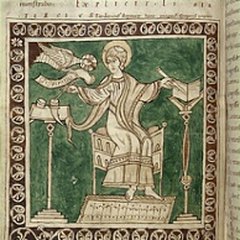
Gregory the Great is elected. He sends missionaries to England and reforms the liturgy.
Gregory was a Roman aristocrat who had served as prefect, the city's top civil official, before turning his family home into a monastery. Later he served as papal envoy in Constantinople. He was elected reluctantly in 590, when plague had just killed his predecessor. In 596 he sent the monk Augustine and about forty companions to the Anglo-Saxons. They landed in Kent in 597, King Aethelberht was baptized, and Augustine became the first Archbishop of Canterbury. Gregory also organized famine relief and managed Church lands. His Pastoral Rule shaped bishops for centuries. He styled himself "servant of the servants of God," and the chant tradition later bears his name.
800Leo III crowns Charlemagne emperor on Christmas Day.
In 799 enemies in Rome attacked Leo III during a procession, and he fled north to Charlemagne, king of the Franks, who had defended the papacy and united much of western Europe. He came to Rome in late 800, and on Christmas Day, as he prayed in St. Peter's Basilica, Leo placed a crown on his head while the crowd hailed him as emperor. It revived the idea of a Roman emperor in the West for the first time in over three centuries, to the displeasure of the Byzantine court. The event bound the papacy and western rulers together and laid foundations for the later Holy Roman Empire.
1054East-West Schism: papal legates and the patriarch of Constantinople excommunicate each other.
The Greek East and Latin West had been drifting apart for centuries over papal authority, the word filioque ("and the Son") added to the Creed in the West, and customs such as unleavened bread at Mass. On July 16, 1054, Cardinal Humbert, leading a delegation from Leo IX, laid a bull of excommunication against Patriarch Michael Cerularius on the altar of Hagia Sophia, and the patriarch answered in kind. Leo had actually died months earlier. The break hardened over the following centuries, especially after the crusaders' sack of Constantinople in 1204 (see 1198). The excommunications were lifted on December 7, 1965, by Pope Paul VI and Patriarch Athenagoras.
1095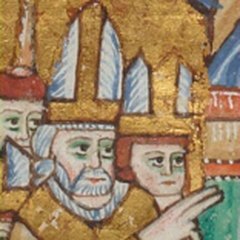
Urban II calls the First Crusade at Clermont.
Urban II, born Odo of Lagery, was a French nobleman and former monk of Cluny. Earlier in 1095 envoys of the Byzantine emperor Alexios I had asked the West for help against the Seljuk Turks, who had overrun much of once-Christian Asia Minor. On November 27, at a church council in Clermont, France, Urban urged knights to aid eastern Christians and free Jerusalem as an armed pilgrimage and act of penance. The crowd is said to have answered "God wills it." The expedition captured Jerusalem on July 15, 1099, though Urban died two weeks later, before the news reached him. It began two centuries of crusading.
1198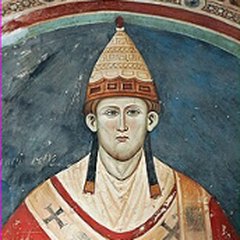
Innocent III begins a reign that marks the height of papal power, and later calls the Fourth Lateran Council.
Lotario dei Conti di Segni was only 37 when elected. He intervened in disputes among kings across Europe, including placing England under interdict, a ban on most public worship, after King John refused to accept Stephen Langton as Archbishop of Canterbury. John submitted in 1213. Innocent approved the new way of life of Francis of Assisi and launched crusades, though the Fourth Crusade went astray, attacking the Christian city of Zara in 1202 and sacking Constantinople in 1204, against his orders. He excommunicated the crusaders over Zara and later condemned the sack bitterly. His Fourth Lateran Council in 1215 gathered some 400 bishops and 800 abbots and priors. It required yearly confession and Communion and used the word transubstantiation for the Eucharist.
Crisis and reform · 1300 to 1900
1309Avignon papacy: popes reside in France until 1377.
Clement V, a Frenchman, was elected in 1305 and settled in Avignon in 1309 amid unrest in Rome and pressure from King Philip IV of France, who had clashed bitterly with Pope Boniface VIII. Under Philip's pressure, Clement also suppressed the Knights Templar in 1312. Seven popes in a row lived in Avignon, building a grand papal palace that still stands. They reformed papal administration and sent missionaries as far as China. Critics, including the poet Petrarch, saw the papacy as too close to the French crown. Saints such as Bridget of Sweden and Catherine of Siena urged a return, and Gregory XI finally entered Rome in January 1377.
1378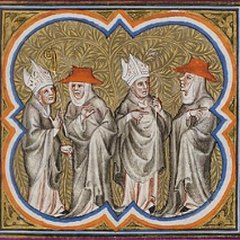
Western Schism: rival popes divide Europe until the Council of Constance ends it in 1417.
After Gregory XI died in 1378, cardinals in Rome, pressed by crowds demanding an Italian pope, elected Urban VI. Within months, many of the same cardinals, alarmed by his harshness, declared the election invalid and chose Clement VII, who returned to Avignon. Kingdoms took sides: France, Scotland and the Spanish kingdoms generally backed Avignon, while England, the Empire and much of Italy backed Rome. A council at Pisa in 1409 only added a third claimant. The Council of Constance (1414 to 1418) finally resolved the crisis. The Roman pope Gregory XII resigned, the other two claimants were deposed, and in 1417 the council elected Martin V, reuniting the Western Church.
1506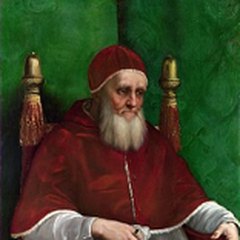
Julius II begins building the new St. Peter's Basilica.
Giuliano della Rovere, elected in 1503, was called the warrior pope because he led armies in person. The old basilica built under Constantine was more than a thousand years old and falling into disrepair. On April 18, 1506, Julius II laid the foundation stone for a new church designed by Bramante. That same year he founded the Swiss Guard, and soon he set Michelangelo to paint the Sistine Chapel ceiling and Raphael to decorate his rooms. Later architects carried the basilica forward, including Michelangelo, who designed the great dome. It was consecrated only in 1626. Fundraising through indulgences for the project became one of the sparks of the Reformation.
1582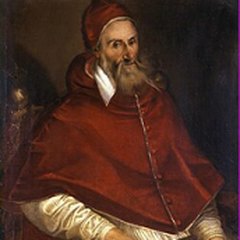
Gregory XIII introduces the Gregorian calendar used worldwide today.
The Julian calendar, set up under Julius Caesar, made the year about eleven minutes too long, so it had slowly drifted out of step with the sun, pushing the spring equinox and the date of Easter off course. Drawing on the work of the physician Aloysius Lilius and the Jesuit mathematician Christopher Clavius, Gregory XIII issued a bull in February 1582. Thursday, October 4, 1582 was followed directly by Friday, October 15, and century years became leap years only when divisible by 400. Catholic countries adopted it quickly, Protestant and Orthodox lands only gradually, Britain not until 1752 and Russia not until 1918. Rome's Gregorian University also bears his name.
1870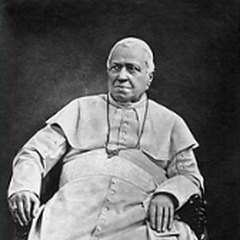
Pius IX: Vatican I defines papal infallibility, and Rome falls to Italy, ending the Papal States.
Pius IX had the longest reign of any pope after Peter, from 1846 to 1878. Revolution drove him from Rome in 1848, and he returned with French help. In 1854 he defined the Immaculate Conception of Mary, and in 1864 his Syllabus of Errors rejected many liberal ideas. The First Vatican Council opened in 1869. On July 18, 1870, by a vote of 533 to 2, it taught that the pope is protected from error when he solemnly defines a doctrine of faith or morals for the whole Church. This rarely used gift is called infallibility.
When the Franco-Prussian War drew French troops away, on September 20, 1870, Italian troops breached Rome's walls at the Porta Pia, ending the last of the Papal States, which had lasted over a thousand years. Pius refused to accept the loss and remained inside the Vatican, calling himself a prisoner there. He was beatified in 2000.
1891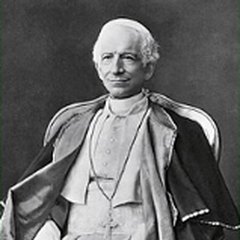
Leo XIII issues Rerum Novarum on workers' rights, founding modern Catholic social teaching.
Gioacchino Pecci was nearly 68 when elected in 1878, yet he lived to 93. Industrialization had brought harsh working conditions and fierce debates between capitalism and socialism. In Rerum Novarum ("Of New Things"), issued May 15, 1891, Leo XIII defended private property while insisting on a just wage, decent conditions and workers' right to form unions. He also revived the study of St. Thomas Aquinas, opened the Vatican archives to scholars and made John Henry Newman a cardinal. Later popes marked its anniversaries with their own social encyclicals, and the name of the current pope, Leo XIV, was chosen partly in tribute to this legacy.
The modern papacy · 1900 to today
1929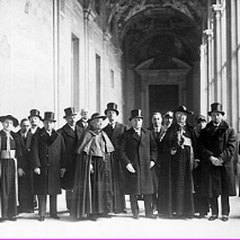
Lateran Treaty under Pius XI creates Vatican City as an independent state.
Since 1870 the popes had refused to recognize the Italian state that had taken Rome, a standoff known as the Roman Question. Pius XI, a scholar and mountaineer elected in 1922, wanted it settled. On February 11, 1929, Cardinal Pietro Gasparri and Benito Mussolini signed the treaty at Rome's Lateran Palace. It recognized papal sovereignty over about 109 acres around St. Peter's, and included a concordat and a financial settlement for the lost Papal States. Vatican City remains the world's smallest independent state, giving the pope freedom from any national government. Pius XI later clashed with fascism and Nazism, condemning Nazi ideology in his 1937 encyclical Mit brennender Sorge.
1962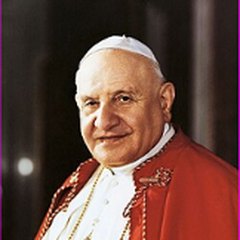
John XXIII opens the Second Vatican Council.
Angelo Roncalli, from a farming family near Bergamo, served as a Vatican diplomat in Bulgaria, in Turkey and Greece, where he helped Jewish refugees during World War II, and in France, and then as Patriarch of Venice. Elected in 1958 at 76, he was expected to be a caretaker. Instead he surprised the world by calling a council to open the Church to the modern world, a renewal he called aggiornamento, Italian for "updating." About 2,500 bishops gathered in St. Peter's on October 11, 1962.
During the Cuban Missile Crisis that October he appealed publicly for peace, and his 1963 encyclical Pacem in Terris was addressed to all people of good will. He died in June 1963 after the first session, and Paul VI carried the council to its close in 1965. Its sixteen documents renewed the liturgy, allowing the Mass in local languages (see councils). Beloved as "Good Pope John," he was canonized in 2014.
1978John Paul II, from Poland, becomes the first non-Italian pope in 455 years.
Karol Wojtyla was born in 1920 in Wadowice, Poland. Under Nazi occupation he worked in a quarry and a chemical plant, acted in an underground theater and studied for the priesthood in secret. He became a poet, philosopher and, in 1964, archbishop of Krakow, steadily resisting communist rule. Elected on October 16, 1978 at 58, he was the first non-Italian pope since Adrian VI, a Dutchman elected in 1522.
His 1979 pilgrimage to Poland drew millions and helped inspire the Solidarity movement the next year, and with it the peaceful fall of communism in 1989. He survived an assassination attempt in St. Peter's Square in 1981 and later forgave his attacker in person. He made 104 foreign trips, founded World Youth Day and issued the Catechism of the Catholic Church. He died in 2005 and was canonized in 2014 (see his timeline).
2013Benedict XVI resigns. Francis, from Argentina, becomes the first pope from the Americas.
On February 11, 2013, Benedict XVI announced in Latin that he lacked the strength to carry on. He was the first pope to resign since Gregory XII in 1415 (see 1378), and he lived afterward as pope emeritus until his death on December 31, 2022. Joseph Ratzinger had been a leading theologian and longtime guardian of doctrine (see his timeline).
The conclave then chose Jorge Mario Bergoglio, archbishop of Buenos Aires and son of Italian immigrants, known for riding the bus and visiting the slums. He took the name Francis after Francis of Assisi. He was the first Jesuit pope and the first non-European pope in nearly 1,300 years. His reign emphasized mercy, care for the poor and the environment in Laudato Si' (2015). He died on Easter Monday, April 21, 2025.
2025Leo XIV, born in Chicago, becomes the first pope from the United States.
Born in Chicago in 1955, Robert Francis Prevost studied mathematics at Villanova University before joining the Augustinian friars, the order named for St. Augustine. He spent many years as a missionary in Peru, led the worldwide Augustinian order for twelve years, and became bishop of Chiclayo, Peru, before leading the Vatican office that helps choose bishops. He was elected on May 8, 2025, on the conclave's second day. He is the first Augustinian pope. He chose the name Leo in tribute to Leo XIII's social teaching, linking it to new challenges such as artificial intelligence. His first major document, Dilexi Te (October 2025), was on love for the poor.